

A solid spin class outfit comes down to five things: a moisture-wicking top, a supportive sports bra, fitted bottoms with minimal seam friction, the right shoes for your studio’s pedal system, and a towel plus water bottle. That’s it. Everything else is optional.
Your quick pre-class checklist:
- Moisture-wicking top (tank, tee, or crop)
- Medium-to-high support sports bra
- Padded cycling shorts or fitted leggings
- Socks (ankle or crew, no cotton)
- Shoes that match your studio’s pedal type
- Small towel for the handlebars
- Refillable water bottle
- Lightweight layer for post-class cool-down
Beginner rule of thumb: Wear fitted, synthetic fabrics, check your studio’s pedal system before buying shoes, and skip the cotton.
Pro Tip: If you’re brand new to spin, your regular gym leggings and a moisture-wicking tee will get you through your first few classes. You don’t need specialized cycling kit on day one.
Key Takeaways
The most important decision in a spin class outfit is fabric first, fit second: moisture-wicking, flat-seam construction keeps you comfortable and focused for the full class.
| Point | Details |
|---|---|
| Skip cotton entirely | Cotton holds sweat and becomes abrasive; choose polyester or nylon-spandex blends instead. |
| Wear fitted bottoms with flat seams | Padded cycling shorts or high-rise leggings reduce saddle friction during 45–60 minute sessions. |
| Check your studio’s pedal system | SPD and LOOK Delta require compatible clip-in shoes; toe cages allow regular sneakers. |
| Pack a post-class layer | A lightweight pullover prevents chills when you stop sweating after an intense class. |
| Kyndeoactivewear matching sets | Coordinated sets simplify outfit selection and deliver consistent fabric performance across top and bottom. |
Table of Contents
- What you should never wear to spin class
- Which bottoms actually work for spin class
- Tops and sports bras: what support level do you actually need
- Shoes and pedals: how to match your footwear to your studio
- Fabrics, seams, and fit details that change your comfort
- Accessories and hygiene essentials worth packing
- Three ready-to-copy outfit combos for spin class
- Your spin class packing checklist
- A note on finding what works for you
- Kyndeoactivewear makes outfit building easy for spin
- Sources
- FAQ
What you should never wear to spin class
Getting the wrong items on your body is the fastest way to ruin a class. Here’s what to leave at home and why.
- Cotton anything. Cotton holds sweat, gets heavy, and turns abrasive against your skin within 20 minutes of a hot class. Swap it for polyester or nylon blends that pull moisture away from your body.
- Jeans or denim. Rigid seams on a saddle for 45 minutes is exactly as painful as it sounds. Wear compression or stretch fabrics only.
- Baggy sweatpants. Loose fabric bunches at the inner thigh and catches on the saddle during standing intervals. Fitted is safer and more comfortable.
- Underwear under padded shorts. Padded cycling shorts are engineered to sit directly against your skin. Adding underwear doubles the friction layer and raises chafing risk significantly.
- Loose jewelry or dangling accessories. Necklaces and bracelets can catch on the bike frame or handlebars mid-sprint. Keep it minimal.
- Heavy hoodies. Studios run warm by design. A thick hoodie traps heat fast and makes it harder to regulate your body temperature through the class.
Pro Tip: If you only own cotton tees, flip one inside-out and check the label weight. Anything above 180 gsm will feel like a wet blanket by the halfway mark. Time to upgrade.
Which bottoms actually work for spin class
Bottoms are where most riders feel the difference between a good class and a miserable one. The saddle contact point is everything.
Padded cycling (biker) shorts are the top choice for sessions lasting 45 minutes or longer. The built-in chamois cushions the sit bones and reduces friction at the saddle. For indoor classes, go with a thinner chamois rather than the thick padding designed for outdoor road cycling. Indoor-specific kit uses lighter, more breathable fabrics and shorter chamois to prevent overheating during studio sessions where airflow is limited.
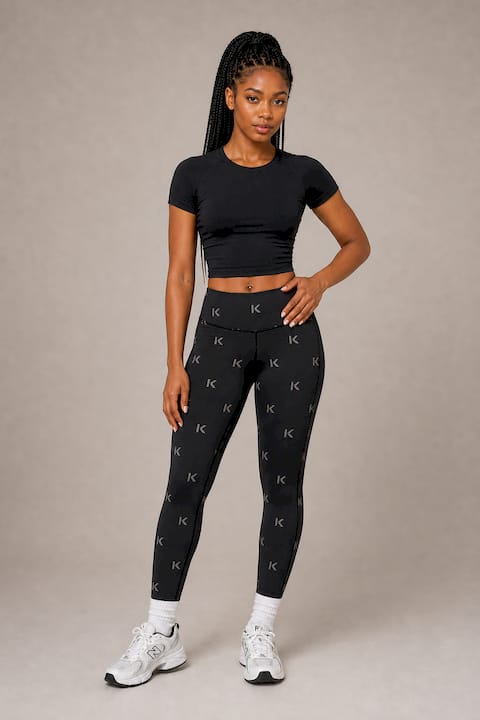
Padded underwear inserts let you wear your regular leggings while still getting chamois protection. They’re a practical middle ground for riders who don’t want to commit to dedicated cycling shorts yet.
High-rise leggings work well for spin when they’re made from compression fabric with flat seams. The high waistband stays put through seated and standing intervals without rolling down. Kyndeoactivewear’s high-rise leggings are built with low-profile seams that reduce inner-thigh friction, which matters a lot at the saddle.
Capri-length options suit warmer studios or riders who run hot. Full-length leggings are fine in cooler rooms.
Fit checklist for bottoms:
- Compression level: snug but not cutting off circulation
- Seam placement: flat seams, no raised ridges at the inner thigh
- Waistband: wide, non-rolling, ideally high-rise
- Length: capri for heat, full-length for cooler studios
Pro Tip: Before class, sit on a hard chair and slide forward slightly to simulate saddle position. If a seam digs in or the waistband folds, those bottoms will cause problems on the bike.
Tops and sports bras: what support level do you actually need
Start here: a medium-to-high support sports bra paired with a fitted moisture-wicking tank or crop top covers most riders for most classes. The bike position puts you leaning forward, so coverage and strap security matter more than they do in a standing workout.
| Support Level | Best For | Top Pairing |
|---|---|---|
| Low support | Very light riders, short classes | Fitted crop or bralette top |
| Medium support | Most beginners, moderate intensity | Tank top or fitted tee |
| High support | Larger cup sizes, high-intensity intervals | Fitted tee or compression top |
For fabric, polyester-spandex blends and nylon-elastane mixes are the standard. They stretch with your movement, dry fast, and don’t cling uncomfortably when wet. The Kyndeoactivewear padded sports bra offers built-in support with a moisture-wicking construction that works well for spin intensity levels.
A few practical notes on tops:
- Avoid loose hems that drape over the handlebars during a forward lean
- Racerback and cross-back styles stay more secure than wide-strap designs during fast cadence work
- If you run hot, a crop top or tank over a supportive bra is the most breathable combo
- Bring a dry shirt to change into post-class; staying in a soaked top gets cold fast
For more on support options, the sports bra alternatives guide on the Kyndeoactivewear blog covers fit and style choices worth reading before you shop.
Shoes and pedals: how to match your footwear to your studio
Check your studio’s pedal system before you buy anything. That single step saves you from showing up with the wrong shoes.
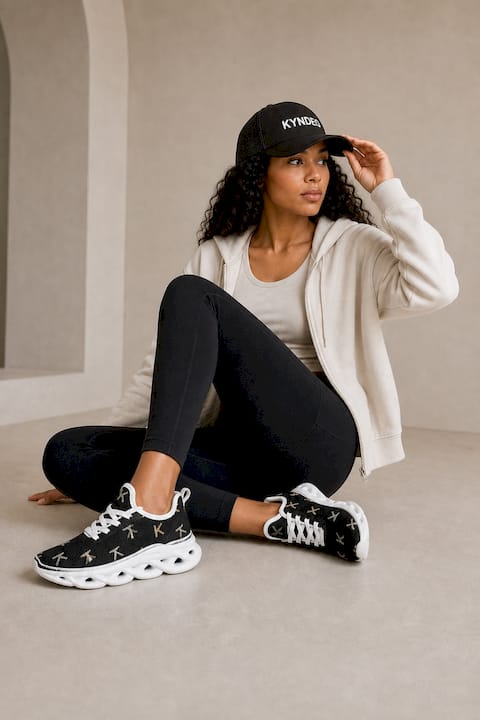
Studio bikes commonly use SPD or LOOK Delta cleats. Many studios offer rental cycling shoes or fit toe cages and straps to their pedals so beginners can use regular sneakers.
Decision flow:
- Call or check the studio’s website for pedal type (SPD, LOOK Delta, or cage/strap)
- If the studio has toe cages: wear supportive athletic sneakers with a firm sole
- If the studio uses SPD: rent shoes or buy SPD-compatible cycling shoes
- If the studio uses LOOK Delta: rent or buy LOOK Delta-compatible shoes
Shoe fit checklist:
- Stiff sole: transfers power more efficiently than a flexible running shoe
- Snug fit: no heel lift, no toe box compression
- Ventilation: mesh panels help in hot studios
- Sock choice: thin synthetic socks, not thick cotton crew socks
Pro Tip: If it’s your first time using clip-in shoes, practice clipping in and out at home or in a stationary position before class starts. The release motion is a lateral heel twist outward. Knowing it before the instructor dims the lights saves real stress.
Fabrics, seams, and fit details that change your comfort
Pick moisture-wicking, quick-dry fabrics with flat seams and no interior tags. That’s the short answer. Here’s what it means in practice.
Minimizing seam friction and managing body heat with technical fabrics helps riders maintain proper form and intensity for the full class. When a seam rubs for 45 minutes straight, it doesn’t just cause discomfort. It pulls your focus off your form and your cadence.
Fabric guide:
- Polyester blends: fast-drying, durable, widely available, the default for most activewear
- Nylon-elastane: softer hand feel, excellent stretch recovery, holds shape through repeated washes
- Spandex/elastane content: look for at least 15–20% for compression and movement range
- Merino wool: temperature-regulating and naturally odor-resistant, but slower to dry; better for cooler studios
Seam and construction details to prioritize:
- Flatlock seams: stitched flat against the fabric, no raised ridge
- Low-profile waistbands: wide and smooth, no thick elastic that folds
- No interior tags: heat-transfer labels or tagless construction only
For lightweight, breathable options built for cardio intensity, the lightweight gear guide from Kyndeoactivewear walks through what to look for in fabric specs.
Pro Tip: When shopping online, check the fabric composition in the product description. If the listing doesn’t include elastane or spandex percentage, look for terms like “4-way stretch” or “compression fit” as a proxy for adequate stretch and recovery.
Accessories and hygiene essentials worth packing
The bike is sweaty. The studio is hot. A few small additions to your bag make a real difference.
Pack this every time:
- Microfiber towel for your face and handlebars
- Refillable water bottle (insulated keeps it cold longer)
- Chamois cream if you’re riding more than 45 minutes regularly
- Deodorant and face wipes for post-class
- Dry change of shirt
Hygiene notes:
- Chamois cream goes directly on your skin, not on the chamois pad itself. Apply before class to reduce friction at the saddle contact points.
- Wear padded shorts directly against skin. No underwear underneath.
- Wipe down the bike seat and handlebars before and after class. Most studios provide spray and paper towels.
Post-class layer:
Instructors commonly recommend bringing a lightweight post-class layer to avoid chills when you stop sweating after an intense class. A thin zip-up or pullover stashed in your bag takes up almost no space and feels necessary the moment you step off the bike.
Three ready-to-copy outfit combos for spin class
1. Beginner combo
Who it’s for: First-timers or occasional riders in a studio with toe cage pedals.
- High-rise fitted leggings (polyester-spandex blend)
- Medium-support sports bra
- Fitted moisture-wicking tank
- Supportive athletic sneakers with a firm sole
- Ankle socks (synthetic, not cotton)
Kyndeoactivewear pairing: A women’s activewear set combining a high-rise legging and a fitted tank gives you a coordinated look without any outfit-building effort. Check that the fabric includes spandex content before buying.
2. Regular rider combo
Who it’s for: Riders attending two or more classes per week who want performance-focused gear.
- Padded cycling shorts (thin indoor chamois)
- High-support sports bra
- Breathable crop top or racerback tank
- SPD or LOOK Delta clip-in shoes
- Thin synthetic socks
Quick fit check: Sit in the shorts before class. If the chamois pad sits centered under your sit bones without bunching, the fit is right.
3. Fashion-forward combo
Who it’s for: Style-conscious riders who want the studio look to carry into the rest of their day.
- Matching set (compression shorts or leggings + coordinating crop)
- Padded sports bra with decorative strap detail
- Clean white or neutral sneakers (if studio allows)
Kyndeoactivewear’s matching workout sets are built for exactly this use case. The coordinated top-and-bottom approach means you’re not mixing and matching fabrics with different stretch or opacity levels, which is a real practical benefit, not just a style one.
Pro Tip: A matching set also makes it easier to check fabric consistency. When both pieces come from the same production run, the stretch, opacity, and moisture-wicking performance are uniform across the outfit.
Your spin class packing checklist
Save this before you leave home.
Wear to class:
- Moisture-wicking top
- Supportive sports bra
- Fitted padded shorts or leggings
- Correct shoes for your studio’s pedal system
- Synthetic socks
In your bag:
- Small towel (face + handlebars)
- Refillable water bottle
- Chamois cream (optional, recommended for 45+ min sessions)
- Face wipes or deodorant
- Lightweight pullover or zip for post-class
Before you go: Confirm your studio’s pedal type (SPD, LOOK Delta, or toe cage) so your shoes are ready. For a full activewear essentials breakdown, the activewear wardrobe essentials list from Kyndeoactivewear is worth bookmarking.
A note on finding what works for you
The best spin class clothing is the outfit you stop thinking about once class starts. That’s the real benchmark.
Experiment freely. Try padded shorts for one class, leggings the next. Test a crop top versus a full tank in the same studio. Notice where friction shows up after class and adjust from there. Comfort on the bike is a process, not a one-time purchase decision.
60-second comfort test before class:
- Sit on a hard chair and lean slightly forward (simulate handlebar position)
- Check: does the waistband fold? Does any seam press into your inner thigh?
- Stand up and do a few quick squats: does the fabric stay put?
If everything holds, you’re ready. If something shifts or digs in, swap it out before you clip in.
Kyndeoactivewear’s matching activewear sets simplify this process considerably. When the top and bottom are designed together, you’re not guessing whether the fabrics will perform the same way under the same conditions.
Kyndeoactivewear makes outfit building easy for spin
Picking a spin class outfit shouldn’t take longer than the warm-up. Kyndeoactivewear’s gym-to-street clothing line is built for exactly this: movement-ready fabrics, low-profile seams, and coordinated sets that go from the studio to the rest of your day without a wardrobe change.
The women’s activewear collection and men’s activewear collection both include high-rise leggings, fitted tanks, and matching sets built from moisture-wicking, stretch fabrics. The sustainable activewear line adds an eco-conscious option for riders who care about production practices as much as performance. Browse the matching sets, pick your combo, and show up to class ready to move.
Sources
- Best indoor cycling clothing 2026: temperature-regulating & expert-tested | Cycling Weekly
- What to Wear To Spin Class (and What NOT to Wear) - Femme Cyclist
- What to wear for indoor cycling workouts | BikeBesties
- Spin class gear guide: must-haves for every cyclist | Cycle Bar
FAQ
What shoes should you wear for a spin class?
Check your studio’s pedal system first. Studios typically use SPD or LOOK Delta cleats, and many offer rental shoes or toe cages so beginners can use supportive athletic sneakers with a firm sole.
Is spinning good for losing weight?
Spin class is high-intensity cardio that burns a significant number of calories per session. Consistent attendance combined with a balanced diet supports weight loss over time.
Does spin class get you toned?
Spinning builds cardiovascular fitness and engages the legs and core, but visible muscle toning requires consistent higher-resistance training. Increasing the resistance on the bike during each class accelerates that result.
What is the 3-3-3 rule for spin class outfits?
There’s no established 3-3-3 rule for spin class clothing. The practical framework most instructors use is simpler: wicking fabric, fitted bottoms, and the right shoes for your studio’s pedal system.
Can you wear regular leggings to spin class?
Yes, especially for beginners. Fitted leggings made from polyester or nylon-spandex blends work well. For longer or more frequent sessions, adding a padded cycling short or chamois insert improves saddle comfort noticeably.