

Weightlifting apparel is defined as performance-focused clothing engineered to support strength training through 4-way stretch fabrics, moisture-wicking technology, and reinforced construction at high-stress points. This weightlifting apparel explained guide covers everything from material science to style combinations, so you can train harder and look intentional doing it. Brands like Castiron Lift and Kyndeoactivewear have pushed the category forward by treating function and style as equal priorities. What you wear to the platform is not a small decision. The right gear protects your range of motion, manages sweat, and holds up through hundreds of sessions.
What makes weightlifting apparel different from regular gym clothes?
Generic gym wear bunches, restricts movement, and falls apart quickly when used for barbell sports. Specialized lifting clothing is built around the specific demands of the snatch, clean and jerk, squat, and overhead press. Those movements require unrestricted shoulder rotation, hip hinge freedom, and fabric that stays in place under load.
The difference shows up fast. A standard cotton tee tightens across the back during a deadlift and soaks through within 20 minutes of a heavy session. A performance tee built with polyester and elastane blends moves with you and pulls moisture away from your skin. That is not a minor comfort upgrade. It directly affects how long you can train at full intensity.
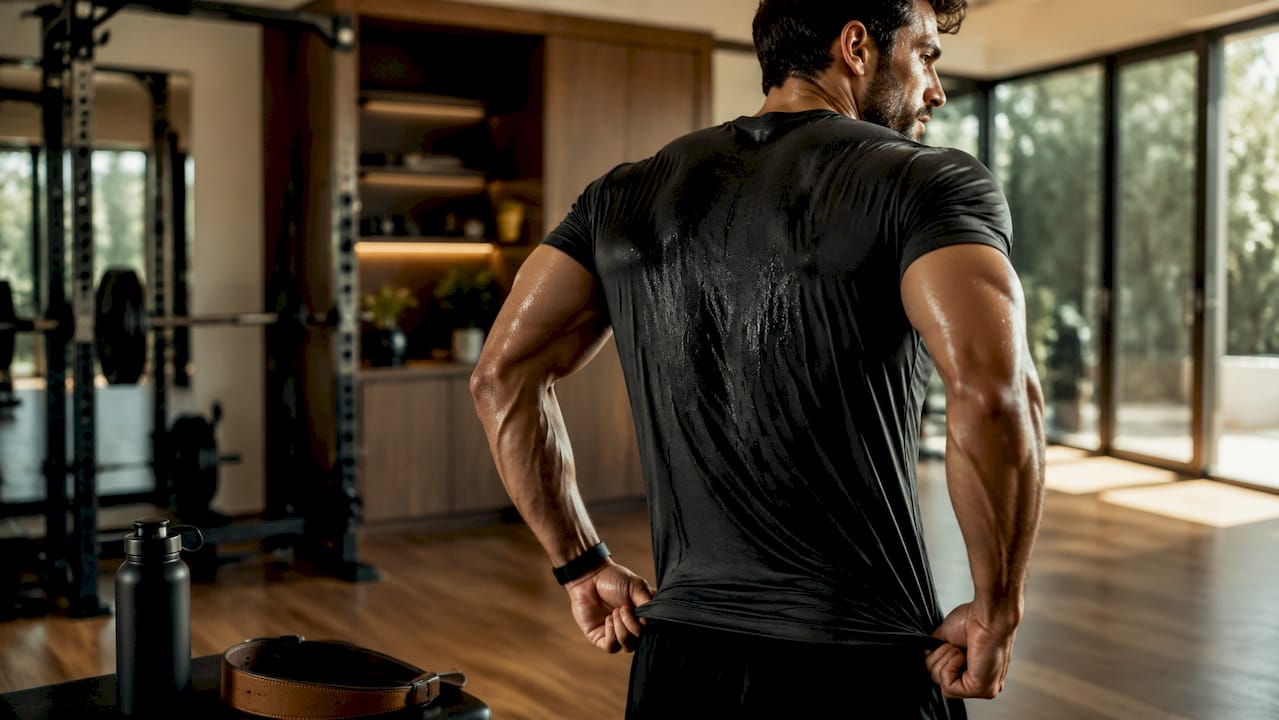
Experienced lifters prioritize synthetic blends with moisture-wicking properties and reinforced stitching to maintain apparel shape and performance over time. This is the single clearest dividing line between functional fitness clothing and generic activewear.
What materials make weightlifting apparel effective?
The best lifting gear uses polyester, nylon, and elastane in specific blends. Each material serves a purpose:
- Polyester forms the base of most performance fabrics. It is lightweight, durable, and holds its shape after repeated washing.
- Nylon adds abrasion resistance. Seams and high-contact zones benefit most from nylon reinforcement.
- Elastane or spandex provides the stretch. A fabric with 10–20% elastane delivers the 4-way stretch needed for overhead lifts and deep squats.
Moisture-wicking fabrics keep lifters dry and comfortable in humid or warm gym environments. This matters more than most beginners realize. Wet fabric against skin during a heavy set creates friction, reduces grip on the bar, and drops your core temperature unevenly. Moisture management is not a luxury feature. It is a performance requirement.
Reinforced stitching at the shoulders and underarms is the other critical material consideration. Low-quality gear fails after roughly six months of regular lifting. Chalk exposure, barbell contact, and frequent washing all degrade standard stitching fast. Double-needle or flatlock seams at stress points extend the life of your gear significantly.
Pro Tip: Wash lifting apparel inside out in cold water and air dry when possible. Heat from dryers breaks down elastane fibers faster than any workout will.
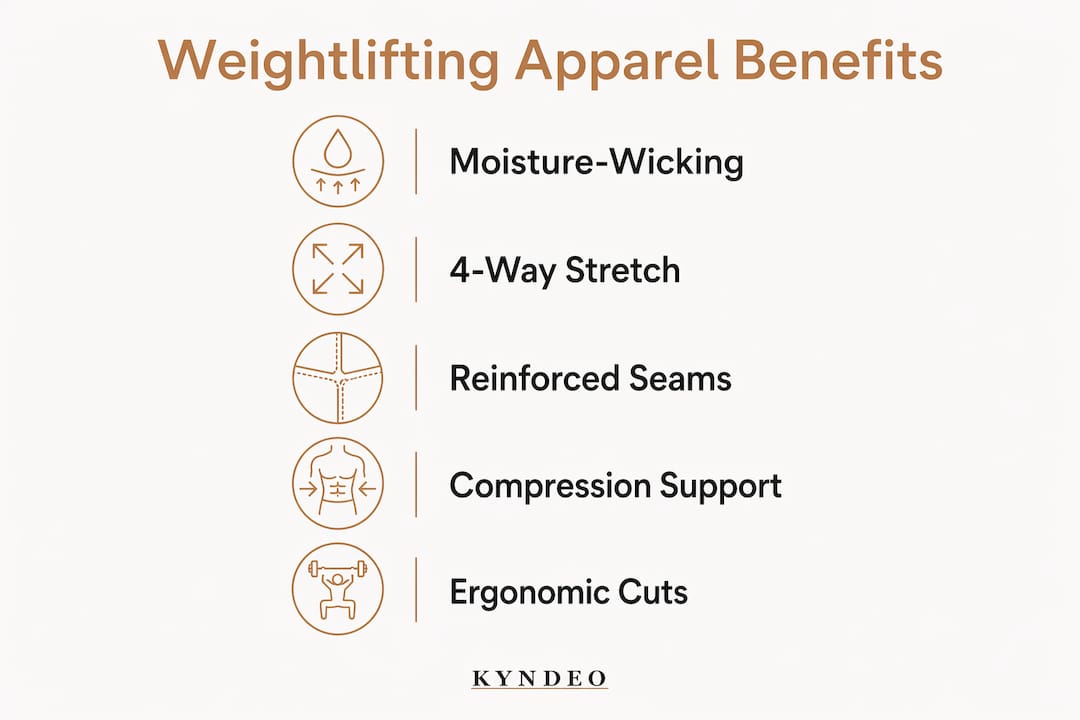
How do design features support lifting movements and prevent injury?
Design is where functional fitness clothing separates itself from everything else on the rack. The cut, seam placement, and sleeve construction all affect how freely you can move under load.
Raglan and drop-shoulder construction
Raglan sleeves run diagonally from the collar to the underarm rather than meeting at the shoulder seam. That single design choice removes the most common restriction point for overhead lifts. Restricted shoulder mobility from improper apparel increases injury risk in overhead movements like the snatch and overhead squat. A raglan or drop-shoulder cut eliminates that risk without sacrificing fit.
The activewear for life philosophy behind Kyndeoactivewear’s design approach reflects exactly this thinking. Clothes built for motion do not fight your body when you push overhead.
Seam construction and chafing
Flatlock and seamless seams reduce chafing and irritation during long lifting sessions. Standard raised seams press into skin during repeated reps and become painful over a two-hour training block. Flatlock stitching lies flat against the body. Seamless construction eliminates the seam entirely in high-contact zones.
Compression vs. relaxed fit
- Compression fit wraps close to the muscle. It provides stability during heavy compound lifts and can reduce post-session soreness. Compression clothing provides muscle support and can reduce fatigue but should not restrict your full range of motion. If you cannot reach full depth in a squat or lock out overhead, the fit is too tight.
- Relaxed fit gives you room to move without restriction. It works well for training days focused on volume and technique rather than maximum load.
- Athletic fit sits between the two. It follows the body without compressing it. This is the most versatile option for lifters who train across multiple movement patterns.
“The goal is clothing that disappears when you wear it. You should not feel your shirt during a lift. If you do, it is the wrong shirt.” — Castiron Lift
Sizing accuracy matters as much as fit style. Many complaints stem from sizing inconsistencies, and brands offering detailed sizing charts improve customer satisfaction significantly. Always check the size guide before ordering, especially for compression pieces.
What styles work best for different lifting contexts?
Your training environment and goals should drive your outfit choices. A competition platform calls for different gear than a Tuesday morning training session.
For competition day:
- A fitted singlet or compression base layer keeps everything in place under judge scrutiny.
- A performance tee over the singlet during warm-ups keeps muscles warm without adding bulk.
- Weightlifting shoes with a raised heel complete the setup. Matching apparel with lifting shoes is a popular style trend among serious lifters for a cohesive look on the platform.
For training days:
- Relaxed fit tees paired with performance joggers give you freedom of movement without the formality of competition gear.
- Seamless long-sleeve tops work well for cold gyms or early morning sessions when muscles need extra warmth before they loosen up.
- Layering a hoodie over your base layer during warm-up and stripping it off before working sets is a practical approach that most experienced lifters use.
For women specifically: Many women’s athletic clothes prioritize aesthetics over support or unrestricted movement, which directly hampers lifting performance. Look for women’s specific cuts that include adequate stretch through the hips and thighs, not just the torso. Kyndeoactivewear’s women’s activewear collection addresses this gap with fabrics built for actual movement, not just appearance.
How to choose and maintain the best weightlifting gear
Choosing the right gear comes down to three factors: fabric quality, construction, and fit accuracy. Here is how to evaluate each before you buy.
| Apparel type | Best use | Durability | Key feature |
|---|---|---|---|
| Compression tee | Competition, heavy lifts | High | Muscle support, flatlock seams |
| Relaxed performance tee | Training, volume days | Medium-High | Moisture-wicking, raglan sleeve |
| Seamless long-sleeve | Cold gyms, warm-up layers | Medium | No chafe zones, full stretch |
| Performance joggers | Training, studio-to-street | High | 4-way stretch, reinforced waistband |
| Lifting singlet | Competition | Very High | Regulation fit, durable fabric |
Fabric quality is the starting point. Avoid anything labeled simply “athletic” without specifying the fiber content. A blend of 85% polyester and 15% elastane is a reliable baseline for lifting tees. Anything with more than 30% cotton will lose its shape and moisture management quickly.
Construction tells you how long the gear will last. Check the stitching at the shoulder seams, underarms, and waistband. These are the first points to fail. Reinforced double-needle stitching at these zones is a sign the brand understands how lifting gear actually gets used.
Pro Tip: Before buying online, check whether the brand provides a detailed size chart with chest, waist, and hip measurements. A brand that invests in clear sizing data is a brand that understands its customer.
Maintenance is where most lifters lose money. Repeated hot washing and machine drying breaks down elastane fibers and weakens stitching faster than training does. Cold wash, inside out, air dry. That routine alone can double the lifespan of quality lifting apparel.
What are the top brands and gear trends in weightlifting apparel?
The lifting apparel market has grown sharply as more athletes treat their training wardrobe as seriously as their programming. Several brands and trends are worth knowing.
Castiron Lift is recognized for customizable and durable apparel built specifically for barbell sports. Their focus on reinforced construction and technical fabrics sets a clear standard for what specialized lifting clothing should deliver.
Kyndeoactivewear brings a studio-to-street approach that works for lifters who want gear that performs in the gym and looks clean outside it. Built as a Black-owned brand with community at its core, Kyndeoactivewear’s men’s activewear line combines 4-way stretch construction with designs that move from the platform to everyday life without missing a beat.
Current trends shaping the category include:
- Color coordination between lifting apparel and shoes. Matching your tee or singlet to your weightlifting shoe colorway has become a standard practice among competitive lifters.
- Sustainable fabrics made from recycled polyester blends. Several brands are introducing eco-conscious options without sacrificing performance specs.
- Custom fit options that let lifters specify measurements rather than relying on S/M/L sizing. This is especially valuable for athletes with non-standard proportions, like wide shoulders and a narrow waist.
The market gap that still exists is in the mid-range. Most quality lifting apparel sits at either the budget end or the premium end. Lifters who want durable, well-designed gear at a fair price point are the underserved segment. Brands like Kyndeoactivewear are filling that space with workout apparel design that does not force you to choose between function and style.
Key takeaways
Effective weightlifting apparel is defined by fabric technology, construction quality, and fit precision. Generic gym clothes cannot replicate what purpose-built lifting gear delivers.
| Point | Details |
|---|---|
| Fabric blend matters most | Polyester and elastane blends provide the stretch, moisture management, and durability lifting demands. |
| Design prevents injury | Raglan sleeves and flatlock seams remove the two most common sources of restricted movement and skin irritation. |
| Fit type depends on context | Compression fits suit competition; relaxed or athletic fits work better for high-volume training days. |
| Maintenance extends lifespan | Cold wash and air dry preserves elastane and stitching far longer than machine drying does. |
| Style and function align | Coordinating apparel with lifting shoes builds confidence and a cohesive identity on the platform. |
Bryan’s take on what actually matters in lifting apparel
I have trained in gyms ranging from climate-controlled facilities in Phoenix to cold, drafty warehouses in the Midwest. The single biggest lesson I have taken from those environments is that fabric choice is not one-size-fits-all. In a humid gym, moisture-wicking is not optional. In a cold space, a seamless long-sleeve base layer under your tee is the difference between a productive warm-up and 20 minutes of stiff, cautious movement.
The pitfall I see most often among experienced lifters is buying gear based on how it looks in a product photo. A tee can look clean and fitted on a model and still bind across the back the moment you pull a barbell from the floor. The raglan sleeve detail, the seam placement, the elastane percentage. These are the specs that matter. They do not always show up in the marketing copy, so you have to know to look for them.
The other thing I will say plainly: apparel affects confidence. When you step up to a heavy lift in gear that fits right and looks intentional, you carry yourself differently. That is not vanity. That is preparation. The best lifters I know treat their training wardrobe with the same attention they give their programming. It is part of the work.
— Bryan
Gear built for the platform and beyond
Kyndeoactivewear is built for lifters who want performance and style in the same package. Every piece is designed to move with you from the first warm-up set to the street outside the gym.
The women’s activewear collection features moisture-wicking, 4-way stretch fabrics cut for real lifting movement. The men’s activewear collection brings the same construction with clean, coordinated looks built to match your lifting shoes. Pair either with a set from the tees and hoodies line for a complete studio-to-street setup. Kyndeoactivewear is Black-owned, community-driven, and built for the pace of real life. Shop the collection and feel intentional from the first wear.
FAQ
What is weightlifting apparel?
Weightlifting apparel is specialized clothing designed for barbell sports, featuring 4-way stretch fabrics, moisture-wicking technology, and reinforced stitching to support performance and durability during strength training.
Why can’t I just wear regular gym clothes for lifting?
Generic gym wear bunches, restricts shoulder and hip movement, and degrades quickly under chalk and barbell contact. Specialized lifting gear is built to handle those specific demands without failing.
What fabric is best for weightlifting clothing?
A blend of polyester and elastane, typically 80–90% polyester and 10–20% elastane, delivers the best combination of stretch, moisture management, and shape retention for lifting sessions.
How do I choose between compression and relaxed fit?
Use compression for competition and heavy single-rep work where muscle support matters most. Choose a relaxed or athletic fit for volume training days where range of motion takes priority over stability.
How often should I replace my lifting apparel?
Low-quality gear typically fails within six months of regular use. High-quality pieces with reinforced stitching and synthetic blends can last two or more years with proper cold-wash and air-dry care.