

TL;DR:
- The modern athletic aesthetic features a balanced, functional physique with visible tone and neutral, technical fabrics. Outfits combine fitted base layers with structured outerwear and minimal accessories for a polished gym-to-street look. It emphasizes high-low layering, cohesive neutral palettes, and purposeful styling rooted in authenticity and sustainable choices.
The modern athletic aesthetic is a gym-to-street style built on three fast identifiers: a balanced, functional physique with visible tone (not bulk), technical stretch fabrics in neutral colorways, and high-low layering that pairs performance base pieces with structured outerwear. It reads polished, not sweaty. Purposeful, not costume-y.
Quick visual cues:
- Silhouette: V-taper or balanced tone, fitted-but-not-skin-tight
- Fabrics: matte performance blends, minimal shine, clean seams
- Styling: compression layer under a tailored coat or structured overshirt
Table of Contents
- What defines the modern athletic aesthetic in clothing?
- What does the modern athletic physique actually look like?
- Your core wardrobe for the modern athletic look
- How to style athletic pieces without looking like you just left the gym
- Footwear and accessories that complete the look
- How the modern athletic aesthetic differs from athleisure and bodybuilding
- Who wears it and what’s shaping the look right now
- How Kyndeoactivewear interprets the modern athletic aesthetic
- Key Takeaways
- Why this aesthetic is worth wearing every day
- Kyndeoactivewear makes the gym-to-street look accessible
- FAQ
What defines the modern athletic aesthetic in clothing?
The look lives in the details of fit, fabric, and proportion. Get one wrong and the outfit reads gym-only. Get all three right and it reads intentional.
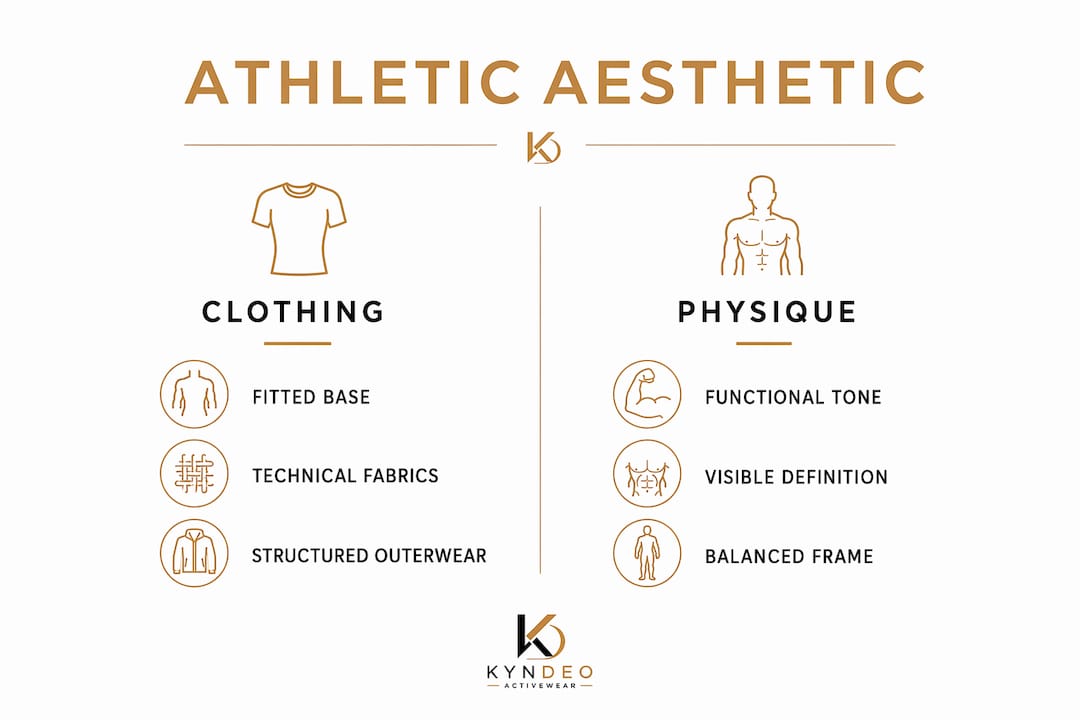
Silhouette and fit follow a simple rule: fitted base, structured outer. A compression tank or fitted long-sleeve sits close to the body without pulling. Tops land at the natural waist or just below. Joggers taper cleanly at the ankle. Nothing billows, nothing clings to the point of discomfort. Shoulders sit flat, not bunched.
Fabrics carry most of the visual weight. Technical performance blends — four-way stretch, moisture-wicking, recycled polyester — give garments their shape and finish. Matte textures read premium; shiny spandex reads budget. Flatlock seams and hidden closures signal quality without announcing it. Recycled technical fabrics are increasingly common and add a sustainability signal that resonates with the current market.
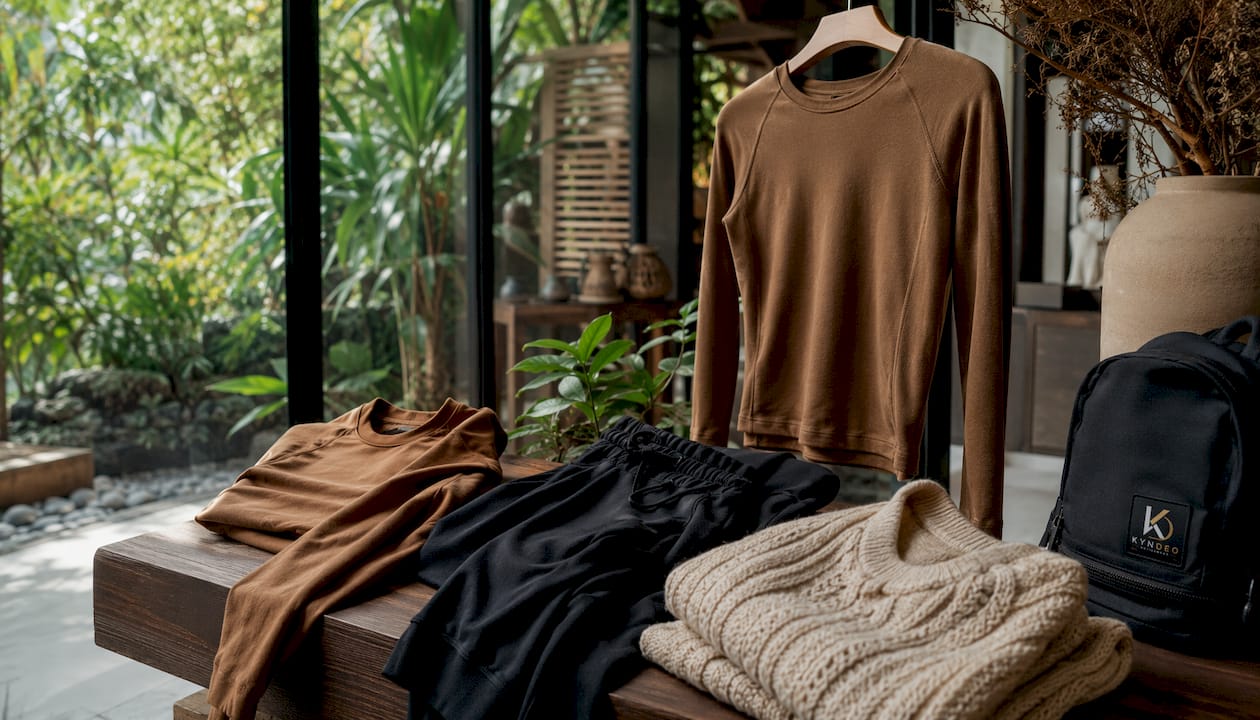
The color palette is deliberately restrained. Black, charcoal, navy, and cream form the core. One accent color, repeated across two or three pieces, creates cohesion. Loud graphics and oversized logos break the polished effect fast. Mixing a technical jacket with a plain knit or tailored trouser is the move fashion analysts consistently point to for achieving a high-end casual read.
Two outfit examples to visualize:
- Compression tank + tailored overcoat + clean white sneaker
- Matching jogger set + structured overshirt + minimal leather trainer
What does the modern athletic physique actually look like?
The physique associated with this aesthetic is functional tone, not hypertrophy. Visible definition, firm limbs, and a balanced frame. Not a bodybuilder’s mass, not a runway model’s slenderness.
The physique associated with this look generally emphasizes functional tone with visible definition and balanced frame. The typical body-fat range cited for the modern athletic look is approximately 10–15% for men and 18–24% for women; baseline strength markers include 1.5x bodyweight squat, 1.25x bodyweight bench, and 2x bodyweight deadlift.
| Marker | Men | Women |
|---|---|---|
| Body fat range | 10–15% | 18–24% |
| Squat baseline | 1.5x bodyweight | 1.5x bodyweight |
| Bench baseline | 1.25x bodyweight | 1.25x bodyweight |
| Deadlift baseline | 2x bodyweight | 2x bodyweight |
The key visual cue is the V-taper: shoulder width that visibly exceeds waist width, with balanced limb definition. Visible abs, toned arms and legs, and overall definition without bulk is how the mainstream fitness market now defines “athletic” as distinct from “muscular.” The cultural shift toward authenticity-first bodies means functional tone earned through compound training and conditioning is more culturally valued than extreme sculpting.
Your core wardrobe for the modern athletic look
Build from a short list of high-quality pieces rather than a large closet of mediocre ones.
Cornerstone pieces:
- Fitted base layer tops (compression tanks, long-sleeves, fitted tees)
- High-quality tapered joggers in black or charcoal
- Structured outerwear (tailored coat, bomber, or overshirt)
- Matching activewear sets in neutral tones
- Minimalist performance sneakers
- One compact bag or backpack in a neutral tone
Outfit formulas (gym-to-street):
- Fitted base layer + tailored coat + neutral sneaker + minimal bag
- Matching set + structured overshirt, unbuttoned + white leather trainer
- Compression leggings + oversized hoodie + running sneaker + visor
- Performance tee + tapered jogger + clean leather trainer + tech watch
- Long-sleeve base layer + bomber jacket + slim jogger + monochrome sneaker
When buying, prioritize:
- Four-way stretch with shape retention after washing
- Matte finish over shiny
- Tapered cuts, not relaxed or baggy
- Neutral colorways that mix across multiple formulas
Care tips for technical fabrics: wash cold, skip the dryer when possible, and turn garments inside out to protect surface finishes. Fabric softener breaks down moisture-wicking properties over time. Air dry to retain shape.
Pro Tip: Start with a matching set in black or cream. It eliminates the coordination problem entirely and gives you a ready-made base for any of the five formulas above.
How to style athletic pieces without looking like you just left the gym
The rule is high-low balance: technical, fitted base pieces layered beneath structured, non-athletic outerwear. That contrast is what signals intention rather than convenience.
Proportions matter more than most people realize. If the bottom is slim and tapered, the top can have more volume, and vice versa. A cropped performance top pairs well with a high-waisted jogger. A fitted long-sleeve works under a relaxed tailored coat. The silhouette stays balanced when one piece is doing more visual work than the other.
Tucking is optional but intentional. A fitted tee half-tucked into tapered joggers reads more styled than fully untucked. Avoid mismatched performance logos across garments — two competing brand marks in different colorways break the cohesion immediately. When in doubt, keep logos minimal or hidden under outerwear.
Pro Tip: For high-low styling guidance, the principle is simple: one technical piece, one tailored piece, one clean shoe. That three-part formula works for almost every occasion.
Footwear and accessories that complete the look
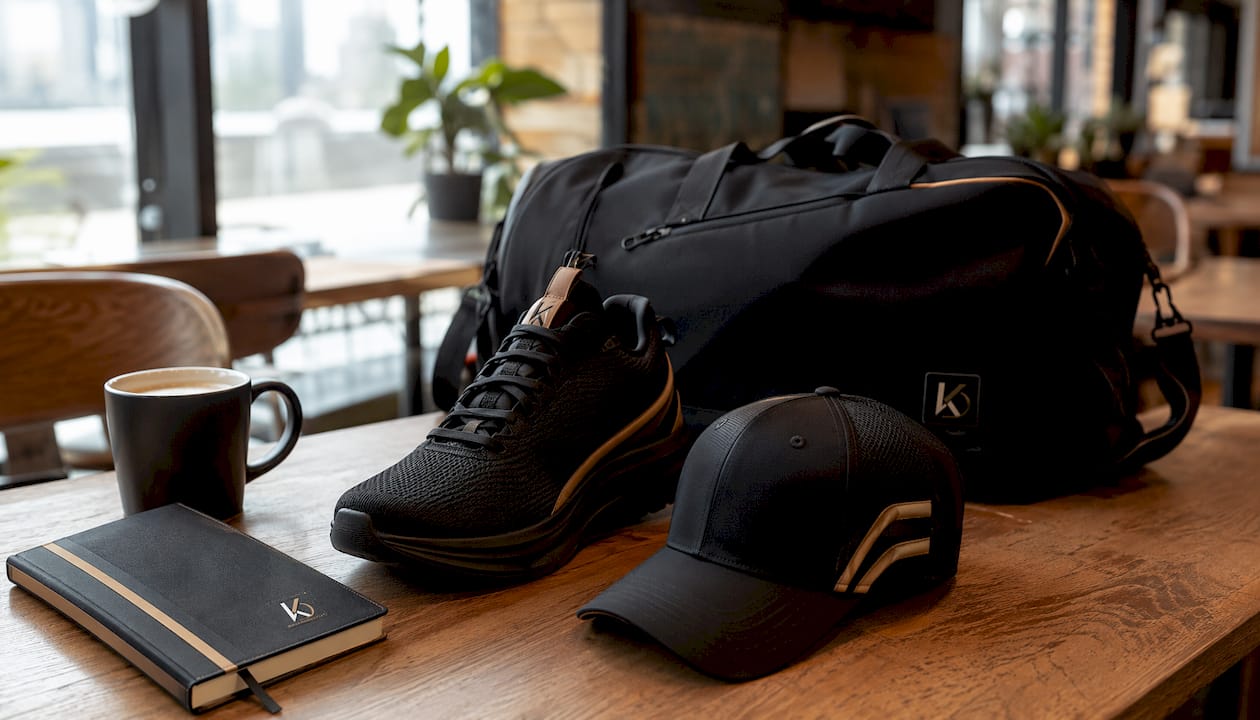
Shoes carry more visual weight in this aesthetic than most people budget for. The wrong pair collapses an otherwise strong outfit.
Footwear that works:
- Minimalist performance sneakers in white, black, or grey
- Elevated running silhouettes with clean midsoles (no excessive chunking)
- Clean leather trainers for gym-to-street transitions
- Low-profile court shoes in neutral tones
Accessories that fit:
- Structured visors or fitted caps in matching tones
- Compact backpacks or crossbody bags, minimal hardware
- Understated tech watches or silicone-band sport watches
- Compression sleeves in matte black or navy as styling elements
Modern support sleeves use matte bases, flatlock seams, and integrated silicone grips designed to blend into an outfit rather than announce an injury. When you wear them, keep them symmetrical. One sleeve on one arm reads asymmetrical and pulls focus. Pair them or skip them.
Pro Tip: Match your shoe’s accent color to one other element in the outfit — the cap, the sleeve, or a stripe on the bag. That one connection is what makes accessories feel chosen, not grabbed.
How the modern athletic aesthetic differs from athleisure and bodybuilding
These styles share DNA but serve different intentions. Knowing the difference helps you borrow the right elements.
| Style | Silhouette | Intent | Fabrics | Occasion |
|---|---|---|---|---|
| Modern athletic | Fitted, structured, high-low layered | Gym-to-street polish | Technical + tailored mix | Work, errands, social |
| Athleisure | Relaxed, comfort-first | Casual everyday | Soft performance blends | Errands, casual outings |
| Sporty | Logo-heavy, team-coded | Fan culture, casual | Jersey, mesh, cotton blends | Casual, spectator events |
| Bodybuilding aesthetic | Maximized mass, minimal fat | Visual display | Compression, posing wear | Gym, competition |
Athleisure grew from the mid-2010s yoga-pants boom and prioritizes comfort and casual wearability over polish. The modern athletic aesthetic builds on that foundation but adds structure and intentional layering. A hoodie and leggings is athleisure. That same hoodie under a tailored coat with a clean sneaker is modern athletic.
The bodybuilding aesthetic, by contrast, is about maximized mass and sub-10% body fat. The modern athletic look sits well below that threshold in both muscle volume and styling drama. One item can read differently depending entirely on how it is styled: a compression tank in a gym bag reads workout gear; the same tank under a structured blazer reads modern athletic.
Who wears it and what’s shaping the look right now
The modern athletic aesthetic is driven by gym-to-street culture, athlete influencers, and sustainability-minded consumers. Those three forces are pulling the look in a specific direction.
Current micro-trends:
- Gender maximization: both men and women are leaning into strong, functional silhouettes rather than gender-coded cuts
- Authentic embodiment: female athletes pairing competition-level physiques with fashion-forward outfits are reshaping mainstream taste
- Technical-but-sustainable fabrics: recycled performance blends are becoming a baseline expectation, not a premium add-on
- Cohesion over maximalism: gym-to-street outfit continuity is driving demand for multifunctional pieces that work across contexts
Gen Z adapts the look with bolder accent colors and experimental layering — an unexpected pop of orange on a cap, a cropped overshirt worn open over a matching set. Mainstream audiences tend to stay in the neutral palette and let fit do the talking. Both approaches work within the same framework.
How Kyndeoactivewear interprets the modern athletic aesthetic
Kyndeoactivewear builds the look from the inside out: performance fabrics and coordinated sets as the base, with pieces designed to layer into gym-to-street outfits without extra effort. As a Black-owned activewear brand, Kyndeoactivewear brings a community-conscious perspective to the aesthetic, prioritizing authentic expression over trend-chasing.
The brand’s minimalist colorways, including Noir Ivory and earthy gold-bronze tones against black and cream, map directly onto the neutral-core palette the aesthetic calls for. Matching sets eliminate the coordination problem: you get a cohesive base layer combination that already reads intentional. Layer a structured overshirt or tailored coat on top and the outfit is done.
Practical tips using Kyndeoactivewear pieces:
- Start with a women’s activewear matching set in black or cream as your base
- Add a hoodie in a matching or complementary tone for layering
- Finish with a lifestyle sneaker and a minimal bag for the full gym-to-street transition
- Check the activewear wardrobe essentials list for a curated shopping checklist by category
Pro Tip: Kyndeoactivewear’s matching sets are the fastest route to the modern athletic look. One coordinated set, one structured outer layer, one clean shoe. That’s the whole formula.
Key Takeaways
The modern athletic aesthetic is a gym-to-street style defined by functional tone, technical fabrics in neutral palettes, and high-low layering that pairs performance base pieces with structured outerwear.
| Point | Details |
|---|---|
| Core definition | Gym-to-street polish built on fitted base layers, neutral colors, and structured outerwear. |
| Physique range | Functional tone with body fat typically 10–15% (men) and 18–24% (women); visible definition without bulk. |
| Styling rule | High-low balance: one technical piece, one tailored piece, one clean shoe. |
| Wardrobe start | A matching set in black or cream gives you a ready-made base for multiple outfit formulas. |
| Kyndeoactivewear | Offers coordinated matching sets and gym-to-street pieces in minimalist colorways that make building the look straightforward. |
Why this aesthetic is worth wearing every day
The modern athletic aesthetic is not about performing fitness for an audience. It is about building a wardrobe that moves at the pace of real life. When your clothes are built for motion and styled with intention, getting dressed stops being a decision and starts being a habit. That is the real value of the look: it works at the gym, at the coffee shop, and everywhere in between, without asking you to change.
Kyndeoactivewear makes the gym-to-street look accessible
The hardest part of the modern athletic aesthetic is not finding individual pieces. It is making them work together. Kyndeoactivewear solves that by leading with coordinated sets and gym-to-street clothing designed to layer and transition without extra effort. The neutral colorways, matte finishes, and performance fabrics align with everything this aesthetic calls for, and the matching-set format means your base layer combination is already done.
Browse the women’s activewear collection or the men’s activewear collection to find coordinated sets in the neutral palettes that anchor the look. If sustainability matters to your fabric choices, the sustainable activewear page outlines the materials and practices behind the pieces. Start with one matching set this week and build from there.
FAQ
What is the athletic aesthetic?
The athletic aesthetic refers to a visually fit, functional physique with visible muscle tone and low-to-moderate body fat, paired with performance-oriented clothing styled for everyday wear. It prioritizes balance and definition over extreme mass.
What are Gen Z wearing to the gym?
Gen Z tends to favor matching sets, bold accent colors, and experimental layering, often pairing a coordinated base set with an oversized hoodie or structured overshirt and a lifestyle sneaker for the gym-to-street transition.
What are the latest trends in athletic wear?
Current trends include technical-but-sustainable fabrics, gender-neutral silhouettes, cohesive monochrome sets, and minimalist accessories. Authentic embodiment over extreme sculpting is the dominant cultural direction shaping both physique ideals and clothing choices.
What do modern athletes wear?
Modern athletes wear fitted performance base layers, tapered joggers or leggings, structured outerwear, and minimalist sneakers. The emphasis is on multifunctional pieces that move from training to everyday life without requiring a wardrobe change.