

Second-skin activewear is defined as clothing engineered for softness, flexibility, and breathability to move naturally with your body while managing heat and sweat. The industry term for this category is “compression-fit” or “body-mapped” activewear, and understanding why activewear should feel second skin changes how you shop, train, and move through your day. The right fit is not a luxury. It is the difference between clothing that supports your performance and clothing that gets in the way of it. Kyndeoactivewear builds every piece around this principle: movement-ready, stretch-fitted, and built for the pace of real life.
Why activewear should feel second skin: the fabric science
The fabric is where second-skin comfort starts. Lightweight, flexible fabrics prevent heat buildup and allow the garment to follow your body rather than resist it. That distinction matters most during high-output activity, when even a small amount of friction or stiffness becomes a distraction.
Moisture-wicking technology works in two stages: it pulls sweat away from your skin immediately, then spreads it across the fabric surface to maximize evaporation. The result is a stable microclimate against your skin that reduces cling, irritation, and the uncomfortable cooling effect of wet fabric. Cotton absorbs moisture but holds it, which is why cotton workout clothing feels heavy and cold after the first real sweat. Performance fabrics like nylon-spandex blends and polyester-elastane weaves wick and dry instead.
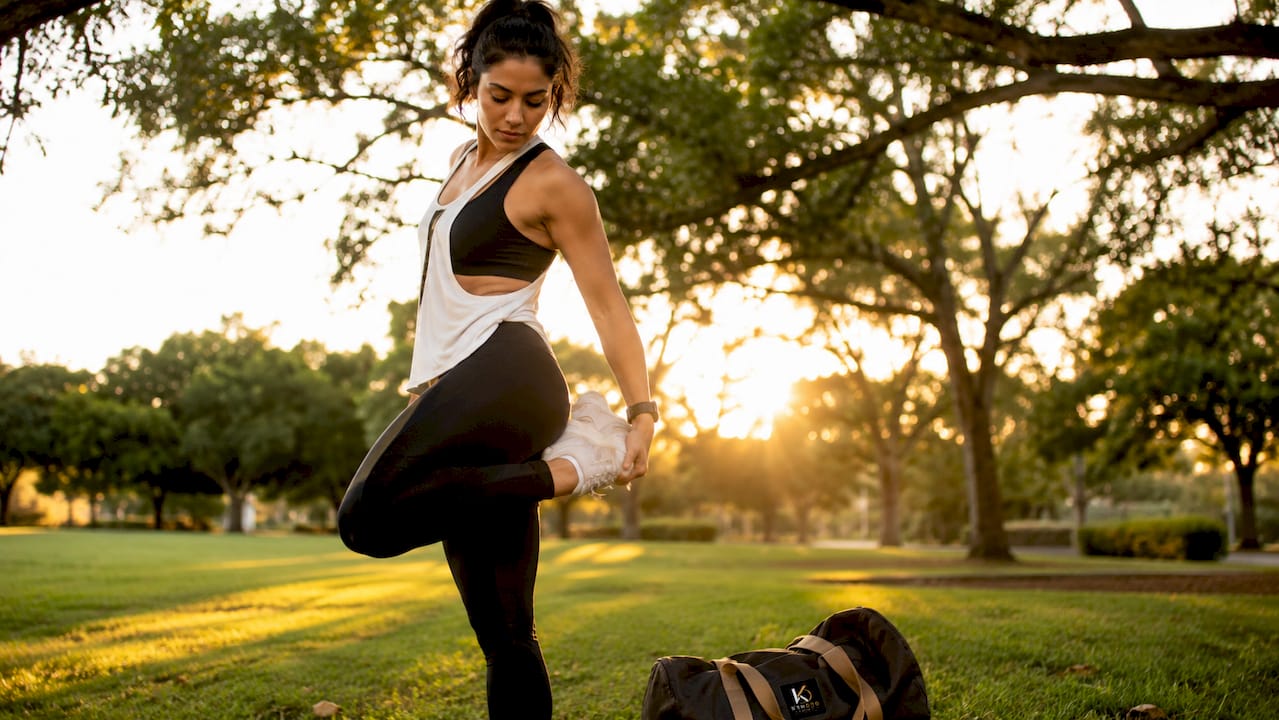
Stretch and recovery is the other critical fabric property. A fabric that stretches but does not recover will sag, bag, and lose its shape mid-workout. High-quality second-skin fabrics return to their original form after every movement, which keeps the garment snug without creating pressure points. This property is what separates a legging that stays put through a full squat session from one that slides down by the second set.
| Property | Moisture-wicking fabric | Absorbent fabric (cotton) |
|---|---|---|
| Sweat management | Pulls moisture away and spreads it to dry | Absorbs and holds moisture |
| Skin feel during exercise | Dry and light | Wet and heavy |
| Temperature regulation | Maintains stable microclimate | Allows heat and chill buildup |
| Shape retention | High stretch and recovery | Stretches but does not recover well |
| Best use | High-intensity training, daily wear | Low-intensity or casual use |
Pro Tip: Rub the fabric between your fingers before buying. High-quality second-skin fabric feels smooth and slightly cool to the touch. If it feels rough or stiff, it will not soften against your skin during movement.
How does garment construction affect comfort and movement?
Fabric quality alone does not create the second-skin experience. Seamless or flatlock seam construction reduces friction points and irritation compared to traditional raised seams, especially during high-motion activities like running, cycling, and yoga. A standard sewn seam creates a ridge that rubs against skin repeatedly. Over a 45-minute workout, that repetition causes real discomfort.
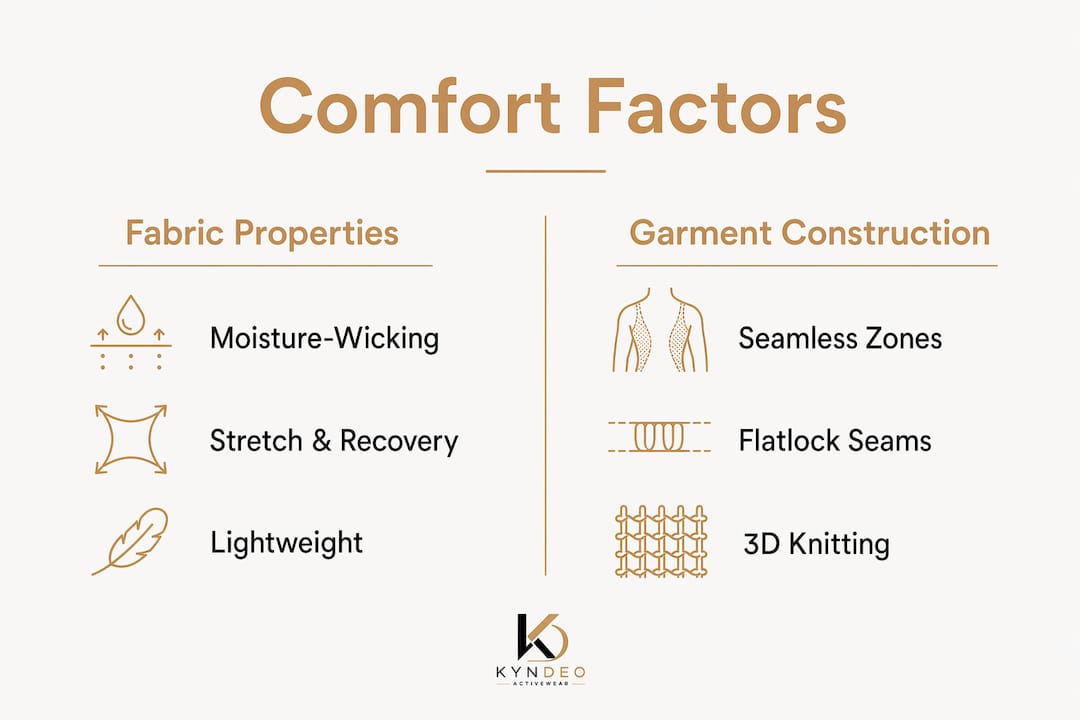
Seamless 3D knitting technology takes this further by integrating performance zones directly into the garment structure. Mesh panels land where you need airflow. Compression zones land where you need support. The garment functions as a system rather than a flat piece of fabric cut and stitched together. That engineering is what makes a well-built piece feel intentional from the first wear.
Seam placement is just as important as seam style. Friction zones like the underarms and inner thighs require targeted seam engineering because those areas experience the most movement and contact. Even a seamless garment can cause chafing if the edge or binding lands directly on a high-friction zone. Good construction maps seams away from these areas by design.
Here is what to look for in well-constructed second-skin activewear:
- Flatlock or bonded seams that lie flat against the skin with no raised ridge
- Ergonomic seam placement that routes stitching away from the inner thigh, underarm, and waistband pressure zones
- Gentle compression panels that support muscles without cutting off circulation
- Elastic-free waistbands or wide, soft waistbands that stay put without digging in
- Mesh or ventilation zones placed at the back of the knee, underarm, or upper back for airflow
Pro Tip: Turn the garment inside out before buying. If you can feel the seams with your fingertips, you will feel them during a workout. Flat, nearly invisible seams are the standard for true second-skin construction.
What makes the right fit for second-skin activewear?
Fit is the final factor that determines whether a garment actually performs like a second skin. The ideal fit allows a full range of motion without fabric pulling, bunching, or shifting out of place. A garment that fits well in a standing position but rides up during a lunge is not a second-skin fit. It is just a tight fit.
The movement test is the most reliable way to assess fit before committing to a piece. Use this sequence:
- Deep squat. Lower into a full squat and hold for three seconds. The waistband should stay in place and the fabric should not go sheer.
- Arm circles. Raise both arms overhead and rotate them in full circles. The hem of a top or jacket should not lift above the waistband.
- Side lunge. Step wide to one side. The inner thigh seam should not pull or restrict the movement.
- Forward fold. Bend forward from the hips. Leggings should not gap at the waistband or pull away from the lower back.
- Seated position. Sit down fully. The waistband should not roll or dig into the abdomen.
Cut differences between men’s and women’s activewear also affect fit quality. Women’s pieces are typically cut with a higher rise, curved hip seams, and shorter inseams to accommodate body proportions. Men’s pieces prioritize a straight cut through the hip and thigh with longer inseams. Wearing a piece cut for a different body shape creates fit problems that no amount of size adjustment will fix. Kyndeoactivewear’s women’s activewear and men’s activewear collections are each cut to match the movement patterns and proportions of the wearer.
Poor fit has real consequences. Bunching fabric at the knee distracts your focus mid-rep. A waistband that rolls down requires constant readjustment. Tight armholes restrict your shoulder mobility. None of these are minor inconveniences. They interrupt your training and reduce the quality of your movement.
What are the practical benefits of second-skin activewear for daily life?
Comfort leads to better movement and performance, and second-skin activewear delivers that comfort across every context, not just the gym. The benefits extend from your first morning workout to your last errand of the day.
- Heat and sweat management. Moisture-wicking fabrics keep your body temperature stable during training, which reduces fatigue and keeps you focused on the work.
- Freedom of movement. A body-mapped fit means the fabric moves with you, not against you, whether you are in a Pilates class, on a trail run, or walking between meetings.
- Confidence through consistency. When your clothing stays in place, you stop thinking about it. That mental freedom is real. Second-skin activewear reduces the need for readjustment, which keeps your attention on your activity.
- Multi-context versatility. A well-fitted, well-constructed piece transitions from a gym session to a coffee run without looking out of place. The studio-to-street function is built into the garment, not added as an afterthought.
- Wardrobe efficiency. Pieces that work everywhere reduce the number of outfit changes in your day. Coordinated activewear leggings and matching sets make building a functional wardrobe straightforward.
The practical case for second-skin activewear is not about aesthetics alone. It is about clothing that performs its function so well that it disappears into your day. Second-skin garments with gentle compression provide support during diverse activities like yoga and Pilates while remaining comfortable enough for hours of casual wear. That range is what makes them worth the investment.
Key Takeaways
True second-skin activewear requires moisture-wicking fabric, high stretch and recovery, and strategic seam placement working together to deliver comfort, support, and freedom of movement.
| Point | Details |
|---|---|
| Fabric technology matters most | Moisture-wicking, stretch-and-recovery fabrics outperform cotton for comfort during training. |
| Seam construction is engineering | Seamless or flatlock seams mapped away from friction zones prevent chafing and irritation. |
| Fit requires a movement test | Squat, lunge, and arm circle tests reveal whether a garment truly moves with your body. |
| Cut must match body shape | Men’s and women’s pieces are cut differently; wearing the right cut prevents fit problems. |
| Versatility is built in | Second-skin garments support training and daily wear without requiring an outfit change. |
The real reason fit beats everything else
I have worn activewear across every price point and every construction style, and the single clearest lesson is this: fabric quality without the right fit is wasted engineering. I have had pieces made from excellent moisture-wicking fabric that bunched at the knee every time I moved into a lunge. I have had seamless garments with beautiful construction that sat wrong at the waist and required constant pulling. The fabric did everything it was supposed to do. The fit undid all of it.
The fitness industry spends a lot of energy talking about fabric innovation, and the science is real. But most people buy activewear based on how it looks on a hanger or a model, not how it moves on their own body. That gap is where most activewear disappointment comes from. The movement test is not optional. It is the only honest way to know whether a piece will support you or distract you.
My advice is to prioritize fit first, then fabric, then everything else. A piece that passes the squat and lunge test in the right fabric will serve you well across every context. Kyndeoactivewear’s approach of building for motion from the ground up reflects exactly this priority. The goal is clothing that feels intentional from the first wear and keeps feeling that way through every session.
— Bryan
Kyndeoactivewear’s collection built for second-skin comfort
Kyndeoactivewear designs every piece around the principles that make second-skin activewear work: stretch-fitted cuts, moisture-managing fabrics, and construction built for real movement.
Whether you train hard, move often, or need clothing that works from the gym to the street, Kyndeoactivewear has pieces built for that pace. The women’s activewear collection and men’s activewear collection each feature body-mapped fits, coordinated sets, and fabrics that stay with you through every movement. Shop by activity, by set, or by style and find the pieces that feel like they were made for your body and your day.
FAQ
What is second-skin activewear?
Second-skin activewear is clothing engineered for a close, body-mapped fit using lightweight, flexible, and moisture-wicking fabrics that move with the body without restricting or irritating the skin.
How do I know if activewear fits like a second skin?
Perform a deep squat and arm circles while wearing the garment. If the fabric stays in place, does not go sheer, and does not pull or bunch, the fit qualifies as second-skin.
Why does moisture-wicking fabric matter for comfort?
Moisture-wicking fabric pulls sweat away from your skin and spreads it to evaporate quickly, maintaining a dry, stable microclimate that prevents cling, irritation, and the discomfort of wet fabric during exercise.
Does seamless construction actually reduce chafing?
Yes. Seamless knitting eliminates seam bulk and friction at high-contact zones, which directly reduces chafing during repetitive, high-motion activities like running, cycling, and yoga.
Can second-skin activewear be worn outside the gym?
Second-skin activewear is built for versatility. Its close fit, clean lines, and moisture-managing fabric make it appropriate for training, travel, errands, and casual outings without requiring a change of clothes.