

Workout clothing directly shapes athletic performance through both physical mechanics and psychological readiness, making apparel a functional training tool, not just a style choice. The right gear manages heat, supports muscles, and shifts your mindset before you lift a single weight or run a single mile. This guide explains why workout clothes affect performance using 2026 research, covers the best fabrics for workouts, and gives you a practical framework for building a wardrobe that works as hard as you do.
Why workout clothes affect performance physically
The impact of clothing on performance starts at the skin level. Fabric, fit, and construction each play a direct role in how your body moves, regulates temperature, and manages fatigue.
Moisture-wicking fabrics and temperature control
Moisture-wicking fabrics maintain lower skin temperature and reduce perceived exertion compared to cotton during moderate to high-intensity workouts in warm conditions. That matters because overheating forces your cardiovascular system to work harder, pulling resources away from your muscles. Synthetic materials like polyester and nylon pull sweat away from the skin and allow it to evaporate quickly. Cotton absorbs moisture and holds it, creating a wet, heavy layer that raises skin temperature and increases discomfort.
Compression clothing and muscle support
Compression garments are the most studied category in performance enhancement clothing. The Adidas Techfit Endurance Suit, for example, improves running economy by over 1%, which translates to roughly 48 seconds in a near-two-hour marathon through pelvis and hip stabilization. That is not a marginal gain. It is the difference between a podium finish and a personal best for competitive runners.
Compression also affects how you feel during a session. Compression garments improve users’ perception of exertion and recovery, enhancing mind-muscle connection and movement intentionality even when physiological differences are minimal. You feel more supported, so you push harder.
Fit, breathability, and movement efficiency
Fit is a performance variable. In elite ski jumping, suit size correlates with a 5.8-point increase in performance and 3.2 meters more jump length per centimeter of circumference tolerance. That level of precision does not apply to your morning run, but the principle does. Clothes that restrict movement reduce your range of motion and force compensatory patterns that waste energy and increase injury risk.
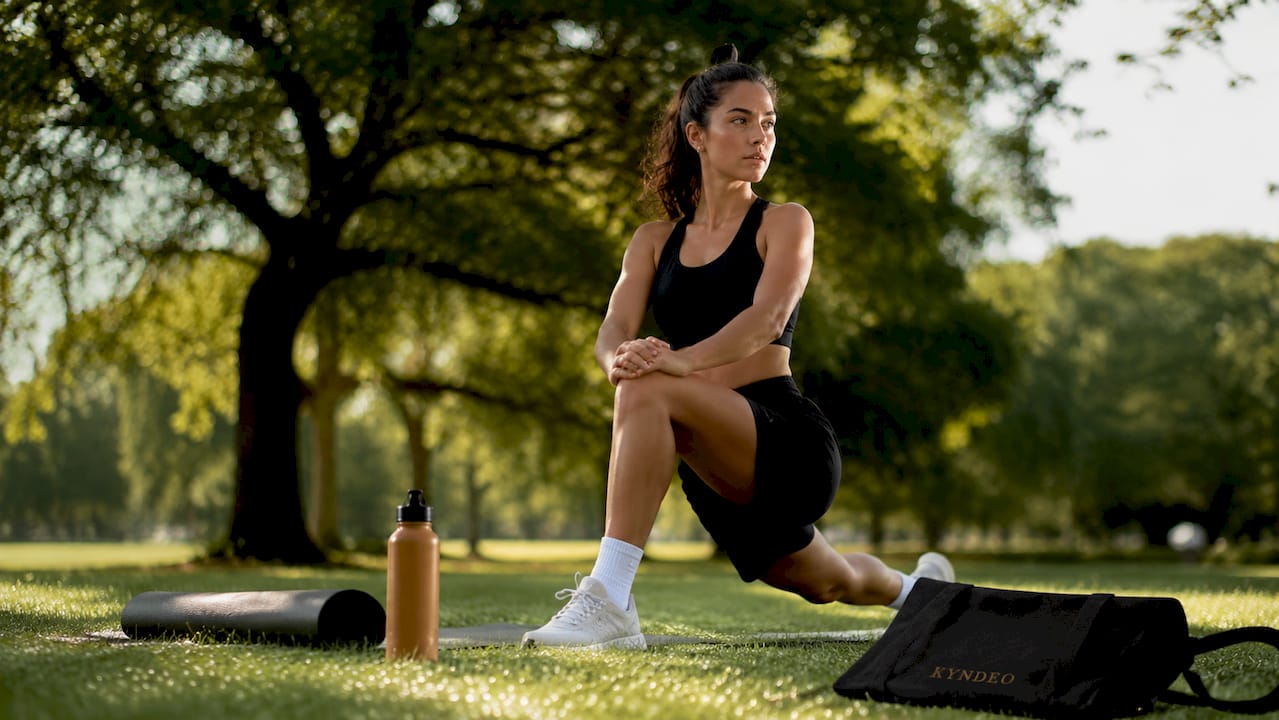
Comfort in sportswear depends on fabric breathability, fit, heat and moisture transfer, and ergonomic design, all of which directly affect motivation and training efficiency. Racerback designs, for instance, enhance scapular mobility in strength training compared to parallel-strap tops. These are not aesthetic details. They are technical decisions.
Key physical factors to prioritize when selecting workout attire:
- Moisture management: Choose polyester, nylon, or merino wool blends over 100% cotton for any high-output session.
- Compression level: Light compression works for most training. Medical-grade compression suits specific recovery or endurance needs.
- Range of motion: Test full squat depth, overhead reach, and lateral movement before buying.
- Seam placement: Flat-lock seams prevent chafing during long runs or high-rep training.
- Weight: Lighter fabrics reduce drag and heat buildup during cardio-focused workouts.
Pro Tip: Wash performance fabrics inside out in cold water without fabric softener. Softener coats the fibers and destroys moisture-wicking properties after just a few washes.
How does workout clothing affect psychological performance?
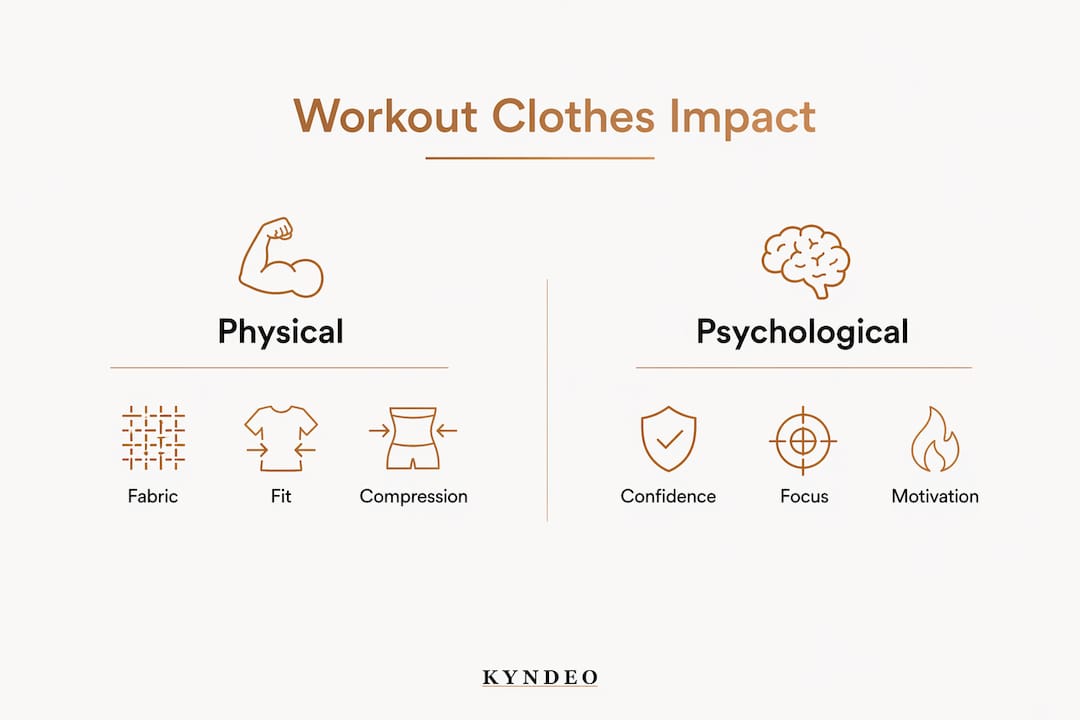
Workout clothing is an environmental factor influencing cognitive and emotional readiness beyond physical function. Sports psychologists call this mechanism “enclothed cognition,” the idea that the symbolic meaning of clothing and its physical feel combine to change how you think and behave.
Enclothed cognition in sportswear
Wearable workout gear triggers enclothed cognition, increasing confidence and focus, and shifting mindset from casual to intentional training. When you put on gear that looks and feels like performance clothing, your brain registers the shift. You stop thinking like someone who is about to exercise and start thinking like an athlete. That mental transition produces real output differences in focus, effort, and endurance.
Research confirms the specifics. Garment fabric color significantly affects intrinsic motivation, and fit influences self-confidence independently, both with statistical significance at p<0.001. These are not soft, anecdotal claims. They are measurable psychological effects tied to specific design variables.
“Clothing is not just worn on the body. It is processed by the mind. The gear you choose before a workout sets the cognitive frame for everything that follows.”
Psychological benefits of wearing purpose-built workout attire:
- Confidence: Clothes that fit well and look intentional increase self-assurance before and during training.
- Focus: Gear associated with athletic identity reduces mental drift and keeps attention on the session.
- Motivation: Color and style choices that resonate personally increase intrinsic drive to perform.
- Commitment: Changing into dedicated workout clothes signals to your brain that training time is separate from rest time.
Some athletes treat their workout wardrobe the same way they treat their activewear for life philosophy. The clothes you wear daily shape how you move through the world. The clothes you train in shape how you perform in it.
Compression vs. loose-fit: which clothing type performs better?
The right clothing type depends on your training modality. No single style wins across every workout. Here is how the main categories compare.
| Clothing Type | Best For | Key Benefit | Watch Out For |
|---|---|---|---|
| Compression | Running, cycling, recovery | Muscle support, reduced fatigue perception | Overheating in high-humidity environments |
| Loose-fit | Strength training, yoga, HIIT | Full range of motion, airflow | Fabric catching on equipment |
| Thermal layers | Cold-weather training, outdoor runs | Core temperature retention | Overheating once intensity rises |
| Cotton | Low-intensity, casual movement | Softness, accessibility | Poor moisture management, heavy when wet |
| Synthetic blends | All-purpose training | Moisture-wicking, durability | Can retain odor without proper care |
Synthetic blends outperform cotton in nearly every high-output scenario. Cotton is comfortable at rest but becomes a liability during a 45-minute run or a heavy lifting session. Compression garments deliver the most documented performance benefits for endurance athletes, while loose-fit synthetic gear suits strength training and yoga better because it allows unrestricted movement without the tightness that can feel restrictive during loaded squats or deep stretches.
Pro Tip: For strength training, choose a racerback or sleeveless top paired with fitted but non-compressive shorts or joggers. This combination maximizes shoulder mobility and keeps fabric out of the way during pulls and presses.
For yoga specifically, a sleeveless yoga top built from four-way stretch fabric allows full expression of every pose without bunching or riding up. The difference between a session in cotton and one in technical fabric is felt within the first 10 minutes.
What mistakes kill the performance benefits of workout gear?
Most athletes leave performance on the table not because they bought the wrong gear, but because they use it wrong. These are the most common mistakes.
-
Wearing the wrong fit. Clothes that are too loose bunch and catch. Clothes that are too tight restrict blood flow and range of motion. Poor quality gear creates friction interruptions like rolling waistbands and trapped sweat, which break rhythm and lower endurance during workouts. Test fit before you commit.
-
Saving your best gear for competition only. Performance apparel requires repeated use during regular training to deliver full benefits through sweat management, muscle support, and ergonomic function. Wearing your best gear only on race day means you never adapt to it. Train in it consistently.
-
Ignoring climate and layering. Wearing a single heavy layer for an outdoor winter run is as problematic as wearing no layer at all. A moisture-wicking base layer paired with a lightweight thermal mid-layer handles temperature swings far better than one thick cotton hoodie.
-
Overloading on mismatched pieces. A streamlined wardrobe of 4–5 versatile pieces optimized for specific workouts outperforms a drawer full of mismatched gear. More is not better. Purposeful is better.
-
Neglecting garment care. Performance fabrics degrade with improper washing. Fabric softener, high heat, and tumble drying break down the fibers that make technical gear work. Follow care labels precisely.
How to choose and maintain workout clothes for maximum results
Building a workout wardrobe that actually improves exercise gear and results requires a focused approach. Start with your primary training modality and build outward.
- Identify your top two or three workout types. Running, lifting, and yoga each demand different fabric weights, fits, and constructions. Buy for your actual training, not your aspirational training.
- Prioritize fabric technology over brand aesthetics. Look for four-way stretch, moisture-wicking certification, and flat-lock seams as baseline requirements.
- Invest in two to three complete sets. Rotating gear allows proper washing between sessions and extends garment life significantly.
- Wash in cold water, no fabric softener, and air dry. This single habit extends the performance life of technical fabrics by months.
- Replace gear when it loses function, not just appearance. Compression that no longer compresses, or moisture-wicking fabric that holds sweat, is no longer performance clothing. It is just clothing.
The clothing influence on exercise is real and measurable. Treating your workout wardrobe as technical equipment rather than casual wear changes how you select, use, and maintain it.
Key takeaways
Workout clothing shapes both physical output and mental readiness, making fabric, fit, and consistent use the three non-negotiable pillars of performance-driven apparel.
| Point | Details |
|---|---|
| Fabric determines thermoregulation | Moisture-wicking synthetics outperform cotton by keeping skin temperature lower during intense sessions. |
| Compression delivers measurable gains | Compression gear like the Adidas Techfit Suit improves running economy by over 1%, with documented time savings. |
| Enclothed cognition is real | Garment color and fit independently affect motivation and self-confidence at statistically significant levels. |
| Fit is a performance variable | Poor fit causes friction, breaks rhythm, and reduces endurance during training sessions. |
| Train in your best gear consistently | Performance benefits from quality apparel accumulate through regular use, not just competition days. |
Bryan’s take: gear is training equipment, full stop
I have watched athletes spend thousands on coaching, supplements, and gym memberships while training in a cotton t-shirt that was soaked through by the second set. The logic does not add up. If you treat your apparel as an afterthought, you are leaving a real, documented performance variable completely unmanaged.
What I have found over years of paying attention to this is that the athletes who train consistently well almost always have a deliberate relationship with their gear. They know what they wear for what session. They wash it right. They replace it when it stops functioning. That is not obsession. That is the same logic you apply to your shoes or your equipment.
The psychological piece is the one most people underestimate. Putting on gear that fits well and looks intentional changes how you walk into a session. You are not just dressing for the gym. You are signaling to yourself that this hour matters. That signal compounds over hundreds of sessions.
My advice is simple. Stop treating workout clothes as a budget line item. Treat them as training equipment. Buy fewer pieces, buy better, and use them every session. The return on that investment shows up in your consistency, your focus, and eventually, your results.
— Bryan
Built for motion: Kyndeoactivewear has you covered
Everything covered in this article, from moisture management to fit precision to the psychological lift of wearing gear that looks and feels right, is exactly what Kyndeoactivewear is built around. Kyndeoactivewear is a Black-owned activewear brand designed for the pace of real life, from the gym floor to the street, without sacrificing performance or clean design.
Whether you are building your first performance wardrobe or upgrading what you already have, Kyndeoactivewear has collections built for movement. Browse the women’s activewear collection for performance sets built from technical fabrics with ergonomic fits. Check out the men’s activewear collection for gear that moves with you through every session. Every piece is designed to feel intentional from the first wear.
FAQ
Does fabric type really affect workout performance?
Yes. Moisture-wicking fabrics maintain lower skin temperature and reduce perceived exertion compared to cotton during moderate to high-intensity workouts, directly impacting endurance and comfort.
What is enclothed cognition in fitness?
Enclothed cognition is a documented psychological phenomenon where wearing purpose-built workout gear increases confidence and focus, shifting your mindset from casual to intentional training and improving performance output.
Do compression garments actually improve performance?
Compression garments improve perception of exertion and recovery, and specialized compression suits like the Adidas Techfit have been shown to improve running economy by over 1%, equating to roughly 48 seconds in a marathon.
How often should i replace workout clothes?
Replace performance gear when it loses its functional properties, such as compression that no longer supports or moisture-wicking fabric that retains sweat, regardless of how the garment looks visually.
Is a bigger workout wardrobe better for performance?
No. A streamlined set of 4–5 versatile pieces optimized for your specific workouts outperforms a large collection of mismatched gear. Purposeful selection beats volume every time.