

Yoga training clothing is defined as performance apparel engineered to move with your body through every fold, inversion, and balance your practice demands. The right gear combines four-way stretch fabrics, moisture management, and a fit that stays put without constant adjustment. Polyester-spandex and nylon-spandex blends are the industry standard for active yoga styles in 2026. Getting this right is not about spending more. It is about knowing what to look for before you buy.
What fabrics work best for yoga training clothing?
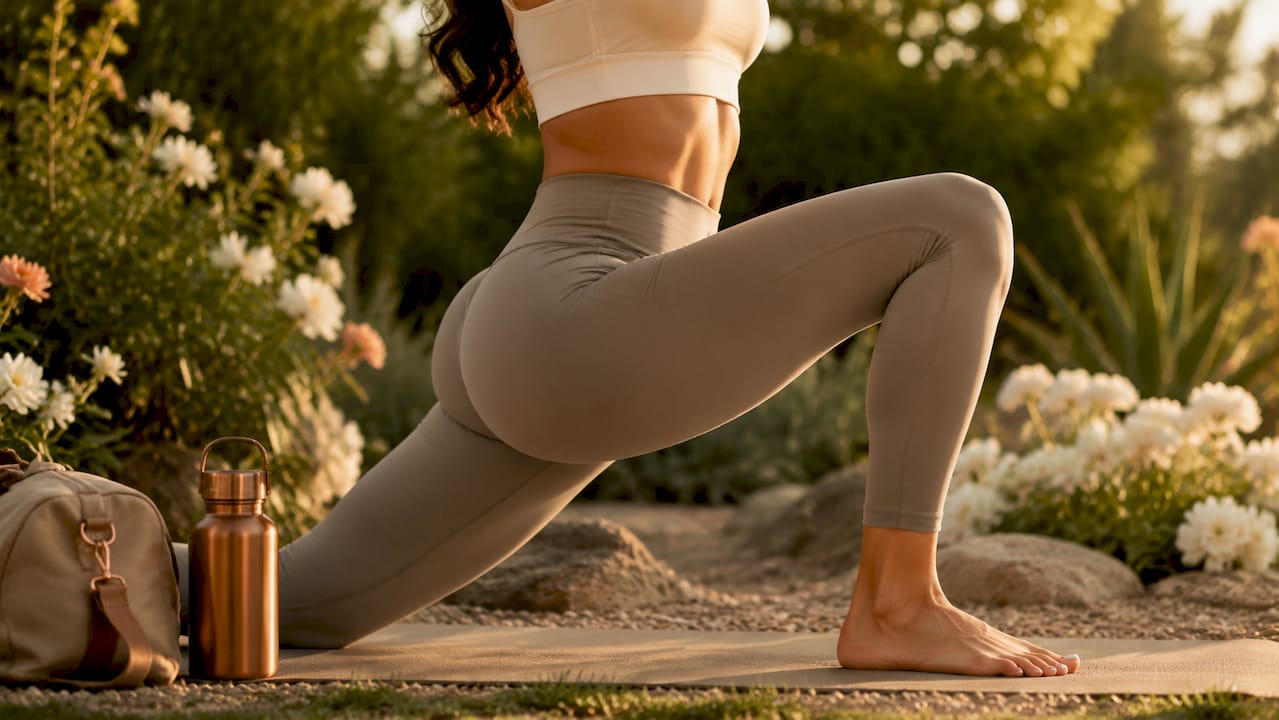
The fabric is the foundation of every yoga outfit. Four-way stretch fabric stretches both horizontally and vertically, allowing unrestricted movement in poses like warrior III or a deep pigeon stretch. That bidirectional stretch is what separates performance yoga apparel from regular athletic wear.
Standard blends run 80–90% synthetic fiber with 10–20% spandex. That ratio delivers the stretch you need while keeping the garment light and shape-retaining after repeated washes. Going below 10% spandex typically means the fabric loses recovery and starts to sag at the knees and seat.
Polyester vs. nylon blends
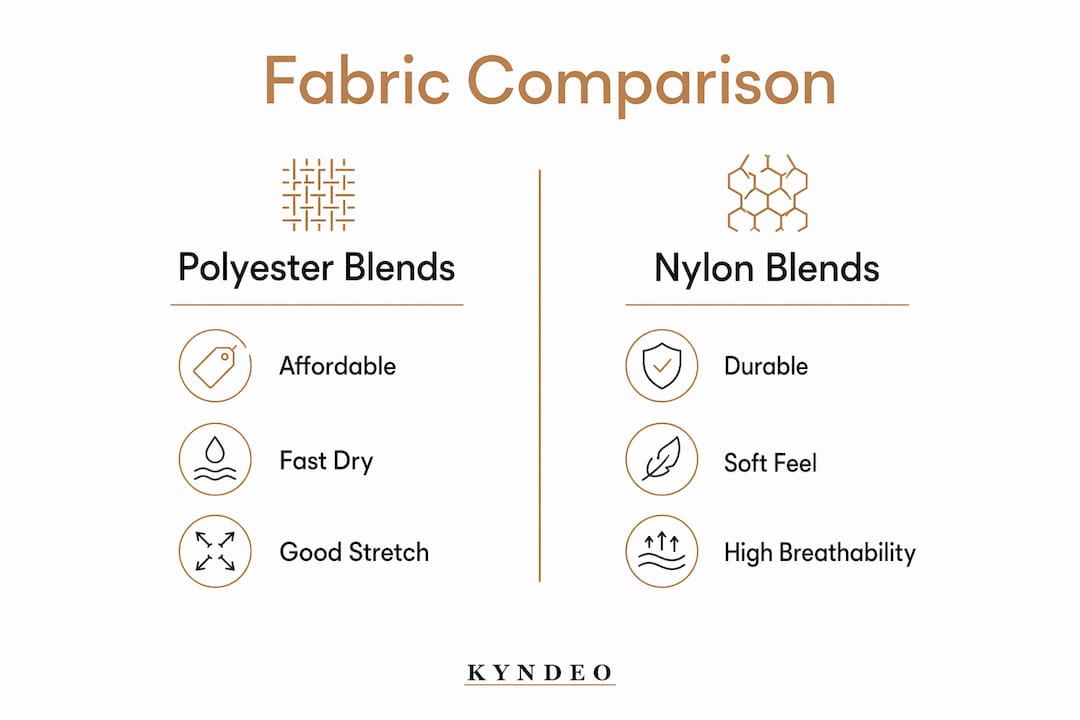
Polyester-spandex blends are the more affordable option and dry fast. They handle sweat well in moderate-intensity classes like Hatha or restorative yoga. Nylon-spandex blends cost more but offer a softer, second-skin feel with better durability. Nylon-spandex retains shape after washing and provides moderate compression for muscle support without restricting movement. For Power Yoga or Vinyasa, nylon is worth the upgrade.
Why cotton falls short
Cotton absorbs sweat, becomes heavy, and loses structural shape during active sessions. It traps moisture against the skin, which leads to chafing and discomfort during sustained movement. Cotton is fine for a casual stretch or a slow Yin class, but it is not built for motion in a heated studio.
Seams and opacity matter too
Flatlock seams lie flat against the skin and eliminate the ridges that dig into pressure points during seated or prone poses. Fabric opacity is equally important. A legging that turns sheer in a forward fold creates a distraction you do not need mid-class. Always check opacity before buying by doing a quick bend test in the fitting room.
Pro Tip: Hold the fabric up to a light source and stretch it slightly. If you can see your hand clearly through it, the legging will not hold up in a deep forward fold.
How does fit and design affect yoga clothing performance?
Fit is where most yoga apparel fails. A fabric can be technically perfect and still ruin a practice if the waistband rolls, the top rides up, or the shorts creep during a lunge sequence.
High-waisted leggings reduce mid-practice waistband adjustments by over 90% compared to low-rise pants. That statistic reflects a real experience: low-rise waistbands shift constantly during forward folds and inversions, pulling your attention away from your breath and alignment. High-rise styles cover the core and stay anchored through every transition.
Waistband construction
Wide, flat waistbands without hardware or thick seams offer abdominal support without digging in. Avoid waistbands with exposed elastic or thin bands that fold over under pressure. A well-constructed waistband on high-rise yoga pants should feel stable at the top of a headstand and invisible during a seated meditation.
Compression and breathability
Compression fabrics provide muscle support and reduce fatigue during longer sessions. The trade-off is breathability. High compression is useful for Power Yoga or Vinyasa but can feel restrictive in a slow Yin or restorative class. Match your compression level to your practice intensity.
| Feature | Best for | Avoid when |
|---|---|---|
| High-waisted leggings | Inversions, flows, core work | Very hot studios with no airflow |
| Compression fabric | Power Yoga, Vinyasa | Yin, restorative, or gentle yoga |
| Wide flat waistband | All styles | N/A — universally preferred |
| Fitted tops | Dynamic movement, inversions | Preference for loose layering |
| Sports bra only | Hot yoga, heated studios | Cold or outdoor practice |
Sports bras and fitted tops must balance support and breathability for comfort during dynamic practices. Underwire bras are discouraged because they dig into the ribcage during twists and prone backbends. A medium-support sports bra works for most yoga styles. Add a fitted tank for coverage and layering flexibility.
Pro Tip: Before your first wear, do a full sun salutation in your new gear at home. If anything shifts, rolls, or exposes skin, return it. No pose should require a wardrobe adjustment.
How does your yoga style change what you should wear?
Different yoga styles demand different fabric and fit features for comfort and performance. Wearing the wrong gear for your style is the most common mistake practitioners make. Buying by marketing buzzwords instead of matching clothing to practice type leads to discomfort and wasted money.
Here is how to match your wardrobe to your practice:
- Gentle yoga and Hatha: Soft cotton blends or brushed fabrics work well here. The pace is slow, sweat output is low, and comfort takes priority over moisture management. Loose-fitting pants and a relaxed top are appropriate.
- Power Yoga and Vinyasa: These styles require fast-drying, compressive synthetics. Polyester or nylon-spandex blends handle the sweat load and keep the fabric from clinging uncomfortably. Fitted leggings and a supportive top are the standard choice.
- Hot yoga: Shorts with a 4–5 inch inseam provide sufficient coverage and mobility in heated rooms. Minimal fabric reduces heat retention. A fitted sports bra or crop top keeps things light.
- Yin yoga: Cozy layers and grip socks support the long holds and relaxation postures in Yin practice. Bamboo or modal fabrics feel soft against the skin during extended floor work.
- Outdoor or humid-climate yoga: Bamboo and modal fabrics dry faster and prevent the trapped-moisture feeling in high-humidity environments. Cotton in 80–85% humidity becomes a cold, heavy problem within the first 15 minutes.
One detail most people overlook: bare thighs in hot yoga shorts reduce grip in arm-balance poses where your leg presses against your upper arm. High-waisted leggings improve traction and stability in those poses. If arm balances are part of your regular practice, leggings are the better call even in a warm room.
Yoga Mountain Studio experts also recommend avoiding stiff fabrics like denim that restrict deep breathing and movement. That advice sounds obvious, but plenty of people show up to beginner classes in rigid athletic pants that limit their range of motion from the first pose.
How to test yoga clothing before you buy
The movement test is the single most reliable way to evaluate yoga apparel before purchase. It reveals fit issues that no product description will tell you.
- Forward fold: Bend at the hips and reach toward the floor. Check whether the waistband rolls down or the top rides up and exposes your lower back.
- Deep squat: Drop into a full squat with feet flat. Look for fabric pulling tight across the hips or seams digging into the inner thigh.
- Overhead reach: Raise both arms fully overhead. Confirm the top stays in place and does not expose your midriff.
- Seated twist: Sit cross-legged and rotate your torso. Check for seam irritation along the hips and lower back.
- Lunge with a twist: Step into a low lunge and add a spinal twist. This tests the waistband stability and fabric recovery under full extension.
After the movement test, check fabric recovery. Pull the fabric away from your body and release it. It should snap back immediately. Fabric that stays stretched has lost its elasticity and will sag after a few washes. Performance fabrics retain shape after washing and provide moderate compression without restricting movement. That recovery quality is what separates a $30 legging from one that holds up for two years.
Loose and baggy clothing can interfere with breathing and movement. It also creates a real hazard during inversions, where excess fabric can fall over your face or catch on your hands. Fitted clothing prevents entanglement and lets your instructor see your alignment clearly.
Key Takeaways
The best yoga training clothing combines four-way stretch synthetic fabrics, a high-waisted supportive fit, and style-specific choices that match your practice intensity and environment.
| Point | Details |
|---|---|
| Fabric blend is foundational | Choose 80–90% polyester or nylon with 10–20% spandex for stretch and moisture management. |
| High-waisted fit reduces distraction | High-rise leggings stay anchored through inversions and flows without constant adjustment. |
| Match clothing to your yoga style | Hot yoga needs minimal, fast-drying fabrics; Yin yoga benefits from soft, cozy layers. |
| Always run the movement test | Forward fold, deep squat, and overhead reach reveal fit issues before you commit to a purchase. |
| Cotton is not built for active yoga | Cotton absorbs sweat, becomes heavy, and loses shape during sustained dynamic movement. |
What I have learned from years of wearing the wrong thing
The first time I showed up to a Vinyasa class in a cotton T-shirt, I spent the last 20 minutes of practice in a cold, soaked shirt that stuck to my back on every chaturanga. That experience taught me more about yoga apparel than any buying guide ever could.
The waistband lesson took longer to learn. I wore low-rise leggings for almost a year before switching to a high-rise style. The difference was immediate. No more pulling the waistband up between poses. No more distraction during standing sequences. The high-rise fit just disappeared into the background, which is exactly what good yoga clothing should do.
Layering is something most people figure out too late. A light zip-up or activewear hoodie for the warm-up and cool-down makes a real difference in how your body feels before and after the main practice. Muscles that stay warm transition better and recover faster.
My honest recommendation: start with two or three well-made basics before buying specialty pieces. A reliable pair of high-rise leggings, a supportive sports bra, and a fitted tank will cover 90% of yoga styles. Once you know your practice and your preferences, you can build from there with intention.
— Bryan
Build your yoga wardrobe with Kyndeoactivewear
Kyndeoactivewear designs activewear built for real movement, from the studio to the street. Every piece is made with the fabric performance and fit principles covered in this guide.
The women’s activewear collection includes high-rise leggings and shorts with moisture-wicking, stretchy fabrics built for flow, inversions, and everything in between. The men’s activewear collection brings the same performance focus with clean, versatile cuts that move with you. Kyndeoactivewear also offers matching activewear sets so you can build a complete, coordinated yoga wardrobe without the guesswork. Shop the collection and feel intentional from the first wear.
FAQ
What is the best fabric for yoga clothing?
Polyester or nylon blended with 10–20% spandex is the best fabric for yoga. These blends provide four-way stretch, moisture-wicking, and shape retention through repeated washes.
Are high-waisted leggings better for yoga?
High-waisted leggings are the preferred choice for most yoga styles. They stay anchored during inversions and flows, eliminating mid-practice waistband adjustments.
Can I wear cotton to yoga class?
Cotton works for slow or gentle yoga styles but is not recommended for active practices. It absorbs sweat, becomes heavy, and loses structural shape during sustained movement.
How do I know if my yoga clothes fit correctly?
Run the movement test: forward fold, deep squat, and overhead reach. If the waistband rolls, the top exposes skin, or seams dig in, the fit is wrong for yoga.
What should I wear to hot yoga?
Shorts with a 4–5 inch inseam and a fitted sports bra or crop top are the standard for hot yoga. Minimal, fast-drying synthetic fabrics keep you cool and comfortable in a heated room.