

Gym-to-street fashion is defined as the practice of styling functional activewear with structured, non-sport pieces to create outfits that move from a workout directly into everyday life. The industry term for this broader category is athleisure, and it has grown well beyond yoga pants at the grocery store. The athleisure market is projected to reach £793 billion by 2028, driven by a compound annual growth rate of 9.9%. That number reflects a real cultural shift: people want clothing that performs at the gym and looks intentional on the street. This guide breaks down exactly how to build that wardrobe, piece by piece.
What are the essential pieces to build a gym-to-street wardrobe?
The foundation of any gym-to-street wardrobe starts with 5–7 core adaptive pieces plus 3–4 structured, non-active layers. That ratio gives you enough flexibility to build multiple outfits without overfilling your closet. Each piece should work in at least two different settings: the gym, a coffee run, a casual meeting, or a weekend errand.
Your core activewear pieces should include:
- Neutral-toned high-waisted leggings. Black, slate gray, and ivory work with almost everything. Avoid loud prints for your base pieces.
- Moisture-wicking fitted tops and tanks. These draw sweat away from skin and stay comfortable for hours of wear beyond the gym.
- Joggers in a clean silhouette. Tapered joggers read as streetwear. Baggy, logo-heavy styles stay gym-only.
- A fitted hoodie or zip-up. A men’s activewear hoodie or a women’s pullover in a solid color layers easily over any base.
- A matching activewear set. Coordinated sets remove the guesswork from outfit building and look put-together with minimal effort.
Your structured layers should include:
- A tailored blazer in a neutral or earth tone.
- A trench coat or clean-lined overcoat for cooler weather.
- A denim or utility jacket as a casual middle layer.
Pro Tip: Buy your structured layers one size up from your activewear. The contrast between a fitted base and a slightly relaxed outer layer creates the visual balance that makes gym-to-street outfits work.
How to style activewear with structured pieces to elevate the look
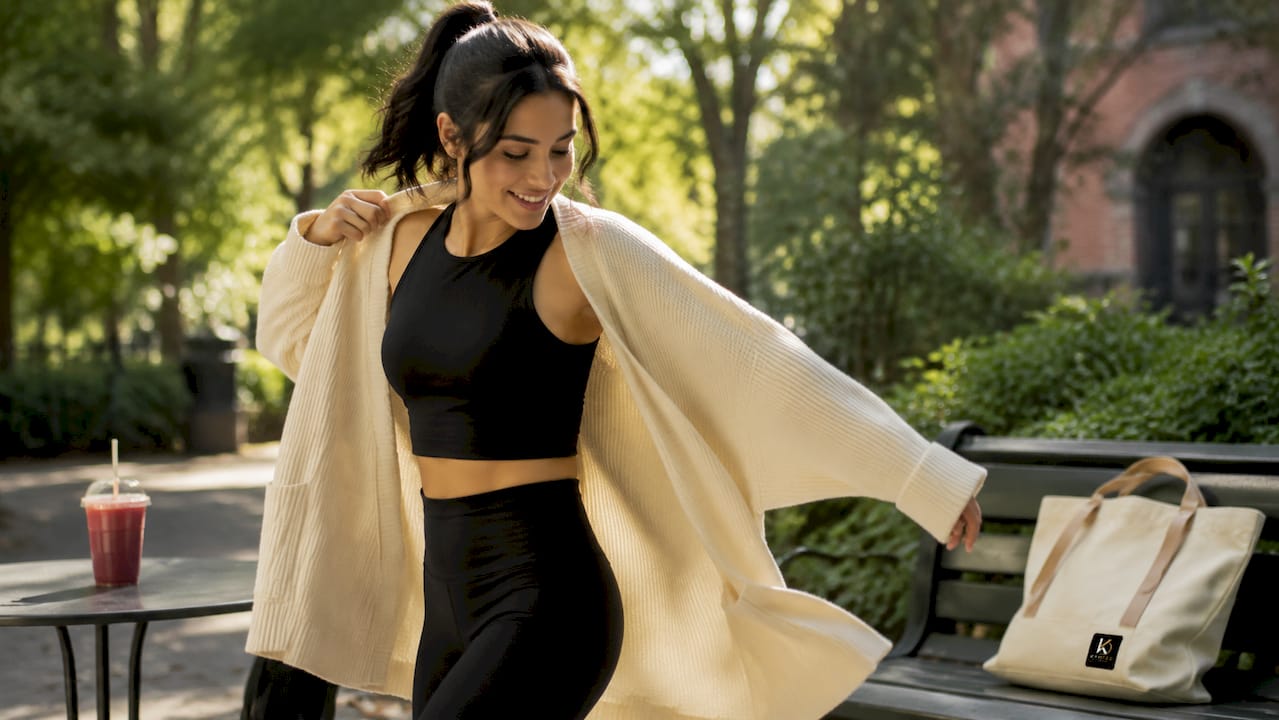
The core rule of gym-to-street styling is balance. Pairing fitted, stretchy activewear with structured pieces elevates the look from athletic to intentional. Without that contrast, an outfit reads as gym-only, no matter how expensive the pieces are.
Here are four outfit formulas that consistently work:
- Leggings plus blazer plus sneakers. This is the most reliable formula. The blazer does the heavy lifting. Keep the sneaker clean and low-profile.
- Joggers plus button-up shirt plus loafers. Mixing track pants with a button-down disrupts the athletic-only perception and creates a cool, effortless vibe. Roll the sleeves for a relaxed finish.
- Matching set plus trench coat plus crossbody bag. The coordinated set reads as a unit. The trench coat adds structure. The bag signals street, not gym.
- Fitted tank plus high-waisted joggers plus oversized denim jacket. The oversized jacket balances the fitted top. This formula works for brunch, errands, and casual Fridays.
Color coordination matters more than most people realize. Stick to a two-color base with one accent. Black leggings, a white tank, and a camel blazer is a complete palette. Adding a third bold color breaks the visual logic and pulls the outfit back toward gym territory.
The most common mistake is over-accessorizing with athletic gear. A gym water bottle, a sport armband, and a performance cap worn together signal that you came straight from a workout and did not plan the rest. Pick one athletic accessory and let the structured pieces carry the look.
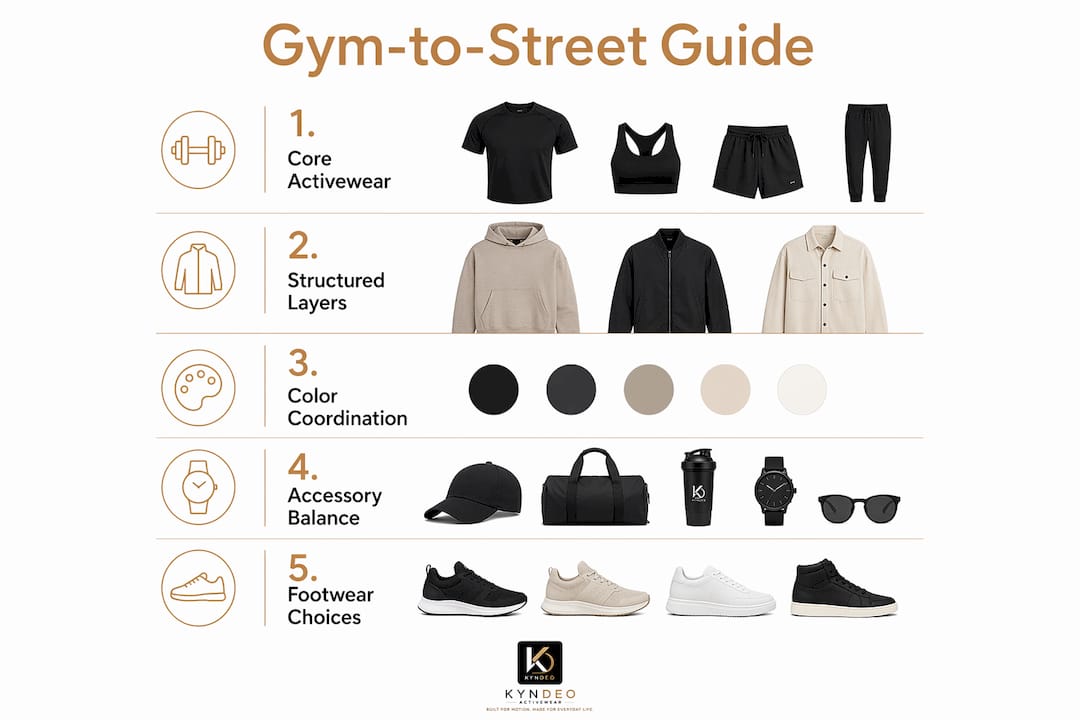
Pro Tip: Lay your outfit flat before you leave. If every single item is activewear, add one structured piece. If every item is structured, you have left the gym-to-street category entirely.
What accessories and footwear complete the gym-to-street outfit?
Accessories are where gym-to-street outfits either succeed or fall apart. The right footwear and bag shift the entire read of an outfit. The wrong ones undo every structured layer you added.
Footwear options that work:
- Low-profile lifestyle sneakers. Clean, minimal silhouettes in white, black, or neutral tones read as streetwear. Chunky performance running shoes with aggressive soles stay gym-adjacent.
- Loafers or mules. Pairing loafers with joggers or leggings is one of the most effective ways to signal that your outfit is intentional.
- Ankle boots. A slim ankle boot with leggings and a blazer is a complete street look with no gym association at all.
Bag choices that elevate the look:
- Crossbody bags and sling bags. A crossbody or sling bag keeps your hands free and reads as street-ready, not sport-ready.
- Structured totes. A clean tote in canvas, leather, or nylon works for commuting and casual outings.
- Mini backpacks. These sit in the middle ground between gym and street. Keep them minimal and avoid sport branding.
Additional accessories:
- Sunglasses. A classic frame in tortoise, black, or gold adds an editorial quality to any activewear-based outfit.
- Caps and beanies. A structured cap or a fitted beanie works. Avoid sport-branded performance caps with mesh panels.
- Simple jewelry. Layered chains or small hoop earrings add a personal touch without competing with the outfit.
Pro Tip: Leave the gym bag in the car or locker. Carrying a large sport duffel with a street outfit immediately signals that the transition was not planned. A compact activewear accessory that doubles as a street bag is the practical solution.
How to build and maintain a gym-to-street capsule wardrobe
A capsule wardrobe is a small, curated collection where every piece works with every other piece. For gym-to-street style, limiting your capsule to about 12 pieces prevents decision fatigue and forces you to buy only what actually transitions well. Each piece should serve at least three outfit scenarios before it earns a place in the rotation.
| Category | Recommended pieces | What to look for |
|---|---|---|
| Activewear bottoms | 3 | Neutral tones, tapered or fitted silhouette |
| Activewear tops | 3 | Moisture-wicking fabric, clean neckline |
| Structured layers | 2 | Blazer, trench coat, or utility jacket |
| Footwear | 2 | One lifestyle sneaker, one elevated option |
| Bags | 1–2 | Crossbody or structured tote |
Sizing precision is the detail most people skip. Too tight restricts movement and reads as gym-only. Too loose looks sloppy and loses the polished contrast that makes the style work. Compare garment measurements against your best-fitting clothes before buying, not just the size label.
Care matters as much as fit. Moisture-wicking and stretch textiles degrade faster when machine-dried on high heat. Wash activewear in cold water and air-dry to preserve both the fabric performance and the shape. A piece that loses its structure after three washes is not a capsule investment.
Evaluate each piece before adding it to your capsule by asking one question: can this work in three different settings without changing anything else? If the answer is no, it belongs in a single-use category, not your core rotation.
How does gym-to-street fashion reflect lifestyle changes in 2026?
Gym-to-street fashion is not a trend. It is a response to how people actually live. Commutes, gym sessions, coffee meetings, and errands now happen in the same morning. Clothing that can only serve one of those settings creates friction. Activewear that performs across all of them removes it.
Moisture-wicking and stretch textiles are the technical foundation of this shift. These fabrics draw sweat away from skin and maintain comfort through hours of wear. That performance quality is what allows a single outfit to move from a spin class to a lunch meeting without a full wardrobe change.
The cultural shift runs deeper than convenience. Wellness has become a visible identity marker. Wearing activewear in public communicates that fitness is part of your daily life, not a separate compartment. Mixing activewear into everyday fashion adds a cool, effortless quality that purely formal or purely casual dressing does not achieve. The boundary between gym and street has not just blurred. It has largely dissolved.
Kyndeoactivewear was built for exactly this reality. The brand’s matching activewear sets are designed to move from a workout to the street without requiring a style compromise. That philosophy reflects where the broader market is heading: clothing built for motion and life at the same time.
Key takeaways
Gym-to-street fashion works because structured layers, precise fit, and intentional accessories transform functional activewear into complete street outfits.
| Point | Details |
|---|---|
| Start with a core ratio | Build on 5–7 activewear pieces plus 3–4 structured layers for maximum outfit flexibility. |
| Balance is the styling rule | Pair fitted activewear with a tailored blazer or trench coat to shift the look from athletic to intentional. |
| Accessories decide the read | Choose lifestyle sneakers, crossbody bags, and minimal jewelry over sport-branded gear for street credibility. |
| Cap your capsule at 12 pieces | Limiting your wardrobe forces versatility and ensures every piece earns its place. |
| Fit precision is non-negotiable | Measure garments against your best-fitting clothes. Too tight or too loose breaks the look. |
What I have learned from building gym-to-street wardrobes that actually work
The biggest mistake I see is treating this as a styling trick rather than a wardrobe system. People buy one blazer, throw it over their gym clothes, and call it done. That works once. It does not work as a repeatable daily practice.
What actually works is building the capsule first and shopping second. Decide on your color palette before you buy anything. I use a three-color base: one dark neutral, one light neutral, and one warm accent. Every piece I add has to work within that palette. That constraint sounds limiting. It is actually freeing, because every combination works without thinking.
Fit is where most people leave money on the table. I have seen expensive activewear look cheap because the sizing was off by one size in the wrong direction. I have also seen budget pieces look sharp because the fit was exact. Measure before you buy. Every time.
The 12-piece capsule framework is not a hard rule, but it is a useful pressure test. If you cannot build at least five distinct outfits from your current collection, you have gaps. If you have 30 pieces and still feel like you have nothing to wear, you have redundancy without versatility. The goal is a small collection where everything connects.
Experiment within the framework. Swap the loafers for boots. Try the blazer over a matching set instead of just leggings. The formulas are starting points, not ceilings.
— Bryan
Kyndeoactivewear’s collection for gym-to-street style
Kyndeoactivewear carries the pieces that make this wardrobe system work from day one. The women’s activewear collection includes leggings, tanks, and coordinated sets built for movement and street wear in equal measure. The men’s activewear collection covers joggers, hoodies, and performance tops designed to pair with structured layers.
Every piece is movement-ready and styled to transition without effort. Kyndeoactivewear is a Black-owned brand built on the belief that your activewear should work as hard as you do, at the gym and everywhere after it. Shop the sets, build your capsule, and wear it with intention.
FAQ
What is gym-to-street fashion?
Gym-to-street fashion is the practice of styling activewear with structured, non-sport pieces to create outfits that work beyond the gym. The broader industry term is athleisure.
How many pieces do I need for a gym-to-street wardrobe?
A capsule of about 12 pieces works best: 5–7 core activewear items plus 3–4 structured layers, with 1–2 footwear options and a bag.
What is the most important styling rule for gym-to-street outfits?
Balance is the core rule. Pair fitted, stretchy activewear with a structured piece like a blazer or trench coat to shift the look from athletic to intentional.
What shoes work best for gym-to-street outfits?
Low-profile lifestyle sneakers, loafers, mules, and ankle boots all work well. Avoid chunky performance running shoes with aggressive soles, which keep the look gym-adjacent.
How do I keep activewear looking good longer?
Wash activewear in cold water and air-dry to preserve moisture-wicking performance and fabric shape. High-heat machine drying degrades stretch textiles faster.