

Build a simple activewear outfit with KYNDEO
Start with pieces you already wear, then fill one gap at a time. Choose a small color palette and compare product photos, fabric details and measurements before adding another item.
- Fitted bottom and relaxed layer: pair leggings with a hoodie for a casual outfit.
- Everyday separates: combine joggers with a tee, choosing colors that work with your existing shoes.
- Carry what you need: compare the dimensions of our gym and duffle bags with the items you usually pack.
A coordinated color does not make two pieces a packaged set. Check each listing for what is included, and choose technical features to suit your activity.
TL;DR:
- Minimalist athletic style combines versatile, performance-oriented pieces in neutral colors suitable for gym and everyday wear. Building a small capsule with key items like leggings, tanks, and hoodies maximizes outfit options while prioritizing durability and fit. This approach emphasizes simplicity, functionality, and intentional wardrobe choices over trend-driven or branded garments.
Minimalist athletic style is a gym-to-street wardrobe built from a small set of versatile, performance-first pieces in a neutral palette. Every item earns its place by working across multiple settings: a training session, a coffee run, a travel day, a casual meeting.
TL;DR capsule — Typically 7 key pieces cover all needs:
- Fitted performance leggings (1–2 pairs, neutral)
- Seamless or structured tank (2)
- Lightweight hoodie or zip jacket (1)
- Tapered jogger (1)
- Clean, low-profile sneakers (1 pair)
- Minimal crossbody bag or tote (1)
- Visor or cap (1)
Start here:
- Audit what you already own. Pull out every piece you’ve worn in the last 30 days.
- Pick a palette: black, cream, taupe, or olive. Choose two anchors and one accent.
- Buy one anchor piece first. A well-fitted legging or a structured tank sets the tone for everything else.
Table of Contents
- What minimalist athletic style actually means
- The five principles that define minimalist athletic style
- Building your minimalist athletic capsule: the essential pieces
- How to build your minimalist athletic wardrobe step by step
- Outfit formulas you can copy right now
- Materials, fit, and care: what keeps pieces performing
- Common mistakes and real downsides to watch for
- How Kyndeoactivewear implements minimalist athletic style
- Key Takeaways
- Why minimalist athletic style works in real life
- Kyndeoactivewear makes the capsule easy to build
- Sources and further reading
- FAQ
What minimalist athletic style actually means
Minimalist athletic style blends simplicity, functionality, and versatility. It is not just “wearing less.” It is a deliberate approach to activewear that prioritizes clean lines, neutral colors, and durable, moisture-wicking materials over seasonal graphics and trend-driven silhouettes.
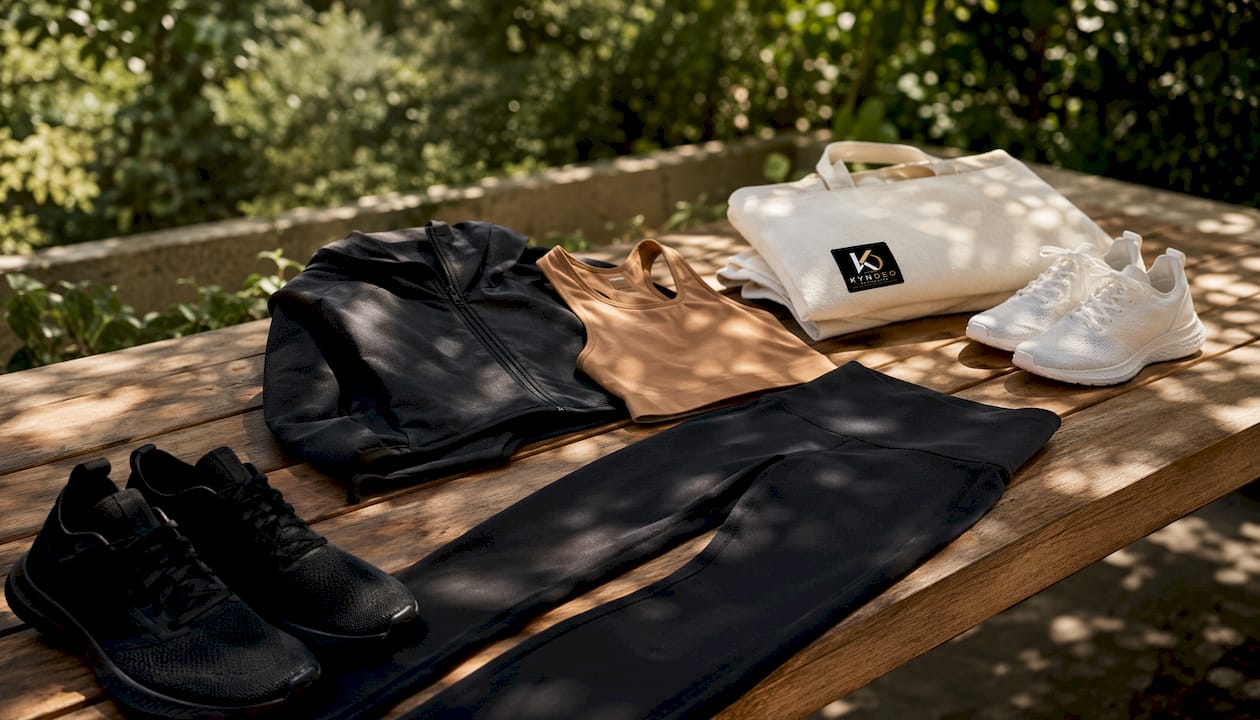
The shift toward this aesthetic is a structural correction driven by athletes who favor disciplined, multipurpose garments over flashy logos. Buyers increasingly prefer pieces that earn their place through utility and durability rather than branding. That preference has reshaped how activewear is designed, marketed, and worn.
The practical result: a wardrobe that is smaller, more intentional, and more reliable. You spend less time deciding what to wear and more time moving.
The five principles that define minimalist athletic style
These are the non-negotiables. Every piece in a minimalist athletic wardrobe should pass all five.
1. Versatility across settings. A piece must work in at least two distinct contexts: training and daily life. If it only functions in the gym, it fails the minimalist test.
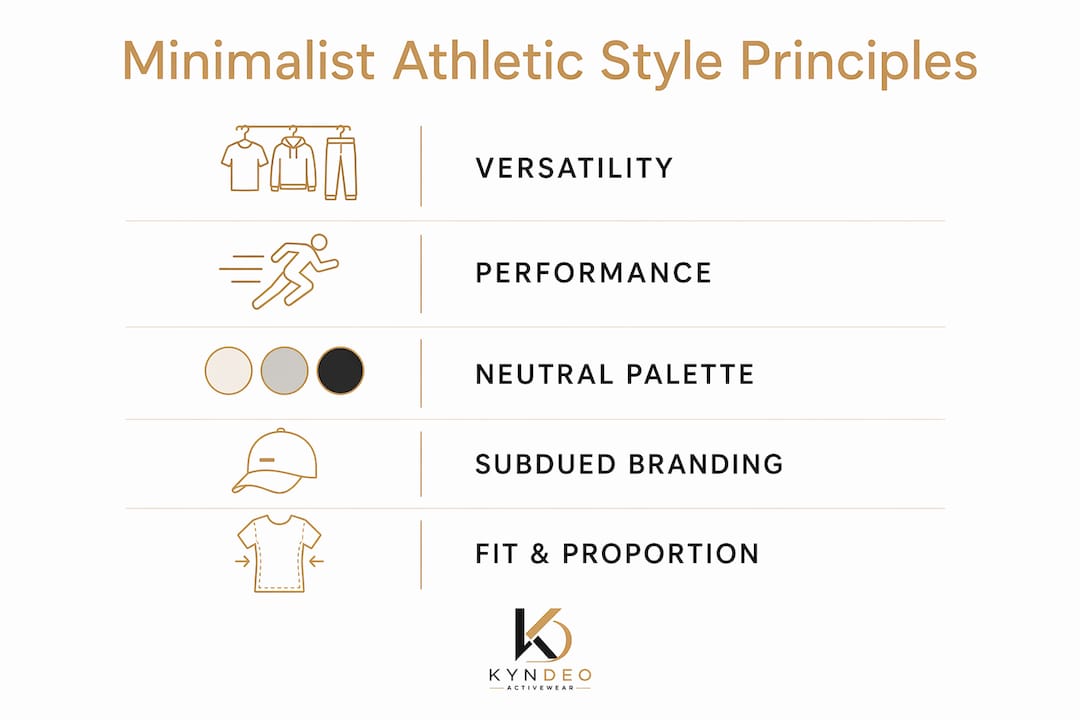
2. Performance-first construction. Moisture-wicking, four-way stretch, and breathable fabrics are table stakes. Fit and fabric, not graphic design, are what translate sporty pieces into polished everyday wear.
3. Neutral, tonal palette. Black, cream, taupe, olive, and charcoal are the foundation. A limited, compatible palette increases perceived polish and makes every piece mix-and-match ready without effort.
4. Subdued branding. Absence of visible logos signals confidence in construction and fabric technology rather than marketing. The piece speaks through its cut and material, not its label.
5. Fit and proportion. Tailored proportions make athletic silhouettes appear refined. A fitted bottom with a relaxed top, or a structured jacket over a seamless set, creates visual balance that reads well outside the gym.
Pro Tip: When evaluating a new piece, ask whether it pairs simply with three items you already own. If it doesn’t, it doesn’t belong in a minimalist wardrobe.
Building your minimalist athletic capsule: the essential pieces
A functional capsule covers five categories. Aim for the piece counts below to stay lean without gaps.
Bottoms (2–3 pieces)
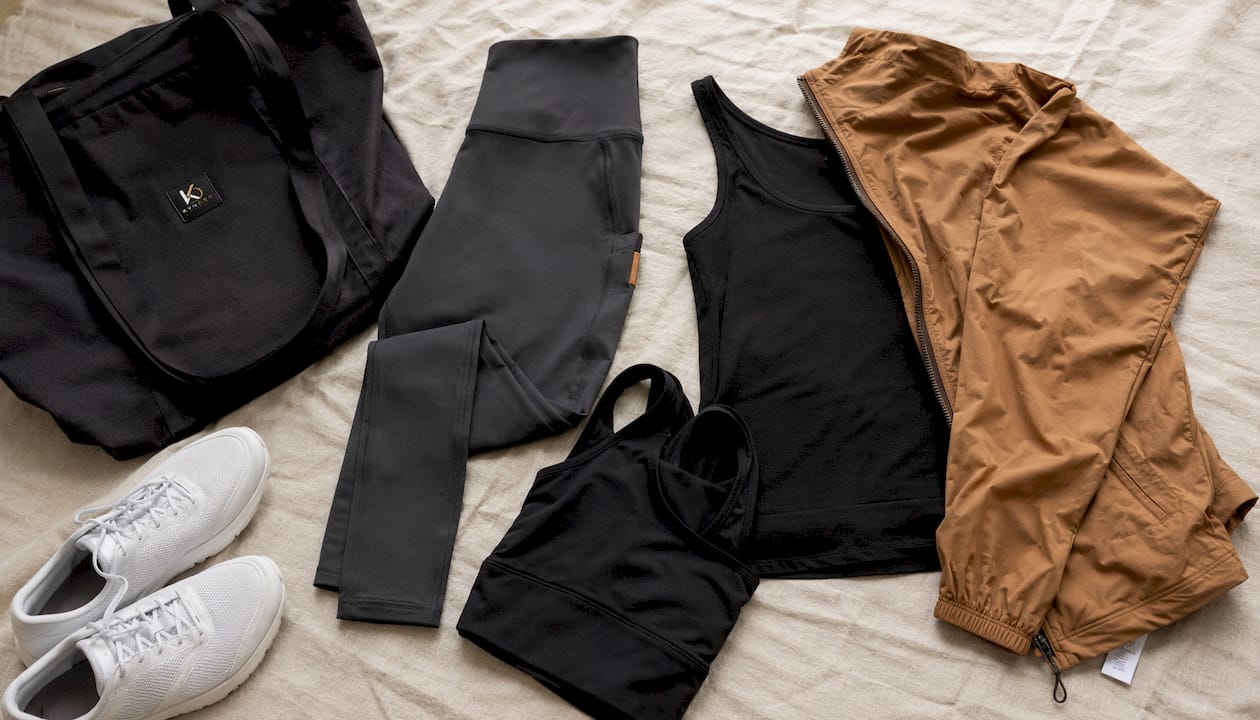
Look for high-waisted leggings in a nylon-spandex or recycled polyester blend with compression and moisture management. One pair in black, one in a secondary neutral (charcoal or taupe). Add one tapered jogger for lower-intensity days and casual wear. Kyndeoactivewear’s men’s joggers and men’s leggings are built for exactly this dual role.
Tops (2–3 pieces)
Two seamless or structured tanks cover most training and errand scenarios. Choose a V-neck or racerback cut for ventilation. A fitted long-sleeve in a technical cotton blend extends the capsule into cooler months without adding bulk.
Outerwear (1–2 pieces)
One lightweight zip jacket or structured hoodie handles post-workout transitions and travel layers. Look for a clean silhouette with no oversized graphics. A second option, a longer pullover hoodie, covers recovery days and casual outings.
Shoes (1–2 pairs)
Clean, low-profile sneakers in white, black, or bone are the workhorse. For training-specific needs, a second pair with more lateral support handles HIIT or court work. Best minimalist running shoes tend to share one trait: a neutral colorway with minimal branding on the upper.
Accessories (2 pieces)
A structured crossbody bag or minimal tote handles gym-to-errand transitions. A visor or cap completes outdoor looks without adding visual noise. Both should match your palette anchors.
Matching sets vs. mix-and-match: A coordinated set (legging + sports bra + tank in the same colorway) removes the decision entirely and photographs well. Mix-and-match gives more daily variety from fewer pieces. Both approaches work; the choice depends on how much mental energy you want to spend getting dressed.
How to build your minimalist athletic wardrobe step by step
Follow this sequence. It works whether you’re starting from scratch or editing an existing closet.
- Audit what you own. Pull everything out. Keep only what you’ve worn in the last 30 days and genuinely reach for. Donate or discard the rest.
- Define your activities. List the specific things your wardrobe must support: HIIT, yoga, commuting, travel, remote work, errands. Each activity has different technical requirements.
- Pick your palette. Choose two anchor colors (usually black and one neutral) and one accent (cream, olive, or a warm earth tone). Every piece you buy must work within this palette.
- Apply the 3-3-3 rule. Choose 3 bottoms, 3 tops, and 3 layers. Each item must pair with every other item in its category. This constraint forces quality over quantity and keeps outfit combinations high.
- Prioritize your first three purchases. Start with your most-used bottom (leggings or jogger), your most-used top (tank or tee), and one layer (hoodie or zip jacket). These three pieces cover the majority of your weekly needs.
- Set a maintenance schedule. Replace high-wear items (leggings, tanks) when they lose compression or show pilling. A six-month check keeps the capsule performing.
Shopping checklist for each piece:
- Does it wick moisture and dry quickly?
- Does it have four-way stretch with recovery (no bagging after wear)?
- Does it pair with at least three items you already own?
- Is the colorway within your palette?
- Is the branding minimal or absent?
Outfit formulas you can copy right now
These five builds use the capsule pieces above. Each one works as a starting point; swap layers or footwear to adjust for season or formality.
Gym day. Fitted leggings + seamless tank + sports bra underneath. Clean sneakers. Leave the hoodie in your bag for post-session. This is the core set, stripped down for movement.
Errands. Same leggings, add the structured hoodie and a crossbody bag. Swap the training sneaker for a cleaner low-profile pair. The silhouette reads casual-put-together without any effort.
Travel. Tapered jogger + long-sleeve technical top + zip jacket. The jogger’s tapered cut looks intentional rather than sloppy. Pack the tank underneath for layering flexibility across time zones and temperatures.
Casual meeting. Fitted legging + structured tank + a clean zip jacket worn open. Keep the sneakers minimal. The tonal palette does the work here; neutral-on-neutral reads polished even in a business-casual setting.
Recovery day. Pullover hoodie + jogger + low-profile sneakers or slides. This is the capsule at its most relaxed, but because everything is within the same palette, it still looks intentional.
Proportions tip: Balance fitted and relaxed silhouettes in every outfit. A fitted bottom with a relaxed top, or a structured jacket over a seamless set, creates visual contrast that keeps the look from reading as purely athletic.
Materials, fit, and care: what keeps pieces performing
Fabrics to prioritize
- Nylon-spandex blends (78/22 or 80/20): Best compression, durability, and moisture management for leggings and fitted tanks.
- Recycled polyester with spandex: Strong sustainability profile without sacrificing stretch or quick-dry performance.
- Structured knit: Holds shape through repeated wear and washing; ideal for hoodies and joggers.
- Technical cotton blends: Softer hand feel for low-intensity and casual pieces; less suited for high-sweat training.
Fit guidance by piece
Leggings should sit at the natural waist without rolling and lie flat against the leg with no bunching at the knee. A tapered jogger should taper from mid-thigh to a clean ankle opening, with no excess fabric pooling at the hem. A jacket’s shoulder seam should sit exactly at the shoulder point, not drooping toward the arm.
Neutral, earthy palettes in tailored fits make athletic silhouettes appear refined and suitable for non-workout settings. That combination of fit and color is what separates minimalist athletic fashion from generic athleisure.
Care rules
- Wash in cold water on a gentle cycle. Heat degrades spandex and breaks down compression.
- Air dry whenever possible. A dryer shortens the lifespan of stretch fabrics significantly.
- Turn leggings and fitted tanks inside out before washing to preserve color and surface texture.
- Store folded, not hung. Hanging stretches waistbands and shoulder seams over time.
Sustainable fabric choices, recycled polyester and responsibly sourced nylon, align naturally with minimalist goals: fewer, better pieces that last longer and reduce waste.
Common mistakes and real downsides to watch for
Minimalism in activewear has real trade-offs. Knowing them upfront saves money and frustration.
Buying cheap basics. Low-cost leggings and tanks sag, pill, and lose compression after a few washes. The per-wear cost of a $15 legging that lasts two months is higher than a $65 piece that holds shape for two years. Streamlined cuts and reduced visual noise only improve the experience when the fabric actually performs.
Over-indexing on black. An all-black capsule is easy to build but creates a flat, monotone wardrobe. Adding one or two neutral accents (cream, taupe, olive) gives the palette enough range to feel intentional rather than default.
Ignoring activity-specific needs. A legging built for yoga may not provide enough compression for running. A training sneaker may not have the lateral support needed for court work. Minimalism means fewer pieces, not wrong pieces. Map each item to its primary activity before buying.
Over-simplifying to the point of boredom. Keeping one or two statement pieces, a bold-colored sports bra, a textured hoodie, prevents the wardrobe from feeling like a uniform. The goal is intentional, not monotonous.
Neglecting rotation and replacement. High-wear items degrade faster than you notice. Leggings lose compression gradually; you may not realize they’ve stopped performing until you’re mid-workout.
Pro Tip: Rotate your two or three most-used leggings and tanks so no single piece takes all the wear. Set a calendar reminder every six months to check compression and surface condition on your highest-use items.
How Kyndeoactivewear implements minimalist athletic style
Kyndeoactivewear is a Black-owned activewear brand built around the gym-to-street principle. Its product range maps directly onto the capsule structure above.
The brand’s gym-to-street clothing page frames its entire offering around the same versatility principle that defines minimalist athletic style: pieces that move from a training session to daily life without a wardrobe change. Leggings, tanks, matching sets, hoodies, and accessories like the visor are all designed with that transition in mind.
How Kyndeoactivewear pieces fill capsule roles:
| Capsule Role | Kyndeoactivewear Category |
|---|---|
| Core bottom | Leggings, men’s leggings |
| Casual bottom | Men’s joggers |
| Top layer | Tanks, matching set tops |
| Outerwear | Hoodies |
| Accessory | Visor, bags |
The brand’s matching workout sets are a practical shortcut for capsule building. A coordinated set in black or a warm neutral covers the core bottom and top roles in one purchase, with no color-matching required.
Shopping tip: Start with a matching set in your primary palette anchor (black or a warm earth tone). That set becomes the foundation. Add a contrasting neutral layer, a cream hoodie over a black set, for immediate outfit variety without buying more bottoms or tops.
Kyndeoactivewear also publishes an activewear wardrobe essentials list that aligns with the capsule approach, and its sustainable activewear page reflects the brand’s commitment to durable, responsibly made pieces, a direct fit with minimalist goals.
Key Takeaways
A minimalist athletic wardrobe works because it forces every piece to earn its place through versatility, performance, and palette compatibility.
| Point | Details |
|---|---|
| Start with an audit | Keep only what you’ve worn in the last 30 days; discard the rest before buying anything new. |
| Apply the 3-3-3 rule | Choose 3 bottoms, 3 tops, and 3 layers, each item pairing with every other item in its category. |
| Prioritize fabric over price | Nylon-spandex blends and recycled polyester outlast cheap basics and hold compression longer. |
| Neutral palette is the multiplier | Two anchor colors plus one accent maximize outfit combinations from a small piece count. |
| Kyndeoactivewear as a starting point | A Kyndeoactivewear matching set in a neutral colorway covers two capsule roles in one purchase. |
Why minimalist athletic style works in real life
The wardrobe you actually use is the one with the fewest decisions attached to it. That is the core argument for minimalist athletic style, and it holds up in practice.
When every piece in your closet works with every other piece, getting dressed stops being a problem to solve. You reach for the legging, grab the tank, add the hoodie, and you’re out the door. The outfit is reliable because the system behind it is reliable. Less visual noise in the closet translates directly to more focus on the things that matter: the workout, the commute, the meeting, the day.
There is also a discipline parallel worth noting. The same thinking that makes a training program effective, doing fewer things with more intention, applies to a wardrobe. A capsule built on quality, fit, and palette compatibility performs better over time than a closet full of impulse buys. The pieces last longer, the outfits look more considered, and the whole system requires less maintenance.
Kyndeoactivewear makes the capsule easy to build
Ready-made minimalist athletic pieces, already coordinated and built for daily movement, are exactly what Kyndeoactivewear delivers. The brand’s women’s activewear and men’s activewear collections are organized by activity type and outfit coordination, so you can build a capsule without the guesswork of color-matching or fit-testing across brands.
The matching activewear sets are the fastest entry point: one purchase, two capsule roles filled, zero styling effort required. For readers who want durable pieces that align with minimalist values, the sustainable activewear collection covers responsibly made options built to last. Browse the full range at Kyndeoactivewear and pick your first anchor piece today.
Sources and further reading
These are the most useful references for readers who want to go deeper on minimalist athletic style or shop the capsule.
-
Minimalism in Sportswear: Functional and Stylish Athletic Wear — Minimalism Lifestyle. Covers the core principles of minimalist activewear: clean lines, neutral colors, and durable materials. Good foundational read.
-
Minimalist Sports Style: How Professional Athletes Redefined Modern Fashion — CU Independent. Explains the athlete-driven origins of subdued branding and multipurpose garment design.
-
A Sporty, Minimalist, and Chic Spring Capsule Wardrobe — LiveLoveSara. Practical stylist advice on neutral palettes and tailored fits for athletic silhouettes.
-
Minimalist Workout Clothes for Men — Centric. Makes the function-over-flash argument with specific guidance on streamlined cuts.
-
Athleisure Capsule Wardrobe — Wit & Whimsy. Covers capsule counts and interchangeable piece selection for year-round wear.
-
Colour Palettes for Fashion Brands: Examples That Convert — Visual Identity Studio. Design-focused guidance on choosing limited, compatible palettes for maximum mix-and-match flexibility.
-
Gym-to-Street Clothing — Kyndeoactivewear. The brand’s own framing of gym-to-street versatility, with category-based shopping to simplify capsule building.
-
Activewear Wardrobe Essentials List for 2026 — Kyndeoactivewear Journal. An editorial essentials list that maps directly to the capsule approach covered in this guide.
FAQ
What is minimalist athletic style?
Minimalist athletic style is a gym-to-street wardrobe built from a small set of versatile, performance-first pieces in a neutral palette. Every item must work across multiple settings, from training to daily life, without requiring a wardrobe change.
Is there a downside to minimalist athletic style?
The main trade-offs are less variety and a higher upfront cost per piece. Over-simplifying to all-black basics can feel monotonous, and ignoring activity-specific technical needs leads to pieces that underperform in training.
What is the 3-3-3 rule for clothes?
The 3-3-3 rule means choosing 3 bottoms, 3 tops, and 3 layers, with each item designed to flexibly mix and match within its category. Applied to activewear, it maximizes outfit combinations from a minimal piece count.
What is an example of a minimalist athletic outfit?
A fitted black legging, a seamless cream tank, and a structured zip jacket in charcoal is a clean example. The tonal neutral palette and balanced proportions make it work for a gym session, errands, or a casual meeting.
How do you start building a minimalist athletic wardrobe?
Audit what you already own, pick a two-color palette with one accent, and buy one anchor piece first, typically a well-fitted legging or structured tank. A Kyndeoactivewear matching set in a neutral colorway covers two capsule roles in a single purchase.