

TL;DR:
- Reflective sportswear uses retroreflective materials like glass beads or microprismatic films to bounce light back to its source, increasing visibility at dawn, dusk, and night. Placement at limbs and across the entire garment enhances recognition distance, especially when paired with active lights in unlit areas. Combining retroreflective details with fluorescent colors and proper care ensures effective safety performance across multiple conditions.
Reflective detail sportswear uses retroreflective materials, typically millions of tiny glass beads or microprismatic films, applied as trims, prints, or woven yarns to bounce directed light straight back to its source. That matters most at dawn, dusk, and night, when vehicle headlights are the primary light source and a driver has only seconds to react. Here is when reflective details earn their place:
- Dawn and dusk runs or rides on roads shared with traffic
- Urban commutes on foot or by bike through lit but unpredictable intersections
- Evening walks along neighborhood paths with partial streetlight coverage
- Any route where headlights are the main light source and you need to be seen from a distance
One important note: reflective details are passive. They need a directed light source to work. In completely unlit, traffic-free areas, pair them with active lights such as a clip-on LED or headlamp. Reflective detail activewear is a safety layer, not a complete solution on its own.
Table of Contents
- What is reflective detail sportswear, and how does the technology work?
- Reflective vs. fluorescent: which one do you actually need?
- Why placement matters more than total reflective surface area
- How much safer does reflective gear actually make you?
- The main types of reflective details you will find on sportswear
- How to care for reflective details so they stay effective
- How to choose reflective sportswear that actually fits your routine
- Why Kyndeoactivewear designs for visibility you will actually wear
- Key Takeaways
- The case for gear you will actually reach for
- Useful sources
- FAQ
What is reflective detail sportswear, and how does the technology work?
The science behind reflective sportswear comes down to one principle: retroreflection. Standard mirrors scatter light outward at an angle. Retroreflective materials send light back along the exact path it arrived, directly toward the driver or cyclist who produced it.
Two technologies create this effect in sportswear.
Glass-bead retroreflection is the most common method. Millions of tiny glass beads are embedded into fabric or bonded onto a transfer film. Light enters each bead, hits a reflective backing, and returns to the source. The result is a bright, wide-angle glow visible from hundreds of meters away under headlights. Glass-bead coatings are flexible, washable, and easy to apply to stretch fabrics, which makes them the go-to choice for running tights, jackets, and leggings.
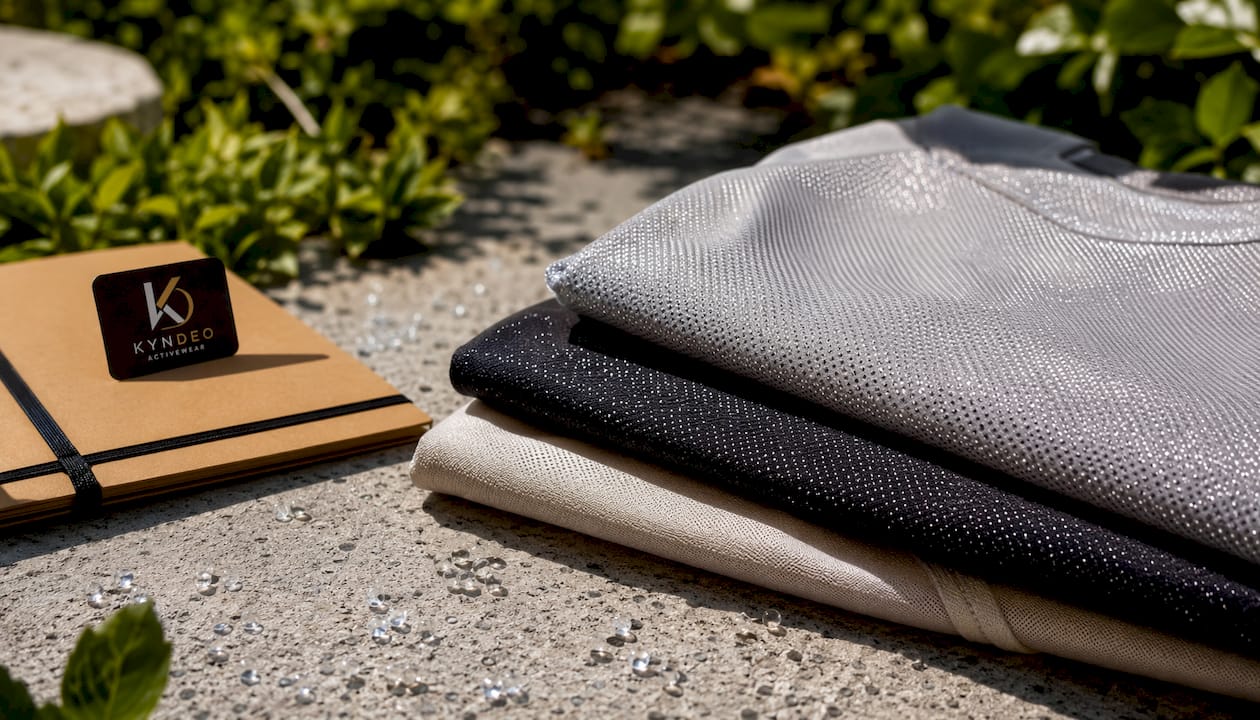
Microprismatic films use geometric prism arrays instead of beads. The prism geometry redirects light with higher intensity and over a narrower angle range. Microprismatic materials tend to appear brighter in direct beam but can lose performance at oblique angles. They are more common in structured garments and accessories than in stretch activewear.
| Feature | Glass-bead retroreflection | Microprismatic films |
|---|---|---|
| How it works | Light enters bead, reflects off backing, returns to source | Prism geometry redirects light back along incident path |
| Brightness | High, visible from 200+ meters under high beam | Very high in direct beam, narrower angle range |
| Flexibility | Excellent, bonds well to stretch fabrics | Moderate, better for structured panels |
| Color options | Silver/gray standard; tinted versions available | Mostly silver/white |
| Day appearance | Subtle silver-gray | Bright silver, more visible by day |
| Durability | Good with proper care; degrades with heat and abrasion | High, but less common in activewear |
Integration method also matters. Woven reflective yarns are built into the fabric structure and tend to last longer. Bonded heat-transfer prints sit on the surface and offer more design flexibility but can crack with heavy washing. Embedded-bead coatings fall between the two in durability and breathability.
Visibility stat: Testing shows drivers recognize pedestrians wearing reflective gear from over 200 meters away under high-beam conditions, much farther than for a person in dark clothing. Full-surface reflective fabric, like the approach used in 360-degree garments, eliminates angle blind spots that single-strip solutions leave open. A strip on the back of a jacket only works when a driver is directly behind you. Distributed coverage across the torso, sleeves, and legs keeps you visible as you move through intersections and turns.
Reflective vs. fluorescent: which one do you actually need?
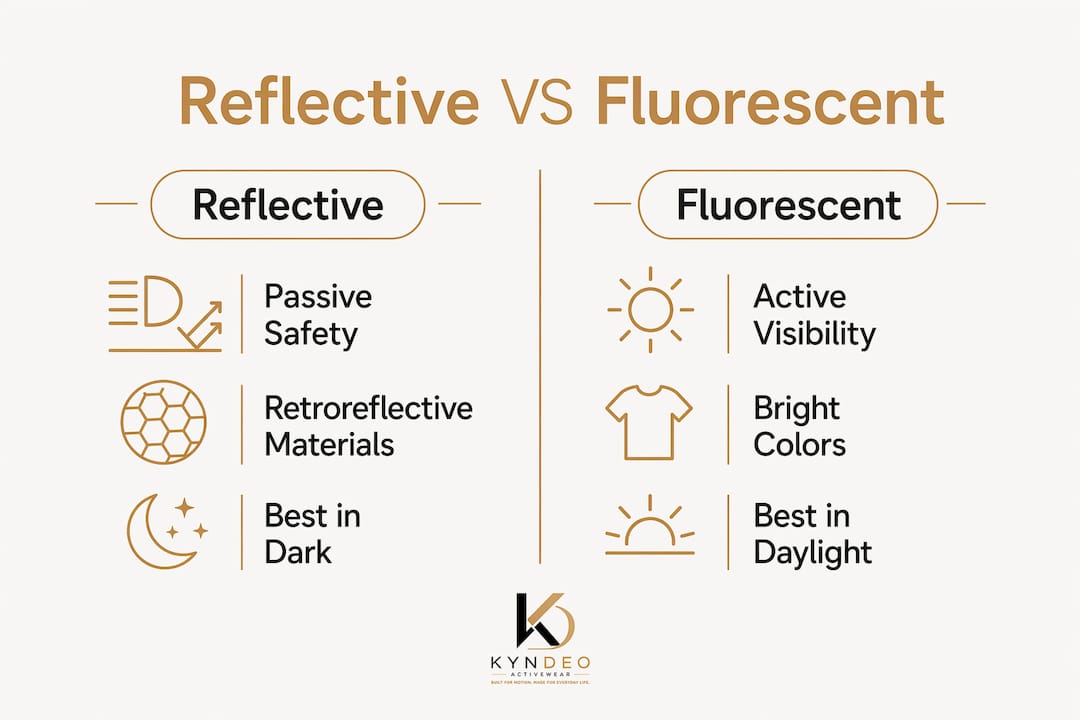
These two technologies solve different problems, and the best visibility strategy uses both.
Fluorescent materials work by absorbing UV light and re-emitting it as visible light. Neon yellow, orange, and lime green fabrics appear unnaturally bright in daylight, creating contrast against natural backgrounds. Fluorescence does not require a directed light source. It works in overcast daylight, fog, and low-sun conditions where retroreflective materials would produce little return.
Retroreflective materials do the opposite: they are nearly invisible in ambient light and only activate when a directed beam, like a car headlight, hits them. At night on a lit road, retroreflection is far more effective than fluorescence.
- Daytime and overcast conditions: fluorescent colors are your primary tool
- Dawn and dusk (transitional light): combine fluorescent fabrics with retroreflective details for full-spectrum coverage
- Night with traffic: retroreflective details are non-negotiable; fluorescence adds little
- Night without traffic (rural paths, trails): active lights are the priority; passive materials alone are insufficient
The practical takeaway: a neon jacket with reflective trim covers you across the widest range of conditions. Choosing one or the other leaves gaps.
Why placement matters more than total reflective surface area
More reflective material does not automatically mean better visibility. Where you put it does.
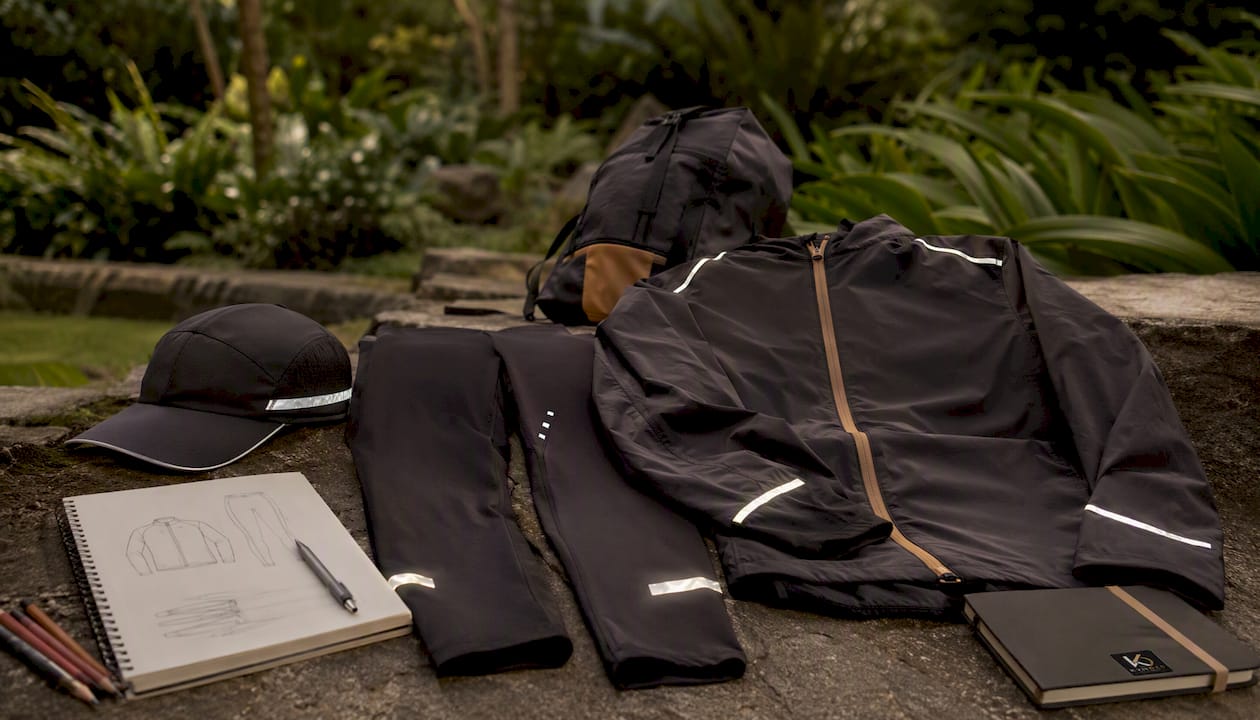
Drivers detect human movement patterns faster than static shapes. This is the biomotion principle: the brain recognizes a person by the rhythmic motion of joints, not by a bright blob. Placing reflective details at joints, specifically ankles, knees, and wrists, amplifies that motion signal. A runner with reflective ankle bands is easier to identify as a human, and to track, than a runner wearing a fully reflective torso panel with no limb details.
360-degree coverage matters for a different reason: angle. A reflective strip on the back of a jacket is invisible to a driver approaching from the side. Garments that integrate reflectivity across front, back, and sides remove those blind spots entirely. The trade-off is usually weight and breathability, since more reflective material means more coating or film on the fabric.
The design mistake to avoid is “supernova” overload: covering every surface with reflective material. All-over shine can create glare that actually makes it harder for a driver to read your shape and direction. Strategic placement beats maximum coverage.
Pro Tip: If you want discreet daytime style with nighttime visibility, look for pieces with reflective details on the lower legs and forearms. Those placements are subtle when you are standing still but create strong motion cues the moment you start moving.
How much safer does reflective gear actually make you?
The numbers are meaningful. Reflective ankle bands substantially increase nighttime recognition distance compared with clothing that has no reflective elements, improving driver reaction time significantly. Without reflective gear, that window shrinks to a few seconds at best.
That said, reflective gear has real limits.
Retroreflective materials are passive. They return light that hits them. In a completely unlit area with no vehicle headlights, no streetlights, and no other directed beam, a reflective jacket is effectively invisible. Retroreflective materials must be paired with active lights in those conditions. A clip-on LED, a headlamp, or a flashing tail light makes you visible even when no external light source is present.
US safety guidance aligns with a layered approach: combine light-colored or fluorescent clothing with retroreflective elements, and add active lights for the highest-risk scenarios.
| Scenario | Recommended strategy | Visibility benefit |
|---|---|---|
| Dawn/dusk road run | Fluorescent top + reflective trim | Broad-spectrum coverage in transitional light |
| Night urban commute | Retroreflective jacket or vest | Recognition distance over 200 meters under headlights |
| Ankle/limb reflectivity | Reflective ankle bands or tights | Doubles nighttime driver recognition distance |
| Rural night route | Reflective gear + clip-on LED or headlamp | Active light covers unlit gaps |
| Replacement trigger | Inspect after heavy use or washing | Replace if surfaces crack, peel, or lose return |
Key figure: Reflective ankle bands can double nighttime recognition distance, making limb-mounted reflectivity one of the highest-value placements per square inch of material.
The main types of reflective details you will find on sportswear
Knowing the type helps you shop smarter and understand what you are actually getting.
- Reflective tape and striping: pre-made strips bonded or sewn onto seams, hems, and panels. Easy to apply, durable, and highly visible. Common on jackets, vests, and shorts.
- Reflective yarn and knit: reflective fibers woven directly into the fabric structure. More durable than surface coatings and maintains stretch. Appears as a subtle sheen by day, bright return at night.
- Bonded reflective prints and heat transfers: graphic or logo-shaped reflective elements applied with heat. Flexible design options, but surface coatings can crack with repeated washing or high heat.
- Microbead-embedded fabrics: glass beads embedded across a fabric panel for broad-area retroreflection. Used in high-coverage garments; tends to be slightly heavier than strip solutions.
- Reflective piping and trims: thin reflective cord or binding used along seams and edges. Adds visibility with minimal weight and a clean aesthetic by day.
- Detachable ankle bands: clip-on or wrap-around bands worn over tights or socks. Highly effective for biomotion visibility; easy to add to any outfit.
- Full-coverage 360-degree garments: entire outer surface is retroreflective. Maximum angle coverage with no blind spots; full-surface reflective fabric maintains visibility from more angles than traditional strip-only approaches. Best for nighttime commuting and road cycling.
By day, most reflective details appear as silver-gray or subtle metallic accents. Under headlights, the same details light up sharply. That dual personality is what makes well-designed reflective activewear wearable around the clock.
How to care for reflective details so they stay effective
Reflective coatings and transfers degrade faster than the base fabric if you are not careful. The main culprits are heat, abrasion, and harsh chemistry.
Manufacturers recommend washing in cold water, turning garments inside out before washing, and line-drying to preserve reflective performance. High-heat tumble drying is the fastest way to crack bonded transfers and degrade bead coatings. Bleach and fabric softeners break down the adhesive layers that hold reflective elements in place.
Practical care checklist:
- Wash cold (30°C / 86°F or below)
- Turn garments inside out before every wash
- Use a gentle, bleach-free detergent
- Skip fabric softener entirely
- Line-dry or lay flat; avoid the dryer
- Inspect reflective surfaces regularly for cracking, peeling, or loss of return
For replacement timing: heavily used or frequently washed hi-vis gear may need replacement within 6–12 months if reflective surfaces degrade. The trigger is performance, not the calendar. If a surface no longer returns a strong light under a flashlight test, it is time to replace the garment.
Durable construction matters here. Garments built with durable, performance-focused materials hold up better through repeated wash cycles, which extends the working life of reflective details and keeps you safer longer.
How to choose reflective sportswear that actually fits your routine
-
Define your primary use case. Night running on roads needs strong retroreflective coverage on limbs and torso. An urban commute in mixed light benefits from fluorescent color plus reflective trim. A trail walk in low traffic can get by with lighter reflective accents and a headlamp.
-
Prioritize limb placement. Reflective details on ankles, calves, and forearms create biomotion cues that drivers recognize faster than torso-only coverage. If a garment only has a small reflective logo on the chest, keep looking.
-
Check front and rear coverage. Visibility from behind is obvious, but side and front coverage matter at intersections. Look for garments with reflective elements on multiple panels, not just the back.
-
Assess breathability and fit. A reflective jacket you overheat in will stay in the closet. The best reflective gear combines visibility with moisture management and a fit that moves with you. Kyndeoactivewear’s gym-to-street pieces are built on this principle: functional design that you will actually reach for.
-
Read the technology claims. Look for specific language: “retroreflective,” “glass-bead,” or “microprismatic.” Vague claims like “reflective accents” with no detail about placement or technology are a red flag. ANSI/ISEA standards apply primarily to occupational high-visibility workwear, not consumer sportswear, but brands that reference lab testing or certified materials are signaling a higher standard.
-
Add active lights for rural or unlit routes. No passive reflective material replaces a headlamp or clip-on LED when there are no vehicle headlights to return. Build your visibility system around your route, not just your outfit.
-
Check care instructions before buying. If a garment requires dry cleaning or prohibits machine washing, reflective details will degrade quickly under real-world use. Cold-wash, line-dry compatibility is the standard to look for.
Why Kyndeoactivewear designs for visibility you will actually wear
The most effective reflective gear is the gear you put on every day. That sounds obvious, but it is the real design challenge. A vest that looks like construction equipment stays home. A piece that moves well, fits your aesthetic, and transitions from the gym to the street gets worn, which means it actually protects you.
Kyndeoactivewear builds around that idea. The brand’s activewear for life approach means pieces are designed for real movement across real days, not just single-use workout sessions. Coordinated sets, stretch-fitted silhouettes, and clean design make it easier to build a wardrobe where visibility details feel like part of the look, not an afterthought.
For women, the women’s activewear collection includes pieces built for movement from morning runs to afternoon errands. For men, the men’s activewear collection covers the same gym-to-street range. Kyndeoactivewear also prioritizes sustainable activewear materials, which aligns with longer garment life and better care outcomes for reflective details.
Pro Tip: Build your visible wardrobe around one strong reflective outer layer and one pair of tights or joggers with ankle-area reflective trim. Those two pieces cover the highest-impact placements and work across the widest range of conditions.

Shop pieces built for motion and visibility at Kyndeoactivewear’s sustainable activewear page, or explore matching activewear sets designed to keep you coordinated and seen.
Key Takeaways
Reflective detail sportswear works because retroreflective materials, placed at motion zones like ankles and wrists, return directed light to drivers from over 200 meters away, giving them time to react.
| Point | Details |
|---|---|
| What reflective detail is | Retroreflective materials (glass beads or microprisms) applied as trims, prints, or yarns to return directed light to its source. |
| When it works best | Dawn, dusk, and night routes with vehicle headlights present; ineffective in completely unlit areas without active lights. |
| Best placement | Ankles, knees, and wrists; limb-mounted reflectivity doubles nighttime driver recognition distance. |
| Layer your visibility | Combine fluorescent color for dawn/dusk, retroreflective details for night, and clip-on LEDs or a headlamp for unlit rural routes. |
The case for gear you will actually reach for
Most visibility advice focuses on the technology. What it underweights is adoption. A technically superior reflective vest that sits in a drawer because it is uncomfortable or unflattering does nothing for your safety. The real variable is whether you wear the gear consistently, across every dawn run and evening commute, not just when conditions feel obviously risky.
That is why design and comfort are not secondary to safety. They are part of it. Pieces that fit well, move with you, and look intentional from the first wear get used. Pieces that feel like a compromise get skipped. Choosing reflective activewear that matches your routine and your style is not vanity. It is the practical decision that makes the safety benefit real.
Pick pieces you are genuinely excited to put on. Add ankle reflectivity for your evening runs. Clip on a light for the dark stretches. Build the habit, and the visibility takes care of itself.
Useful sources
These sources informed this guide and are worth bookmarking for deeper technical detail or standards research:
- Proviz: The Science Behind Reflective Sportswear — Technical explanation of glass-bead retroreflection and 360-degree coverage design
- BTR Sports: Reflective vs Fluorescent Running Gear — Visibility distance data, ankle-band research, and layered strategy guidance
- Brooks Running: Science Behind Run Visible — Biomotion mapping research and expert placement recommendations
- OSHWiki: Protective Clothing, Reflective Clothing — Safety authority guidance on combining fluorescent and retroreflective strategies
- Manufacturing Clothes: Reflective Trim Care — Manufacturer-level care and durability guidance for reflective trims
- Reflective Apparel: When to Replace Hi-Vis Clothing — Replacement timing guidance based on usage and washing frequency
FAQ
What is reflective sportswear?
Reflective sportswear is activewear that incorporates retroreflective materials, usually glass beads or microprismatic films, applied as trims, prints, or woven yarns to return directed light, like vehicle headlights, back to its source, making the wearer visible from a significant distance under appropriate lighting conditions at night.
Is it a good idea to wear reflective clothing?
Yes, especially for any outdoor activity at dawn, dusk, or night near traffic. Reflective gear extends driver recognition distance, giving drivers more time to react, though it should be paired with active lights in completely unlit areas.
How long does reflective clothing last?
With proper care, reflective details can last the life of the garment, but heavily used or frequently washed pieces may need replacement within 6–12 months if surfaces crack or lose their light return. Cold washing and line-drying extend performance significantly.
What is an example of reflective clothing?
Common examples include running tights with reflective ankle trim, jackets with reflective piping along the sleeves and back panel, and full-coverage 360-degree vests where the entire outer surface is retroreflective. Detachable reflective ankle bands worn over any tights are another practical option.
Do reflective details work in the dark without headlights?
No. Retroreflective materials are passive and only activate when a directed light source hits them. In completely unlit areas with no vehicle headlights or streetlights, active lights such as a headlamp or clip-on LED are necessary to be seen.