

Smart casual activewear is defined as a deliberate fusion of structured, polished clothing with functional athletic pieces, balanced at a 70% tailored and 30% athletic ratio to maintain a refined, everyday look. The industry term for this category is “sport chic,” though “smart casual activewear” captures exactly how most people search for and practice it. This style sits above traditional athleisure and below business casual, making it the most versatile dress code for modern life. Kyndeoactivewear was built for exactly this space: movement-ready clothing that looks intentional from the first wear, whether you are heading to a coffee meeting, running errands, or catching a flight.
What is smart casual activewear, and how does it differ from regular activewear?
Smart casual activewear is not athleisure with better branding. The distinction is intentionality. Regular activewear prioritizes function: compression fits, moisture management, and gym-specific performance. Smart casual activewear requires every piece to work as a fashion statement on its own, independent of the gym context.
The clearest way to see the difference is in what gets left out. Smart casual guidelines exclude overt performance gear, heavy compression, large logos, and neon-accented running shoes. A standard athletic outfit is built for output. A smart casual outfit is built for presence.
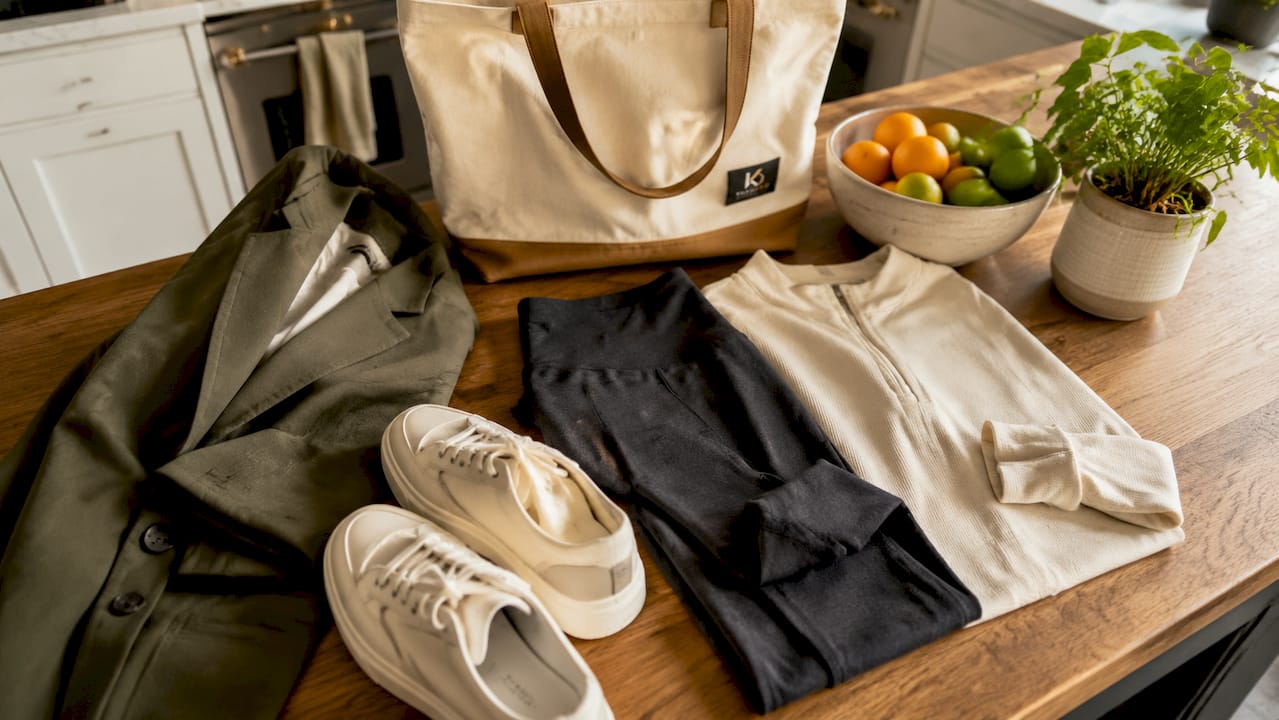
Casual wear, on the other hand, is relaxed but lacks the athletic element entirely. Jeans and a T-shirt read as casual. Tailored joggers and a structured blazer read as smart casual activewear. The athletic DNA is present, but it is refined.
Here is a quick breakdown of how the three categories compare:
| Category | Primary Function | Key Garments | What to Avoid |
|---|---|---|---|
| Traditional activewear | Performance and sport | Compression tights, running shoes, gym tanks | Wearing outside the gym |
| Casual wear | Comfort and ease | Jeans, T-shirts, sneakers | Lacks athletic element |
| Smart casual activewear | Style and movement | Tailored joggers, structured blazers, clean sneakers | Logos, neon, heavy compression |
The defining rule: if a piece only works at the gym, it does not belong in a smart casual outfit. Every garment must earn its place in both worlds.
Key styling principles for building smart casual activewear outfits
The 70/30 rule is the foundation. Seventy percent of your outfit should come from structured, tailored, or luxury-grade pieces. The remaining 30% can be athletic. That means one sporty item per outfit, not three.
Fabric is the first filter
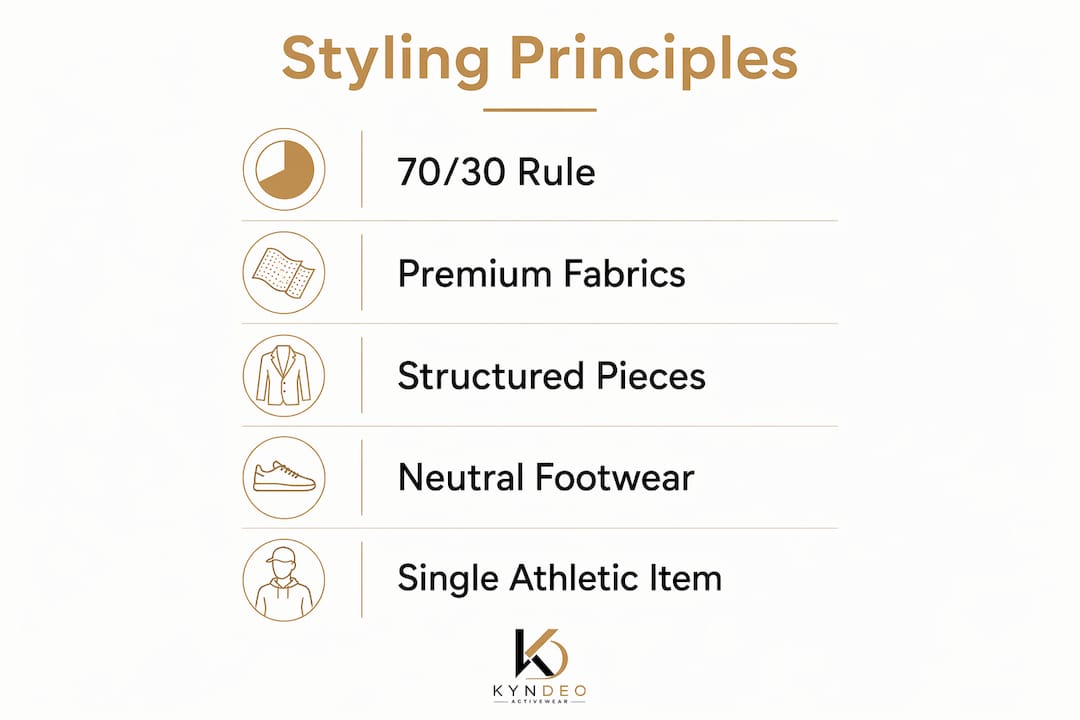
Urban technical fabrics with matte finishes that mimic wool or high-quality knit are the standard for smart casual activewear. These fabrics move with your body but photograph like a polished outfit. Avoid shiny spandex, mesh panels, or anything that reads as gym-specific at a glance.
The best fabric choices for smart casual activewear include:
- Matte technical blends that resemble ponte or scuba knit
- Stretch cotton twill for structured trousers and joggers
- Cashmere or merino blends for hoodies and layering pieces
- Smooth, logo-free leggings in neutral or tonal colorways
Structure carries the look
The “smart” in smart casual activewear comes from structure. A blazer, a tailored trouser, or a cashmere turtleneck anchors the outfit and signals intention. Fashion stylists recommend pairing athletic silhouettes with high-end materials and sharp tailoring to project both comfort and status. Without that structured anchor, the outfit slides back into pure athleisure.
Footwear sets the tone
Neutral-toned leather or suede sneakers are the standard footwear choice for smart casual activewear. Low-profile, clean designs work. Bright, tech-branded running shoes do not. Loafers with a slight athletic sole also work well for professional settings. Think of footwear as the final vote on whether your outfit reads as polished or gym-ready.
Pro Tip: If your shoes are the loudest thing in your outfit, swap them. Smart casual activewear works best when no single piece dominates the eye.
Smart casual outfit ideas for different occasions
The real test of smart casual activewear is whether it holds up across different settings without a full outfit change. It does, but only with deliberate choices.
Professional and client-facing settings
For a work meeting or client lunch, the 70/30 rule leans harder toward the 70. A structured blazer over a smooth, logo-free tank or fitted turtleneck with tailored trousers reads as polished. The athletic element is subtle: a technical fabric trouser instead of wool, or a stretch blazer instead of a rigid one.
Leggings work in professional settings when they are premium quality, free of visible logos, and paired with structured layers like a longline blazer or a fitted tunic. The key is proportion and fabric quality. Thin, shiny, or logo-heavy leggings do not make the cut.
Casual social settings
A weekend brunch or gallery visit gives you more room to play. Here, the athletic piece can be slightly more visible: a coordinated matching set in a matte technical fabric, worn with a clean leather sneaker and a minimal crossbody bag. The structure comes from the set’s tailored cut rather than a separate blazer.
Avoid stacking multiple sporty pieces. Experts advise swapping a casual hoodie for a cashmere turtleneck, or joggers for pleated pants, to keep the balance right. Two overtly athletic pieces in one outfit tips the scale back into athleisure territory.
Errands and everyday movement
This is where smart casual activewear earns its name. A fitted hoodie in a premium fabric, straight-leg joggers with a clean silhouette, and suede sneakers cover the full day: coffee, grocery run, and a spontaneous dinner reservation. Accessories do the heavy lifting here. A structured tote or a minimal visor from Kyndeoactivewear’s activewear accessories collection signals that the outfit was chosen, not grabbed.
Pro Tip: Layer a longline cardigan or a structured vest over your athletic base to instantly shift the outfit’s register from casual to smart casual without changing clothes.
The most common mistake is over-sportifying. One athletic piece per outfit. One. That rule protects the “smart” in smart casual activewear every time.
How to choose and care for smart casual activewear pieces
Choosing the right pieces starts with fabric quality and ends with fit. A garment that pills after three washes or loses its shape after a workout does not belong in a smart casual wardrobe.
Key criteria for selecting smart casual activewear:
- No visible logos or branding on primary pieces. Subtle branding on accessories is acceptable.
- Matte, structured fabrics that hold their shape through movement and washing.
- Neutral or tonal colorways such as black, navy, stone, and ivory. These mix easily and read as intentional.
- Tailored cuts with clean seams and minimal distressing or embellishment.
- Sustainable materials where possible. Sustainable activewear made from recycled or low-impact fabrics aligns with the quiet luxury ethos that smart casual activewear projects.
Garment care directly affects how long a piece holds its smart casual credentials. Wash technical fabrics in cold water on a gentle cycle. Avoid fabric softener, which breaks down stretch fibers over time. Hang dry structured pieces to preserve their shape. Store blazers and structured layers on hangers, not folded in a drawer.
Sustainability and smart casual activewear share the same values: buy fewer, better pieces. A well-made technical trouser that lasts three years costs less per wear than a cheap pair that loses its shape in three months. Kyndeoactivewear’s focus on Black-owned activewear brands and quality-first design reflects exactly that philosophy.
Key Takeaways
Smart casual activewear works because the 70/30 rule forces every outfit to stay polished, structured, and intentional while still delivering full athletic comfort and movement.
| Point | Details |
|---|---|
| The 70/30 rule is non-negotiable | Seventy percent structured pieces, 30% athletic items keeps every outfit polished. |
| Fabric quality defines the category | Matte technical blends that mimic luxury knits separate smart casual from standard gym wear. |
| One sporty piece per outfit | Stacking multiple athletic items collapses the look back into athleisure. |
| Footwear is the final vote | Neutral leather or suede sneakers anchor the outfit; bright running shoes break it. |
| Care extends the investment | Cold wash, hang dry, and structured storage preserve the shape that makes pieces work. |
Why the 70/30 rule changed how I think about getting dressed
Most people approach smart casual activewear backward. They start with an athletic piece they love and try to dress it up. That almost never works. The outfit ends up looking like an afterthought rather than a choice.
The shift that actually works is starting with the structured piece and adding the athletic element last. Pick the blazer or the tailored trouser first. Then ask what one athletic piece fits naturally into that foundation. That sequence keeps the “smart” in control.
The other misconception I see constantly is that smart casual activewear requires expensive pieces across the board. It does not. The structured anchor piece should be high quality. The athletic piece can be more accessible, as long as it is clean, logo-free, and well-fitted. A $30 smooth-finish legging under a well-cut blazer reads as intentional. A $200 logo-covered hoodie under a cheap blazer does not.
The style’s growing relevance in 2026 is not accidental. People want clothing that moves with their actual lives, not clothing that requires a wardrobe change between activities. Smart casual activewear is the practical answer to that demand. It respects both your schedule and your appearance.
Kyndeoactivewear’s collection for the smart casual lifestyle
Kyndeoactivewear designs clothing for exactly the gap smart casual activewear fills: pieces that move through a full day without losing their polish. The women’s activewear and men’s activewear collections include matching sets, structured joggers, and fitted layers built in matte technical fabrics that hold their shape from morning to evening. Every piece is designed to work as part of a coordinated outfit, making the 70/30 balance easier to build without overthinking it. As a Black-owned brand, Kyndeoactivewear brings both community purpose and quality-first design to every collection. Shop the sustainable activewear line to find pieces that align with smart casual principles and last well beyond a single season.
FAQ
What is the difference between smart casual activewear and athleisure?
Athleisure prioritizes comfort and athletic function with minimal styling rules. Smart casual activewear follows the 70/30 rule, requiring structured, tailored pieces to anchor every outfit and excluding overt gym-specific gear like large logos and neon running shoes.
Can leggings be worn as smart casual activewear?
Yes. Premium leggings without visible logos, in a matte fabric, qualify as smart casual activewear when paired with a structured layer like a tailored blazer or longline tunic.
What shoes work best for smart casual activewear outfits?
Neutral-toned leather or suede sneakers are the standard choice. Low-profile loafers with a minimal sole also work. Avoid bright, tech-branded running shoes, which shift the outfit toward pure athletic wear.
How many athletic pieces can I wear in one smart casual outfit?
One. The 70/30 rule limits the athletic element to roughly one piece per outfit. Stacking two or more overtly sporty items removes the structured balance that defines smart casual activewear.
Is smart casual activewear appropriate for work?
Smart casual activewear works in professional settings when the athletic piece is subtle, logo-free, and anchored by structured layers. A tailored blazer over a smooth technical top or premium leggings reads as polished in most modern workplaces.