

Activewear outlasts fast fashion because it is built for repeated stress, not rapid trend turnover. 63% of consumers now wear activewear beyond the gym for errands, social events, and work. That number signals a fundamental shift in how people dress daily. Performance apparel is no longer a fitness category. It is a wardrobe foundation, and its durability is the reason it keeps earning that role. Brands like Kyndeoactivewear design with this reality in mind, building pieces that hold up through workouts, commutes, and everything in between.
Why activewear outlasts fast fashion: fabric and construction
The durability gap between activewear and fast fashion starts at the material level. Performance fabrics like polyester blends and recycled polyester are engineered to handle repeated stretching, washing, and sweat without breaking down. Fast fashion uses cheaper alternatives that fade within 5–10 washes and lose compression rapidly. That is not a minor inconvenience. It is a design failure built into the product from day one.
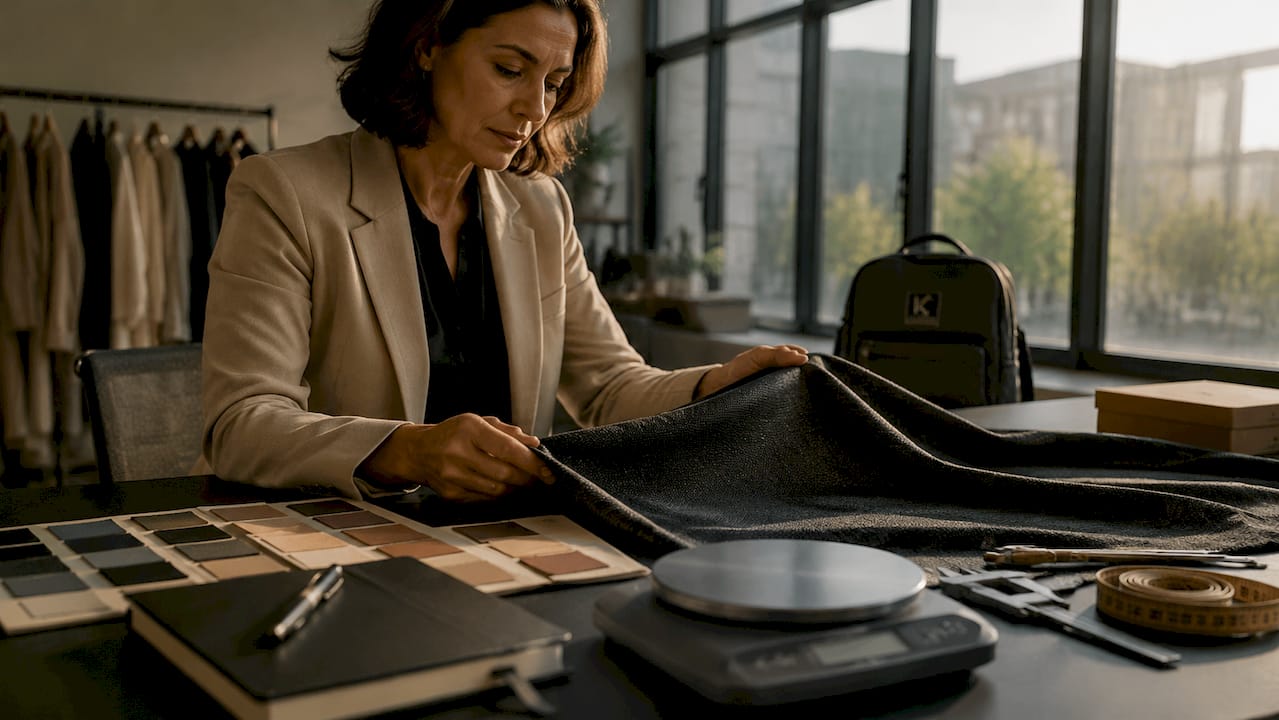
True durability in activewear covers four measurable qualities: stretch recovery, seam integrity, color retention, and resistance to bagging. Each one matters for a different reason. Stretch recovery keeps leggings fitting like they did on the first wear, not sagging after a month of squats. Seam integrity means flatlock or bonded stitching that does not unravel under movement. Color retention keeps the fabric looking fresh through dozens of wash cycles. Resistance to bagging ensures the fabric surface stays smooth, not pilled and worn.
Here is what separates performance construction from fast fashion assembly:
- Flatlock seams lie flat against the skin and resist splitting under lateral stress, unlike overlocked seams common in budget garments.
- Four-way stretch fabric recovers its original shape after pulling in any direction, maintaining fit and compression over time.
- Moisture-wicking finishes are bonded into the fiber, not surface-treated, so they survive repeated washing without fading.
- Reinforced gussets at high-stress points like the crotch and underarm prevent the early tears that end fast fashion garments quickly.
Pro Tip: Check the fabric composition before buying. A blend of at least 80% polyester or nylon with spandex signals better stretch recovery than cotton-dominant fabrics, which absorb moisture and lose shape faster.
How does activewear’s versatility extend its lifespan?
A garment worn in three different contexts lasts longer in practical terms than one worn in only one. Activewear’s shift from single-purpose fitness gear to multi-context daily wear is the clearest reason why activewear longevity beats fast fashion. Athleisure has transcended exercise to serve as office and casual wear, driven by changing workplace norms and lifestyle fluidity.
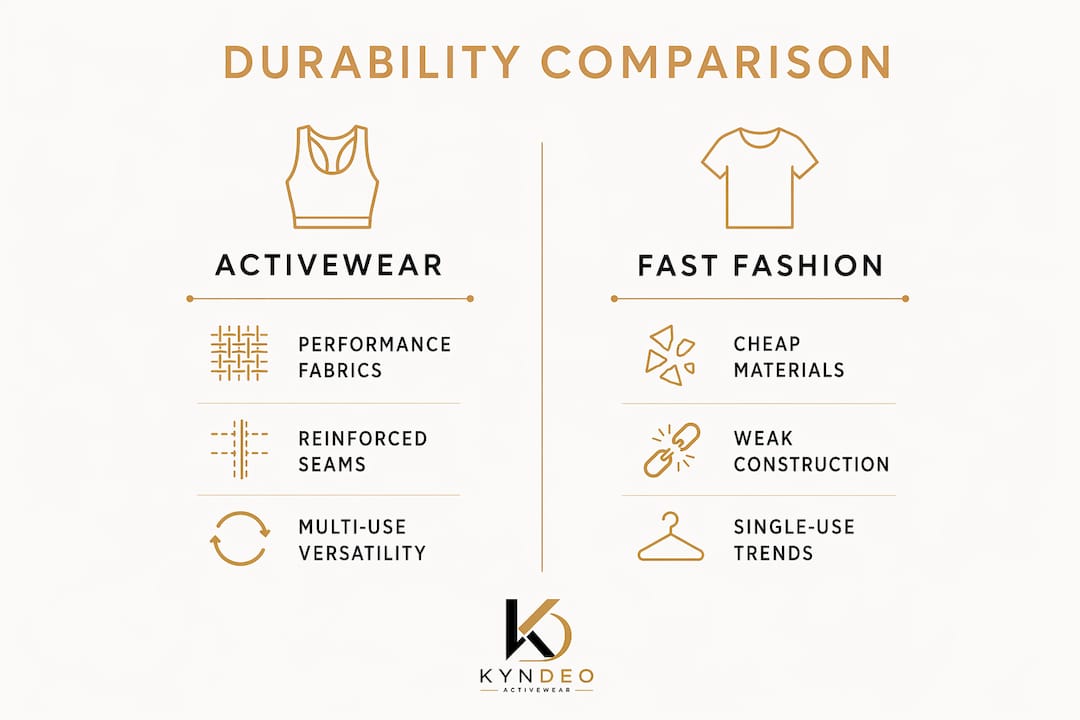
The result is a wardrobe piece that earns its cost across more occasions. When you wear the same leggings to a morning workout, afternoon errands, and a casual dinner, you reduce the total number of garments you need. Fewer garments means less spending, less waste, and a longer useful life per piece.
The multi-use case for activewear plays out in a predictable sequence:
- Morning workout. The fabric handles sweat, movement, and compression without stretching out.
- Post-gym errands. Moisture-wicking properties dry quickly, keeping the look and feel fresh.
- Casual social setting. Clean lines and coordinated sets like those from Kyndeoactivewear read as intentional outfits, not gym overflow.
- Work-from-home or relaxed office. Comfort-first cuts and neutral colorways fit professional casual dress codes without effort.
- Travel. Lightweight, wrinkle-resistant fabrics pack well and perform across time zones.
46% of consumers report feeling more confident in activewear than in other clothing categories. Confidence drives frequency of wear. Frequency of wear is what makes a garment genuinely valuable. This is why activewear replaces jeans for many people as the default daily choice.
In what ways does fast fashion’s model undermine garment durability?
Fast fashion is built on a specific economic logic: produce at the lowest possible cost, sell at volume, and replace with the next trend before the current one wears out. That logic is incompatible with durability. The business model requires disposability.
The material compromises are predictable and consistent:
- Thin, low-grade fabrics cut production costs but pill, fade, and tear within weeks of regular use.
- Trend-driven colorways use surface dyes that bleed and fade rather than fiber-reactive dyes that bond permanently.
- Minimal seam allowances reduce fabric use and cost but create weak points that split under normal stress.
- No performance testing means garments are never evaluated for stretch recovery, wash durability, or compression retention.
“A garment that lasts 200 workouts is environmentally superior to a ‘green’ product failing after 40 workouts.” This principle applies equally to everyday wear. Longevity is the most honest measure of sustainability.
Brands using vague language and flimsy construction without clear evidence of sourcing or durability deserve skepticism. A “recycled” label on a garment that falls apart in two months does not represent sustainable fashion. It represents greenwashing. Performance in wear and fit matters more than marketing claims alone.
What environmental and economic benefits come from choosing durable activewear?
Durable activewear reduces environmental impact through one straightforward mechanism: fewer replacements mean less textile waste. Lower replacement frequency means less fabric discarded in landfills annually. It also means fewer microplastic particles shed from synthetic fabrics during washing, since each wash cycle releases microplastics and a garment washed 200 times contributes far less per use than one washed 20 times before disposal.
The economic case is equally direct. 78% of consumers say high prices stop them from buying preferred styles. Durable activewear offsets that upfront cost by lasting significantly longer. A $90 pair of leggings worn 150 times costs $0.60 per wear. A $25 pair worn 20 times costs $1.25 per wear. The premium piece is cheaper in practice.
Pro Tip: Evaluate any activewear purchase by cost-per-wear, not sticker price. Divide the retail price by the realistic number of times you will wear the piece before it degrades. Anything under $1.00 per wear is strong value for performance apparel.
Two practical criteria separate genuinely durable activewear from greenwashed alternatives:
| Evaluation Criterion | What to look for |
|---|---|
| Fabric composition | Polyester or nylon blends with 15–25% spandex for stretch recovery |
| Seam construction | Flatlock or bonded seams, not single-needle overlocked stitching |
| Wash durability claims | Specific wash cycle ratings, not vague “long-lasting” language |
| Sourcing transparency | Named fabric mills or certifications, not generic “sustainable” claims |
| Fit retention | Brand-stated compression retention after repeated washing |
Kyndeoactivewear’s activewear for life philosophy reflects this standard directly. The focus is on pieces built to move with you across real life, not just one context.
Key Takeaways
Activewear outlasts fast fashion because performance fabrics, reinforced construction, and multi-context versatility combine to deliver more wears per garment at a lower cost per use than disposable trend-driven clothing.
| Point | Details |
|---|---|
| Fabric quality drives longevity | Polyester and nylon blends with spandex retain shape and compression through hundreds of wash cycles. |
| Construction details matter | Flatlock seams, reinforced gussets, and four-way stretch fabrics prevent the early failures common in fast fashion. |
| Versatility extends garment life | Activewear worn across workouts, errands, and social settings delivers more value per piece than single-use fashion. |
| Cost-per-wear favors durability | A $90 piece worn 150 times costs less per wear than a $25 piece worn 20 times before it degrades. |
| Sustainability requires longevity | A garment lasting 200 workouts reduces waste and microplastic output far more than a recycled-label piece failing at 40. |
The real cost of cheap clothing adds up faster than you think
I have been paying attention to how people actually dress for the better part of a decade, and the pattern is consistent. Consumers who buy cheap activewear to save money end up spending more. They replace faded leggings every few months, toss tanks that lost their shape after a summer, and cycle through sets that never quite held up. The math never works in their favor.
What changed my perspective was tracking cost-per-wear seriously. A well-constructed pair of leggings from a brand that prioritizes fabric quality and seam integrity will outlast three or four budget alternatives. That is not marketing language. That is what happens when you stop replacing things.
The cultural shift toward specialized durable activewear is real and accelerating. Consumers are moving away from generic athleisure toward pieces that fit their identity and perform under real conditions. Fast fashion cannot serve that need. It is structurally incapable of it.
My honest advice: spend more once, wear it everywhere, and stop thinking about it. The best activewear should feel intentional from the first wear and still feel that way a year later. That is the standard worth holding brands to.
— Bryan
Kyndeoactivewear: built for the pace of real life
Quality activewear should work as hard as you do, from the gym floor to the street to wherever the day takes you. Kyndeoactivewear builds every piece with that reality in mind, using performance fabrics and construction standards designed for longevity, not just looks.
The women’s activewear collection and men’s activewear collection cover everything from coordinated matching sets to movement-ready leggings, tanks, and hoodies. Each piece is designed to transition from workout to everyday wear without missing a beat. As a Black-owned brand, Kyndeoactivewear brings both purpose and performance to every outfit. Shop the collection and invest in pieces built to last.
FAQ
Why does activewear last longer than fast fashion?
Activewear uses performance fabrics like polyester and nylon blends engineered for stretch recovery, seam integrity, and wash durability. Fast fashion prioritizes low cost over construction quality, resulting in garments that fade and lose shape within weeks.
What fabric qualities should I look for in durable activewear?
Look for four-way stretch fabric with at least 15% spandex, flatlock or bonded seams, and moisture-wicking finishes bonded into the fiber rather than surface-treated. These features determine how well a garment holds up over time.
Is activewear actually more sustainable than fast fashion?
Yes, because durability reduces replacement frequency and therefore textile waste and microplastic output. A garment lasting 200 wears is more sustainable than a recycled-label piece that fails after 40, regardless of its material origin.
Why are more people wearing activewear instead of jeans every day?
63% of consumers now wear activewear outside the gym for daily tasks and social settings. Comfort, versatility, and confidence are the primary drivers, with 46% reporting they feel more confident in activewear than in other clothing.
How do I calculate whether activewear is worth the price?
Divide the retail price by the number of times you realistically expect to wear the piece before it degrades. Anything under $1.00 per wear represents strong value for performance apparel, and durable activewear consistently outperforms budget alternatives on this measure.