

Shopping for Black-owned activewear?
KYNDEO is a Black-owned, veteran-owned activewear brand. This article is published by KYNDEO and includes our own store alongside other fashion labels. If workout clothing and everyday athletic style are what you need, start with our women’s activewear or men’s activewear.
Browse leggings and yoga pants, hoodies and graphic tees by the piece you actually want to wear. Check each product’s measurements, materials and care information to choose a fit that works for you.
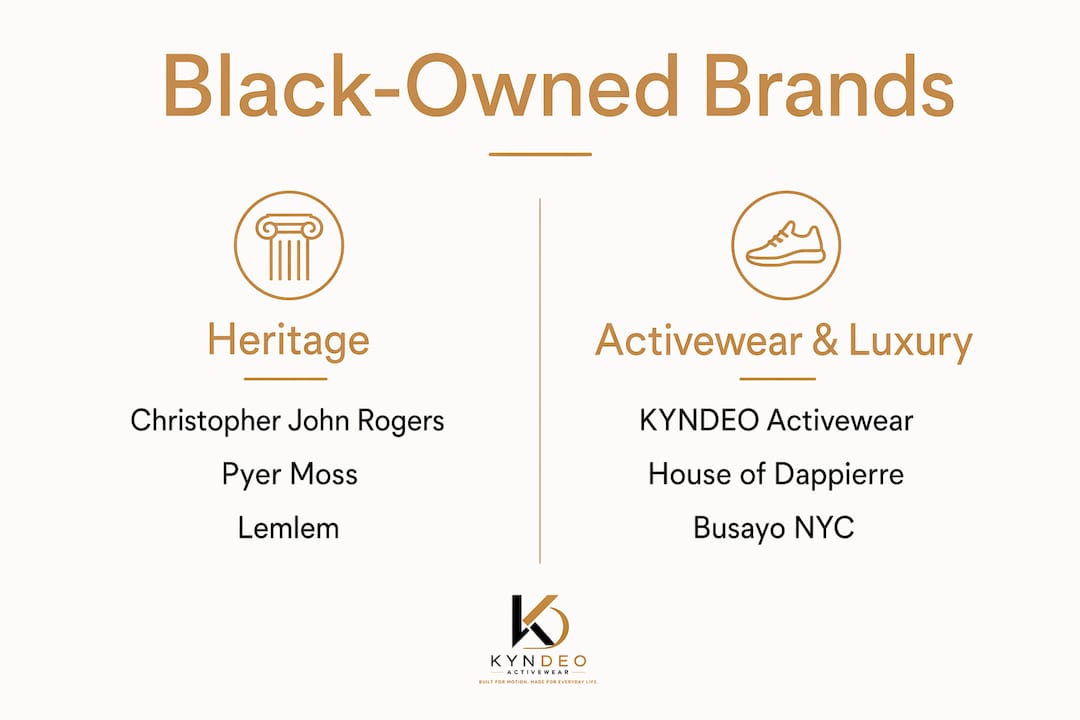
The best Black owned clothing brands in the US right now span every category from luxury ready-to-wear to daily activewear. Here is a quick-reference list to start your search:
- Christopher John Rogers — bold, sculptural womenswear; runway-to-retail price range ($300–$1,500+); available at Saks Fifth Avenue and his own site
- Pyer Moss (Kerby Jean-Raymond) — cultural commentary through menswear and womenswear; known for runway shows as cultural events; luxury price tier
- Lemlem (Liya Kebede) — sustainable Black clothing woven by Ethiopian artisans; resort and casual wear; mid-to-luxury range
- House of Dappierre — luxury apparel, fragrance, and premium spirits under one Black-owned house; premium pricing; available online and through select retailers
- KYNDEO Activewear — Black-owned activewear for men and women; matching sets, leggings, hoodies, and accessories; accessible everyday pricing
- KAHINDO — Congolese-Ugandan heritage; handcrafted by female artisans in Kenya; stocked at Nordstrom and Bloomingdale’s
- Busayo NYC — Nigerian-American designer; Adire textile technique; available at Saks Fifth Avenue and Nordstrom
Each brand carries authentic Black ownership and ships to US customers. The sections below go deeper on heritage, aesthetics, and where to buy.
Table of Contents
- What makes these Black-owned clothing brands worth knowing?
- How to discover and support Black-owned clothing brands long-term
- Kyndeoactivewear: what a Black-owned activewear brand looks like in practice
- Kyndeoactivewear fits the reader who wants more than a label
- FAQ
- Key Takeaways
What makes these Black-owned clothing brands worth knowing?
Black-owned fashion in the US covers a wider range of aesthetics, price points, and cultural roots than most curated lists suggest. These profiles go beyond the name-drop.
1. Christopher John Rogers
Rogers launched his New York label in 2019 and became one of the fastest designers to dress a First Lady, with Jill Biden wearing his work on Inauguration Day 2021. His signature is volume: exaggerated silhouettes, saturated color, and a joyful theatricality that reads as both high fashion and deeply personal expression. The brand focuses on womenswear, with pieces ranging from structured gowns to statement separates. You can shop directly at christopherjohnrogers.com or through Saks Fifth Avenue and Net-a-Porter.
2. Pyer Moss
Kerby Jean-Raymond founded Pyer Moss in 2013 with a clear mandate: fashion as cultural documentation. His runway shows have addressed police brutality, Black American history, and the erasure of Black inventors from mainstream narratives. The brand blends menswear and womenswear with a streetwear-inflected luxury sensibility. In 2021, Jean-Raymond became the first Black American designer to show at Haute Couture Week in Paris. Pyer Moss operates primarily through its own channels and select luxury retailers.
3. Lemlem
Ethiopian-born model Liya Kebede founded lemlem in 2007 with a specific production mission: keep traditional Ethiopian weaving alive by paying artisans fair wages and building a commercial market for their work. The result is a resort and casual wear line built on handwoven cotton and linen, with a color palette that reflects East African textile traditions. Lemlem preserves heritage techniques while maintaining supply chain control, which is rare at this price point. Available at lemlem.com and select department stores.
4. House of Dappierre
House of Dappierre is one of the few independent Black-owned luxury houses operating across multiple lifestyle categories simultaneously. The brand expands into fragrance, premium spirits, and apparel as part of a deliberate strategy to occupy territory traditionally held by European luxury conglomerates. Its apparel line uses narrative-driven design with a focus on melanin-rich skin tones and heirloom-quality construction. For shoppers who want luxury with cultural intentionality, this is a distinct option.
5. KYNDEO Activewear
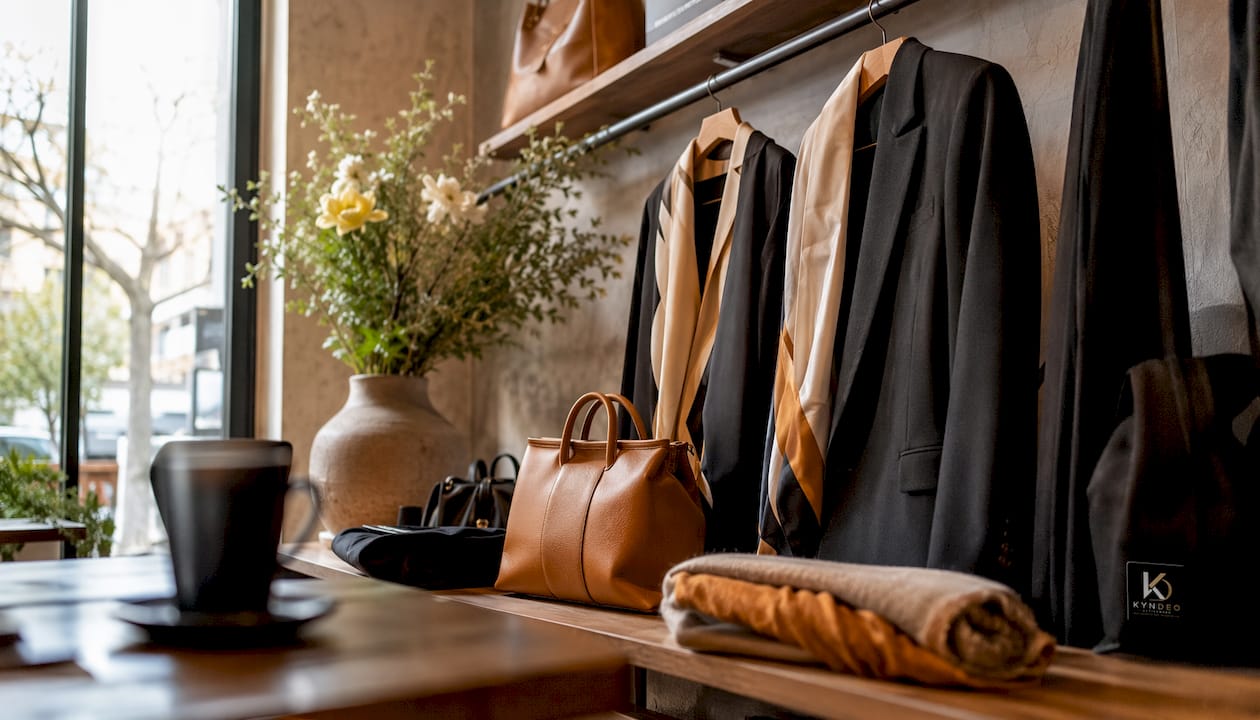
Kyndeoactivewear is a Black-owned e-commerce brand built for the pace of real life. The product range covers women’s activewear and men’s activewear, with coordinated matching sets, high-rise leggings, tanks, hoodies, and accessories including sneakers and bags. The brand’s minimalist aesthetic uses earthy gold-bronze tones against black and cream, giving every piece an editorial quality that works from the gym to the street. Pricing is accessible, and the site organizes products by gender, activity type, and outfit coordination so you can build a complete look without guesswork.
6. KAHINDO
Kahindo Mateene grew up across five African countries before studying fashion design in Chicago and appearing on Project Runway Season 12. She relaunched KAHINDO in 2017 with a model that is its own argument: designed in New York, handcrafted by female artisans in Kenya, sold at Nordstrom, Bloomingdale’s, and Anthropologie. The brand brings Congolese color intelligence to luxury womenswear at a price point that US retail buyers treat as a commercial decision, not a cultural gesture. Collections have been featured in Vogue, Elle, and the New York Times.
7. Busayo NYC
Busayo Olupona practiced law in New York before launching Busayo NYC in 2011. Every piece is built on Adire, the Yoruba resist-dyeing technique from Ile-Ife, with all production in Nigeria. The brand is stocked at Saks Fifth Avenue, Nordstrom, and Shopbop, and has been worn by Lupita Nyong’o and Madonna. The Black in Fashion Council included Busayo in its FW25 showroom at New York Fashion Week. This is an African American fashion brand that earns its retail placement on product merit.
8. Agbobly
Brooklyn-based, Togo-born designer Jacques Agbobly founded Agbobly in 2020. The brand builds sculptural knitwear and ready-to-wear from Togolese heritage and diasporic memory. In 2024, Agbobly became the first designer of Togolese heritage shortlisted for the LVMH Prize. Their designs appeared in the Metropolitan Museum of Art’s Superfine: Tailoring Black Style exhibition in 2025, and a Nike collaboration showed at New York Fashion Week SS26. Available directly from the brand and select wholesale partners.
Pro Tip: When browsing brand websites, check the “About” or “Our Story” page for founder background and production details. Brands with transparent supply chains and named founders are easier to verify as authentically Black-owned.
How to discover and support Black-owned clothing brands long-term
Finding a Black owned clothing brand once is easy. Building a real shopping habit around them takes a bit more intention, and it pays off in quality and cultural connection.
Verify ownership before you buy. Black consumers prioritize inclusivity, leadership diversity, and brand authenticity when choosing fashion labels. Look for named Black founders, transparent leadership pages, and production stories that match the brand’s cultural claims. A brand that says “Black-owned” but hides its leadership team is worth a second look.
Shop direct when you can. Buying from a brand’s own website sends more revenue to the business than purchasing through a third-party marketplace. Most of the brands listed here have strong direct-to-consumer sites with full product catalogs.
Use curated discovery platforms. The African fashion designers building US presence often appear in diaspora-focused pop-ups, showrooms, and events that mainstream retail calendars miss. Following brands on Instagram and TikTok is one of the fastest ways to catch limited drops and collaborations.
Practical tips for sustained support:
- Follow your favorite labels on social media and engage with their content, not just their sales
- Sign up for brand newsletters to catch restocks, new collections, and community events
- Leave honest reviews after purchase; they help small brands build credibility with new customers
- Gift Black-owned apparel to friends and family, turning a single purchase into broader community awareness
- Check platforms like the KYNDEO blog for curated roundups of Black-owned activewear and fashion news
On affordability and emerging brands. Success in Black-owned fashion depends on real-world value: utility, fit, and price, not identity messaging alone. Emerging designers often sell at accessible price points during early collections before scaling up. Following them early means better prices and a direct relationship with the brand before it blows up.
Pro Tip: Search “Black-owned” plus your specific category (e.g., “Black-owned activewear brands” or “Black-owned menswear”) on Google Shopping and Instagram to surface smaller labels that do not appear on mainstream listicles.
Kyndeoactivewear: what a Black-owned activewear brand looks like in practice
Kyndeoactivewear is not trying to be everything. It does one thing with real focus: movement-ready apparel that looks intentional from the first wear and holds up through the pace of real life.
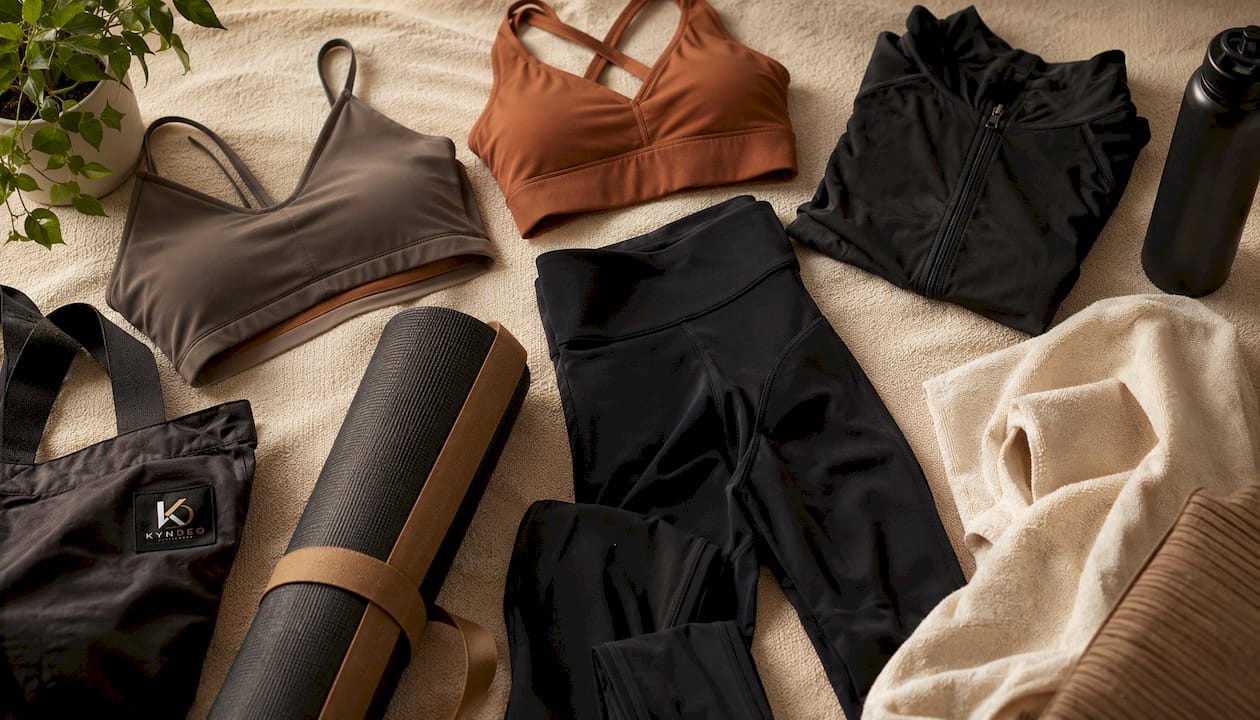
The brand’s identity is built on a minimalist athletic aesthetic with a warm, editorial quality. Gold-bronze tones against black and cream give the collections a cohesion that makes outfit-building straightforward. Every product category, from matching workout sets to the KYNDEO Purpose Black High-Rise Yoga Pants Leggings, is designed to transition from a gym session to a coffee run without a wardrobe change.
What the product range covers:
- Women’s: high-rise leggings, tanks, sports bras, matching sets, hoodies
- Men’s: joggers, leggings, performance tops, coordinated sets
- Accessories: sneakers, bags, visors, and everyday carry items that complete the look
The site organizes everything by gender, activity type, and outfit coordination. That structure matters practically: you can land on the women’s collection page and build a complete, coordinated outfit in one session rather than hunting across categories.
Kyndeoactivewear also carries a sustainable activewear line, reflecting a broader commitment to responsible production that aligns with the values many shoppers bring to their Black-owned brand choices.
Pro Tip: Shop the matching sets first. Kyndeoactivewear’s coordinated sets are priced to offer better value than buying separates, and the color coordination is already done for you.
Kyndeoactivewear fits the reader who wants more than a label
Most Black-owned fashion brands on this list require a real budget and a specific occasion. Kyndeoactivewear fills a different gap: daily-use activewear that carries the same cultural pride and design intention, at a price point built for regular wear.
If you came to this article looking for Black-owned apparel you can actually wear every week, not just on special occasions, Kyndeoactivewear is the direct answer. The gym-to-street clothing collection covers workouts, errands, travel, and casual outings without requiring a separate wardrobe for each. The matching sets make getting dressed fast and intentional. The accessories round out the look without sending you to another brand.
Shop the full collection at kyndeoactivewear.com and browse the matching activewear sets to start building your everyday look.
FAQ
What luxury brand is Black-owned?
House of Dappierre is a notable Black-owned luxury brand offering apparel, fragrance, and premium spirits. Pyer Moss and Christopher John Rogers are also recognized for luxury womenswear and cultural fashion at premium price points.
What are some well-known Black-owned clothing products in the US?
KYNDEO Activewear’s matching sets and high-rise leggings, Busayo NYC’s Adire-dyed womenswear, KAHINDO’s handcrafted luxury pieces, and lemlem’s handwoven resort wear are all widely recognized Black-owned apparel products available in the US market.
What are the biggest African clothing brands building a US presence?
Busayo NYC (stocked at Saks Fifth Avenue and Nordstrom), KAHINDO (at Nordstrom and Bloomingdale’s), and Agbobly (shown at New York Fashion Week) are among the most commercially significant African-heritage designers currently building US market positions.
How do I verify that a clothing brand is genuinely Black-owned?
Look for a named Black founder on the brand’s “About” page, transparent leadership information, and production details that match the brand’s cultural story. Brands featured by the Black in Fashion Council or stocked at major retailers with verified ownership credentials are reliable starting points.
Does supporting Black-owned brands require a big budget?
No. Brands like Kyndeoactivewear offer accessible everyday pricing on activewear and matching sets, while emerging designers often price early collections competitively. Long-term support also includes social media engagement, reviews, and word-of-mouth, none of which cost anything.
Key Takeaways
The most effective way to support Black-owned clothing brands is to combine direct purchasing with consistent community engagement, choosing brands that prove their value through product quality, transparent ownership, and cultural authenticity.
| Point | Details |
|---|---|
| Verify ownership first | Check for named Black founders, transparent leadership pages, and production stories before purchasing. |
| Shop direct for more impact | Buying from a brand’s own website sends more revenue to the business than third-party marketplaces. |
| Quality drives loyalty | Black consumers prioritize utility, fit, and affordability over identity messaging alone when choosing apparel brands. |
| Diaspora brands hold US retail | Busayo NYC, KAHINDO, and Agbobly are stocked at Saks, Nordstrom, and Bloomingdale’s based on commercial merit. |
| Kyndeoactivewear for daily wear | Kyndeoactivewear offers accessible Black-owned activewear, including matching sets, leggings, and accessories suited for everyday movement. |