

Activewear fit is defined as garments that move with your body, providing support without restriction, pinching, or constant adjustment. The activewear fit guide best practices covered here go beyond “buy your size.” They address fabric weight, compression standards, measurement technique, and layering strategy. Visible fit issues like rolling waistbands or fabric spotlighting are almost always caused by technical misfit, not body shape. Getting fit right means understanding the interplay between sizing, fabric construction, and how you actually move.
1. Activewear fit guide best practices: start with accurate measurements
The most common sizing mistake is measuring incorrectly before you even look at a size chart. A soft vinyl tape is the right tool for body measurements. Metal construction tapes do not contour to body curves, especially around the hips and waist, which leads to readings that are off by an inch or more.
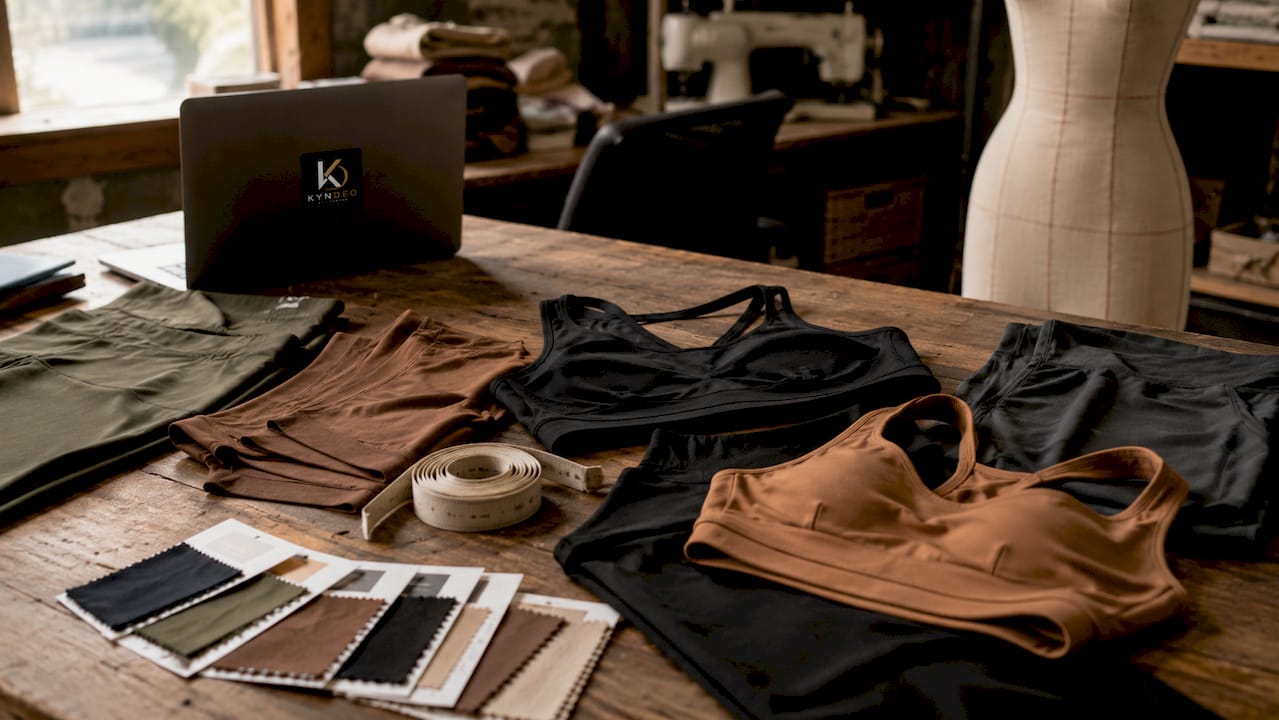
Take measurements at the fullest points of each body part with your body relaxed and standing straight. Pulling the tape tight compresses soft tissue and gives you a smaller number than your actual size. That smaller number leads you to size down, which causes exactly the fit problems you were trying to avoid.
Key measurements to take:
- Waist: measure at the narrowest point, usually just above the navel
- Hips: measure at the fullest point, typically 7–9 inches below the waist
- Inseam: measure from the crotch seam to the ankle bone
- Chest/bust: measure at the fullest point, keeping the tape parallel to the floor
Pro Tip: Write your measurements down and compare them to the brand’s size chart every time you shop. Sizing varies significantly across brands, so your measurements matter more than your usual size label.
2. Size up when you are between sizes
Sizing up when you fall between two sizes produces better fabric behavior, better opacity, and more comfort than sizing down. Sizing down causes sheerness, seam digging, and fabric that spotlights skin texture. None of those are body problems. They are fit problems caused by too much tension on the fabric.
Sizing up distributes fabric tension evenly across the garment. The waistband sits flat instead of rolling. The seat fabric lies smooth instead of pulling. You get the coverage and support the garment was designed to deliver.
This is especially true for leggings and fitted shorts. A half-size difference in the hips can be the gap between a garment that performs and one that fails the squat test.
3. What fabric weight and spandex content tell you about fit
Fabric construction is the single biggest predictor of how well activewear will fit and hold up. Squat-proof leggings require a minimum fabric weight of 220 GSM (grams per square meter) and more than 15% spandex or elastane content. Those two numbers are the technical baseline for opacity and snap-back after movement.
GSM measures how dense the fabric is. Denser fabric blocks light, holds its shape under tension, and resists pilling. Spandex content determines how well the fabric recovers after stretching. Below 15% spandex, fabric stretches out during a workout and does not return to its original shape. That means sagging, bagging, and a garment that looks worn out after a few sessions.
| Fabric Feature | Minimum Standard | What It Delivers |
|---|---|---|
| Fabric weight | 220 GSM | Opacity and structure under movement |
| Spandex/elastane | 15%+ | Snap-back and shape retention |
| Construction | Gusset panels | Reduced seam irritation and better range of motion |
| Opacity test | No light through | Squat-proof performance confirmed |
Pro Tip: Hold the fabric up to a light source and stretch it gently. If you can see your hand through it, the fabric weight is too low for high-movement activities.
4. How to test fit with functional movement checks
Trying on activewear in a fitting room and standing still tells you almost nothing. Squat, bend, twist, and reach tests reveal whether a garment fits for actual movement. These tests expose pulling, sliding, sheerness, and restriction that only appear under load.
- Squat test: Lower into a full squat and hold for five seconds. Check if the waistband rolls down or the fabric becomes sheer at the seat.
- Reach test: Raise both arms overhead. Check if the top rides up and exposes your midsection.
- Twist test: Rotate your torso left and right. Check if the fabric pulls or bunches at the sides.
- Lunge test: Step into a deep lunge. Check if the inner thigh seam digs in or restricts your stride.
- Camera check: Use your phone’s rear camera to photograph yourself in each position. Front-facing cameras distort depth and can hide fabric transparency that the rear lens catches clearly.
Any garment that requires constant adjustment during these tests will require constant adjustment during your workout. That is the definition of a poor fit.
5. What waistband performance tells you about overall fit
The waistband is the most reliable indicator of whether a garment fits correctly. A well-fitted waistband sits flat against the skin without digging, rolling, or sliding down during movement. If it rolls, the fabric is under too much tension, which usually means the garment is too small.
A waistband that slides down during squats or lunges signals the opposite problem. The garment is either too large or the fabric lacks sufficient elastane recovery. Both problems are fixable by adjusting your size or choosing a higher spandex content.
Wide waistbands (typically 3 inches or more) distribute pressure more evenly than narrow ones. They stay in place better during high-impact movement and provide light core support. For activities like running or HIIT, a wide waistband is a functional feature, not just a style choice.
6. Why gussets and seamless construction improve fit
A gusset is a triangular or diamond-shaped fabric panel sewn into the crotch area of leggings and shorts. It allows the legs to move independently without pulling the garment out of position. Without a gusset, a single seam runs straight through the crotch, which creates friction, restricts stride length, and causes the garment to shift during movement.
Seamless construction eliminates raised seam lines entirely by knitting the fabric in one piece. This removes the pressure points that flat-seam and overlock-seam construction create. For long training sessions, seamless garments reduce chafing significantly. Technical activewear fit testing, which follows ASTM tension standards, accounts for these construction details because they directly affect how a garment performs under repeated stress.
7. How layering activewear works for performance and temperature control
Layering is a performance tool, not just a cold-weather habit. Layering with base, mid, and outer layers regulates body temperature across different phases of a workout, from warm-up to peak effort to cooldown. Each layer has a specific fit requirement that makes the system work.
Base layer: fits close to the skin with moisture-wicking, four-way stretch fabric. This layer pulls sweat away from the skin and moves with every motion without bunching. Polyester blends and spandex mixes work best here.
Mid-layer: sits slightly looser than the base to allow air circulation between layers. Fleece-lined fabrics or bamboo blends trap warmth without adding bulk. The fit should allow full arm and leg movement without the mid-layer riding up.
Outer layer: needs enough clearance over the mid-layer to avoid restricting movement. Look for zippered vents at the underarms or back to release heat during high-intensity intervals. A hoodie or lightweight activewear hoodie with a relaxed fit works well as an outer layer for most gym and outdoor settings.
The key to layering that works is making sure each layer fits its role. A base layer that is too loose traps sweat. A mid-layer that is too tight defeats the purpose of the base layer beneath it. Fit each layer for its function, not just for how it looks on its own.
8. Why inclusive sizing matters for activewear fit
Inclusive sizing is not a marketing term. It is a technical requirement for activewear that actually fits a wide range of bodies. Standard sizing grids are built around a narrow set of proportions. When those proportions do not match your body, the garment fails at the waist, hips, or thighs, regardless of the size label.
Brands that build inclusive sizing into their pattern-making adjust the grading between sizes to account for proportional differences across the size range. This means the hip-to-waist ratio, rise height, and inseam length scale correctly rather than simply getting bigger. The result is a garment that fits the body it was made for, not just a scaled-up version of a sample size.
When shopping, look for brands that publish detailed size charts with actual body measurements rather than generic S/M/L labels. A chart that lists waist, hip, and inseam measurements in inches gives you real information to work with.
Key Takeaways
The best activewear fit comes from combining accurate measurements, the right fabric construction, and movement-based testing before you commit to a garment.
| Point | Details |
|---|---|
| Measure accurately | Use a soft vinyl tape at the fullest body points to get reliable sizing data. |
| Size up when in doubt | Sizing up improves fabric behavior, opacity, and comfort compared to sizing down. |
| Check fabric specs | Look for 220 GSM minimum and 15%+ spandex content for squat-proof performance. |
| Test with movement | Squat, lunge, and reach in the fitting room to catch fit failures before purchase. |
| Layer by function | Fit each layer for its role: snug base, slightly loose mid, and clear outer layer. |
What I have learned about activewear fit after years of testing it
The most persistent myth in activewear is that fit problems are body problems. They are not. Every time I have seen someone frustrated with rolling waistbands or sheer fabric, the issue traced back to fabric weight, spandex content, or the wrong size, not the person wearing it. That reframe matters because it puts the solution in your hands.
The second thing I have learned is that fabric quality beats price every time. I have worn expensive garments that failed the squat test and affordable ones that held up through hundreds of sessions. The difference was always in the GSM and spandex content, not the price tag or the logo. Check the fabric specs before you check the price.
The third lesson is about care. Activewear loses its snap-back faster when washed in hot water or dried in a machine dryer. Cold water washing and air drying preserve elastane content and extend the life of the garment’s fit. A well-constructed piece that you care for correctly will fit better at 100 wears than a cheaper piece will at 20.
Fit confidence builds over time. Once you know your measurements, understand what fabric specs to look for, and trust the movement test, shopping for activewear stops being frustrating and starts being straightforward.
— Bryan
Kyndeoactivewear: built for motion, sized for real bodies
Kyndeoactivewear designs every piece around the idea that your clothes should keep up with your life, not slow it down. The women’s activewear collection and men’s activewear collection are built with technical fabrics, thoughtful construction, and sizing that accounts for real body proportions.
Kyndeoactivewear’s sustainable activewear line combines durable, high-GSM fabrics with eco-conscious production. The matching sets are designed to coordinate fit across tops and bottoms so you are not mixing and matching sizing systems. From the gym to the street, every piece is built to move with you and look intentional doing it.
FAQ
What does good activewear fit actually feel like?
Good activewear fit feels snug without pinching, with no fabric bunching, sliding, or pulling during movement. You should be able to squat, lunge, and reach without adjusting the garment.
How do I know if my leggings are squat-proof?
Use your phone’s rear camera to photograph yourself in a full squat. If you can see skin tone through the fabric, the fabric weight is too low or the size is too small.
Should I size up or down in activewear?
Size up when you fall between sizes. Sizing up improves fabric opacity, reduces seam pressure, and keeps the waistband flat during movement.
What spandex percentage do I need for leggings that hold their shape?
Leggings need more than 15% spandex or elastane content to snap back after stretching. Below that threshold, fabric sags and loses shape during a workout.
Why does layering help with gym performance?
Layering regulates body temperature across workout phases by assigning each layer a specific function: moisture management at the base, insulation in the middle, and wind or weather protection on the outside.