

TL;DR:
- Post-workout clothing helps support comfort, temperature regulation, and effortless transition from the gym to daily life within the first 60 minutes after exercise.
- It features relaxed cuts, soft fabrics like Tencel and merino wool blends, and avoids tight compression that impairs vasodilation.
Post-workout clothing is a distinct apparel category designed specifically for the post-exercise cool-down phase, typically lasting 30 to 90 minutes, when your body is still regulating temperature, your skin is more sensitive, and your next stop is usually somewhere other than the gym. The bottom line: the right recovery outfit keeps you comfortable, supports faster perceived recovery, and lets you walk straight from your workout into real life without changing twice. Kyndeoactivewear designs exactly for this moment. The Varlo Journal’s “rule of 60” recommends changing out of training gear within 60 minutes to capture most of the recovery-phase benefit from softer, less restrictive fabrics.
Table of Contents
- What post-workout clothing actually is — and why it’s different from gym gear
- Which fabrics and features actually matter for recovery wear
- How to build a gym-to-street outfit in four steps
- Outfit ideas for real post-workout situations
- What your post-workout wardrobe actually needs
- How to choose the right fit and spot red flags
- How to care for performance fabrics so they last
- Why post-workout clothing pays off beyond how it looks
- Key Takeaways
- The case for designing with the cool-down in mind
- Build your post-workout capsule with Kyndeoactivewear
- Useful sources
- FAQ
What post-workout clothing actually is — and why it’s different from gym gear
Your body doesn’t stop working the moment you rack the weights. After moderate-to-intense exercise, core temperature remains elevated for a period of time, and peripheral vasodilation increases skin sensitivity across that window. That’s a physiologically distinct phase from the workout itself, and it calls for different fabric and cut choices.
Workout gear vs. post-workout gear at a glance:
- In-workout: tight compression, moisture-wicking, oxygen delivery, performance stretch
- Post-workout: looser cuts, soft-hand fabrics, thermal regulation, circulation support, skin comfort
| Factor | In-Workout | Post-Workout |
|---|---|---|
| Core temperature | Rising sharply | Elevated, gradually falling |
| Cool-down window | N/A | 30–90 minutes |
| Compression need | High (performance) | Low to moderate (15–25 mmHg max) |
| Fabric priority | Moisture-wicking, stretch | Soft hand, breathability, light warmth |
| Cut priority | Body-mapped, compressive | Relaxed, nonrestrictive |
One important distinction: post-workout clothing for everyday athletes is not the same as adaptive or post-surgery recovery wear, which requires features like side zippers and open-back designs for limited mobility. This guide covers the athletic cool-down context.
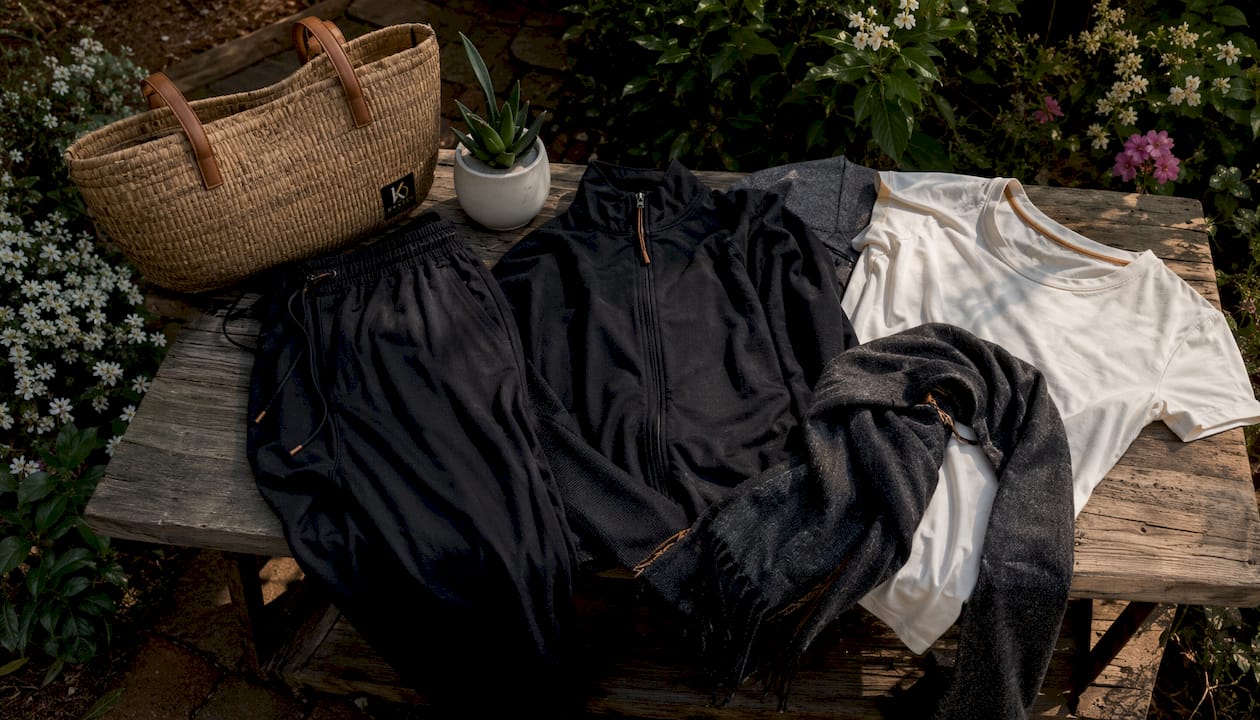
Pro Tip: Set a 60-minute timer when you finish your last set. Keep a recovery outfit in your gym bag so the swap is automatic, not optional.
Which fabrics and features actually matter for recovery wear
Prioritize soft-hand fabrics, targeted breathability, and moderate stretch over tight compression for the cool-down phase. The goal is comfort and temperature management, not performance output.
Fabrics worth choosing:
- Tencel/Modal: buttery soft, moisture-wicking, temperature-regulating, eco-friendly
- Merino wool blends: natural odor control, gentle warmth, breathable
- Light polyester blends: fast-drying, durable, easy care
- Cotton-modal blends: soft feel, good for low-intensity cool-down movement
Avoid heavy cotton when it’s damp. It traps heat and sits against sensitive post-workout skin longer than any other common fabric. For comfortable fabrics for daily wear, modal and Tencel consistently rank highest for skin feel.
Features to look for:
- Looser, relaxed cuts that don’t restrict vasodilation
- Mesh panels at high-heat zones (back yoke, underarm)
- Anti-microbial or odor-control finishes
- Gradient compression socks or sleeves when targeted recovery is the goal (not full-body tight compression)
- Labeled care instructions for technical fabrics
Skip these for cool-down:
- Full-body tight training compression (it works against relaxation and vasodilation)
- Heavyweight, heat-trapping outer layers immediately post-workout
- Fabrics with no stretch that restrict natural movement
Pro Tip: When a brand claims “recovery” benefits, check whether the garment has actual construction differences: looser cut, softer fabric, thermal paneling. Many recovery marketing claims replicate training-line construction with no material change.
How to build a gym-to-street outfit in four steps
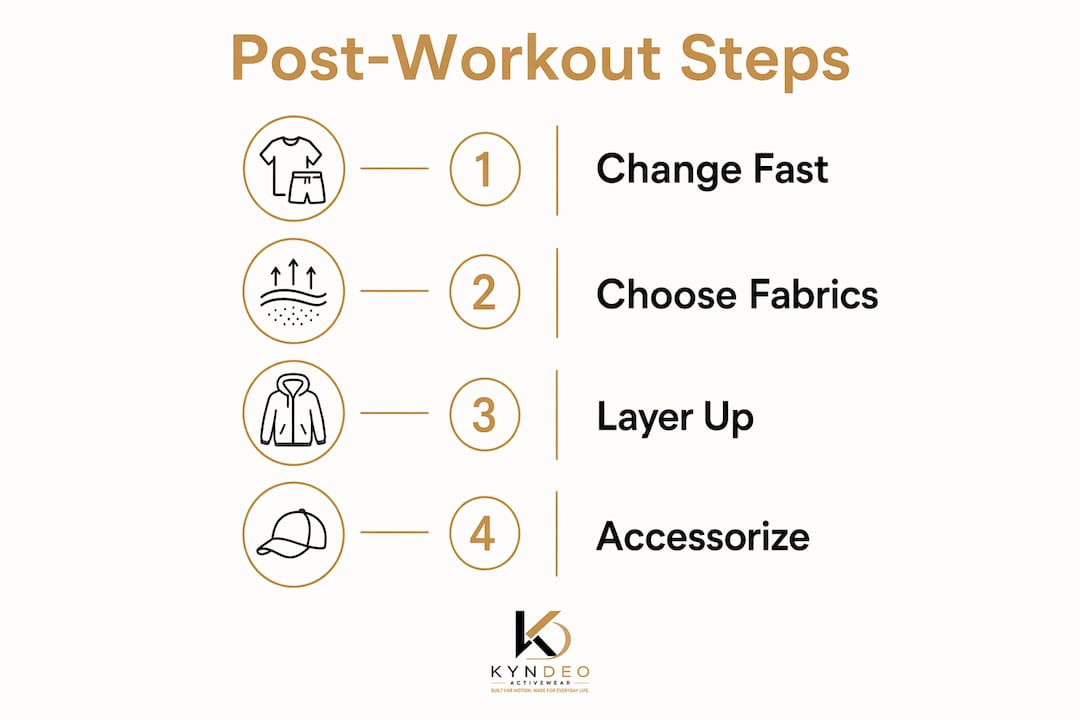
The system is simple: start with a clean technical base, add a relaxed outer layer, choose the right bottom silhouette, and finish with a versatile shoe. Styling experts consistently recommend this mix of technical base plus elevated, loose-fitting outer layers for both functional cooling and street-ready polish.
- Start with a clean technical base. A fitted tank or short-sleeve tee in a moisture-wicking, soft fabric. This is your foundation.
- Add a relaxed midlayer. An oversized tee, open overshirt, or zip hoodie. This is where style enters.
- Choose the right bottom silhouette. Relaxed joggers for errands, tapered joggers for coffee stops, matching set bottoms for a pulled-together look.
- Finish with polished sneakers or slides. A clean low-top sneaker or structured slide elevates the whole outfit instantly.
Three quick outfit formulas:
- Matchy-matchy set + open overshirt: effortless, coordinated, works for errands or a casual lunch
- Compression base + oversized tee + relaxed jogger: layered, street-ready, easy to transition from gym to transit
- Tencel tee + longline coat + slip-on sneaker: refined, travel-ready, looks intentional from the first wear
Rotating your technical base layers also protects them. Practical styling guides note that rotation extends the life of performance pieces and keeps your gym-to-street looks consistently fresh.
Outfit ideas for real post-workout situations
A single system covers most scenarios. Here are five place-based examples you can recreate today.
- Cool-down at the gym: Kyndeoactivewear matching set (top + jogger bottoms) worn straight off the floor. Soft, coordinated, zero effort. Swap training shoes for slides.
- Grocery run or errands: Relaxed men’s joggers or women’s set bottoms + oversized tee + low-top sneaker. Add a belt bag for hands-free carry.
- Coffee or casual social stop: Matching set + open overshirt or zip hoodie. The set does the work; the layer adds polish. Clean sneakers finish it.
- Travel day: Tencel or modal tee + tapered jogger + slip-on sneaker. Comfortable for long sits, looks put-together at the gate. A tote or structured bag completes the look.
- Outdoor cool-down walk: Zip hoodie over a fitted tank + relaxed jogger + supportive sneaker. Warm enough for the temperature drop, breathable enough for residual heat.
Weather swap: in cooler months, swap slides for a clean low-top and add a lightweight zip layer. In summer, opt for shorts or cropped joggers and a breathable mesh-panel tee.
What your post-workout wardrobe actually needs
Own 4–6 versatile pieces and you’ll cover most post-workout scenarios without overthinking it. Here’s the capsule:
- Matching set (top + bottom): The fastest put-together look. Kyndeoactivewear’s matching workout sets are built for exactly this moment. Coordinated, movement-ready, gym-to-street.
- Relaxed jogger: Supports vasodilation, looks polished with almost any top. Choose a tapered cut for versatility.
- Soft tee or tank: Your technical base. Modal or polyester blend. Pairs with everything.
- Overshirt or zip hoodie: The layer that converts a gym look into a street look. Relaxed fit, clean silhouette.
- Recovery slide or versatile sneaker: Slides for immediate post-workout comfort; a clean low-top for anywhere else.
Pair a technical base with an elevated outer layer every time and the look stays cohesive. That pairing is the whole system. For a broader activewear wardrobe essentials checklist, Kyndeoactivewear’s 2026 guide covers the full capsule.
How to choose the right fit and spot red flags
Prioritize a relaxed fit and soft hand feel over sizing down for recovery use. A garment that feels slightly roomy is doing its job.
- Check fabric content first. Modal, Tencel, merino, or light polyester blends are the right starting point.
- Test the waistband. It should sit comfortably without digging after 30 minutes of wear.
- Check the crotch seam depth on joggers. A deep, gusseted seam means freedom of movement. A shallow seam restricts.
- Look for mesh panels. Specified paneling at the back or underarm signals genuine breathability design.
- Read the care label. If it’s missing or vague, the brand isn’t confident in the fabric.
Sizing guidance: if you’re between sizes, go up for recovery wear. Street fit can be snug; recovery fit should not be. Measure your natural waist and hips, then compare to the brand’s size chart rather than guessing by feel in-store.
Quick questions to ask any product page: Is the fit relaxed or compressive? What is the fiber content? Are mesh or paneling zones specified?
Red flag: a brand using “recovery” as a tag on garments with identical construction to their training line. Genuine recovery apparel features looser cuts, softer fabrics, and thermal paneling — not just a different colorway.
How to care for performance fabrics so they last
Simple laundry habits extend both performance and appearance. Start with the care label, every time.
- Rinse fast-dry items immediately after a sweaty session if you can’t wash right away.
- Wash on a gentle, cold or warm cycle (never hot).
- Turn garments inside out before washing to protect surface finishes.
- Use a small amount of sport-specific or enzyme-based detergent for sweat and odor.
- Air dry when possible. High heat degrades elastic fibers and anti-microbial finishes faster than anything else.
Do and don’t list:
- Do use an enzyme-based prewash for stubborn sweat stains
- Do wash similar fabrics together
- Don’t use fabric softener on technical fabrics (it coats fibers and kills moisture-wicking performance)
- Don’t use dryer sheets
- Don’t leave damp activewear balled up in a bag for hours
Odor that survives a normal wash usually means detergent buildup. Soak in cold water with a small amount of white vinegar before the next wash cycle.
Why post-workout clothing pays off beyond how it looks
Comfortable recovery clothing improves adherence and perceived recovery. That’s the ergonomic-comfort effect: when garments feel better, athletes train more consistently over time. It’s one of the most under-discussed benefits of investing in recovery apparel.
Practical benefits:
- Quicker behavioral cool-down cue (changing signals your body to shift modes)
- Less skin irritation from damp, restrictive training gear
- Better temperature management during the 30–90 minute recovery window
- Higher outfit confidence for gym-to-street transitions
- Long-term training consistency driven by comfort
On compression specifically: meta-analyses report small but statistically significant reductions in delayed-onset muscle soreness (DOMS) when compression garments meet specific pressure ranges (15–25 mmHg) and are worn for extended post-exercise periods. The effect is real but modest. For most people, the comfort and adherence benefit is the bigger win.
The rule of 60: Change into recovery-specific clothing within 60 minutes of finishing your workout. After 90 minutes, the physiological benefit from fabric differences becomes marginal.
Key Takeaways
Post-workout clothing works because it matches softer fabrics and relaxed cuts to the body’s 30–90 minute cool-down phase, supporting comfort, temperature regulation, and gym-to-street style in one move.
| Point | Details |
|---|---|
| The rule of 60 | Change out of training gear within 60 minutes to capture most recovery-phase benefits. |
| Fabric first | Prioritize Modal, Tencel, merino, or light polyester blends over heavy cotton for the cool-down window. |
| Compression context | Gradient compression (15–25 mmHg) for targeted recovery is useful; full-body tight compression works against relaxation. |
| The styling system | Mix a technical base with a relaxed outer layer and a clean sneaker for a gym-to-street look every time. |
| Kyndeoactivewear capsule | A matching set, relaxed jogger, soft tee, and zip hoodie from Kyndeoactivewear covers most post-workout scenarios. |
The case for designing with the cool-down in mind
Most activewear brands design for the workout. The cool-down is an afterthought — a gap between the gym and the rest of your day that most people fill with whatever’s in their bag. That gap is where Kyndeoactivewear focuses.
The physiology is clear: your body needs a different kind of support after training than during it. Looser cuts, softer fabrics, and coordinated pieces that work in the real world aren’t a luxury. They’re a practical response to how your body actually behaves after a hard session. The styling benefit is real too. A matching set that looks intentional from the first wear removes the mental load of “what do I put on now?” entirely.
What most guides miss is the adherence angle. Comfortable gear isn’t just about feeling good in the moment. It’s about showing up again tomorrow. That connection between comfort and consistency is worth building a wardrobe around. Kyndeoactivewear’s activewear for life philosophy is built on exactly that idea: clothing that moves with the pace of real life, not just the hour you spend in the gym.
Build your post-workout capsule with Kyndeoactivewear
Four pieces cover most post-workout scenarios, and Kyndeoactivewear makes it easy to shop them as a coordinated capsule rather than hunting for separates that match.
Here’s what a practical capsule looks like with Kyndeoactivewear:
- Matching set: Top and bottom in one coordinated buy. Built for motion, styled for the street. Shop the full women’s activewear and men’s activewear collections for current sets.
- Relaxed jogger: The men’s jogger is a go-to recovery bottom: nonrestrictive, polished, pairs with any tee or hoodie.
- Soft tee or tank: Your technical base layer. Wear it under a zip hoodie or overshirt for instant gym-to-street layering.
- Zip hoodie or overshirt: The layer that converts the whole look. Add it over any base and the outfit is done.
Kyndeoactivewear’s gym-to-street clothing page shows how these pieces work together as complete looks. Start with one matching set in your gym bag this week and feel the difference the first time you walk out the door without changing twice.
Useful sources
- Recovery Apparel: Why the Post-Workout Layer Matters as Much as the Training Layer — Varlo Journal, Curated Sense: Core physiology source for the rule of 60, core temperature data, and recovery-apparel construction standards.
- What ‘Recovery Apparel’ Actually Does (And What It Doesn’t) — Curated Sense: Evidence review covering compression meta-analyses (Brown et al. 2017; Hill et al. 2014) and the ergonomic-comfort adherence effect.
- Post-Workout Style Guide Inspired by Jasmine Antetokounmpo — Wears.info: Styling expert perspective on the technical base plus elevated outer layer system for gym-to-street looks.
- Why Compression Clothing Helps Recovery — Myprotein: Practical breakdown of appropriate compression use for targeted recovery vs. full-body cool-down.
FAQ
What is post-workout clothing and how does it differ from gym wear?
Post-workout clothing is designed for the cool-down phase after exercise lasting typically between half an hour and an hour and a half, prioritizing soft fabrics, relaxed cuts, and temperature regulation rather than the tight compression and performance stretch of in-workout gear.
When should you change into post-workout clothes?
Change within 60 minutes of finishing your workout to capture most recovery-phase benefits from softer, less restrictive fabrics; after 90 minutes the difference is marginal.
Does compression clothing help with post-workout recovery?
Compression garments show small but statistically significant reductions in DOMS when worn at 15–25 mmHg for extended post-exercise periods, but full-body tight compression works against relaxation and vasodilation during the cool-down phase.
What fabrics are best for recovery outfits?
Modal, Tencel, merino wool blends, and light polyester blends are the top choices. They offer soft hand feel, moisture management, and breathability without trapping heat the way damp heavy cotton does.
Can Kyndeoactivewear pieces work for both the gym and post-workout wear?
Yes. Kyndeoactivewear’s matching sets, relaxed joggers, and layering pieces are built for gym-to-street transitions, covering both the workout and the cool-down window in coordinated, movement-ready looks.