

Belt loops keep a belt and any gear clipped to it securely aligned on the waistband of gym pants, adding retention and accessory anchoring when you need them. For most high-intensity workouts, they’re optional. For loaded training, hiking, or gym-to-street wear, they earn their place.
Quick functions at a glance:
- Retain a belt in its correct position around the waistband
- Anchor accessories like carabiner clips, utility pouches, or badge holders
- Contribute a structured, tailored look that reads as street-ready off the gym floor
Pro Tip: Kyndeoactivewear and garment-construction resources like the American Sewing Guild both treat belt loops as a design decision, not a default — choose them when your activity calls for a belt or gear attachment.
Key Takeaways
Belt loops on gym pants serve a clear functional purpose: they stabilize a belt, anchor accessories, and support gym-to-street styling when chosen for the right activity.
| Point | Details |
|---|---|
| Primary function | Belt loops keep a belt aligned and prevent waistband slippage during loaded or utility activities. |
| Performance impact | Adding a belt introduces localized hip pressure; research found a ~2% increase in VO2 (about 0.4 ml·kg·min−1) and roughly 5 extra kcal per hour with toning capris versus shorts, with no measurable muscle activation gain. |
| Best use cases | Loaded lifting, hiking, and gym-to-street wear benefit most; running and high-compression recovery do not. |
| Construction tip | Bartack reinforcement at each loop end is the standard for durability; inspect them regularly on heavy-use pants. |
| Kyndeoactivewear | Loops appear on selected joggers for utility; loopless high-rise styles suit compression and yoga-focused use. |
Table of Contents
- What does the role of belt loop in gym pants actually do for you?
- How do belt loops interact with compression and athletic performance?
- When should you choose gym pants with belt loops?
- How are belt loops designed and sewn into gym pants?
- How to add or remove belt loops on gym pants
- Care and washing tips for pants with belt loops
- How Kyndeoactivewear approaches belt loop design
- The honest take on belt loops and gym pants
- Gym-to-street style, built with purpose
- Sources
- FAQ
What does the role of belt loop in gym pants actually do for you?
The primary job is simple: keep a belt from sliding. Denimhunters notes that five loops is the standard count on jeans, with specialty pants using more for extra stability. On gym pants, that same principle applies with a few active-use additions.
Functional benefits:
- Stabilizes the waistband under load (weighted squats, hiking with a pack)
- Distributes belt tension evenly around the hips rather than concentrating it at the buckle
- Prevents waistband roll during dynamic movement when a belt is worn
- Supports gym-to-street styling by giving the pant a structured silhouette
The trade-offs are real. Loops add small seam points that can chafe bare skin during high-rep cardio. On compression-focused tights, the extra fabric can interrupt the smooth fit. For running kits where every gram matters, they’re unnecessary weight.
Pro Tip: If you want the retention benefit without a full belt, thread a lightweight nylon webbing belt through the loops and leave it loose. You get waistband stability without the pressure of a cinched buckle.
How do belt loops interact with compression and athletic performance?
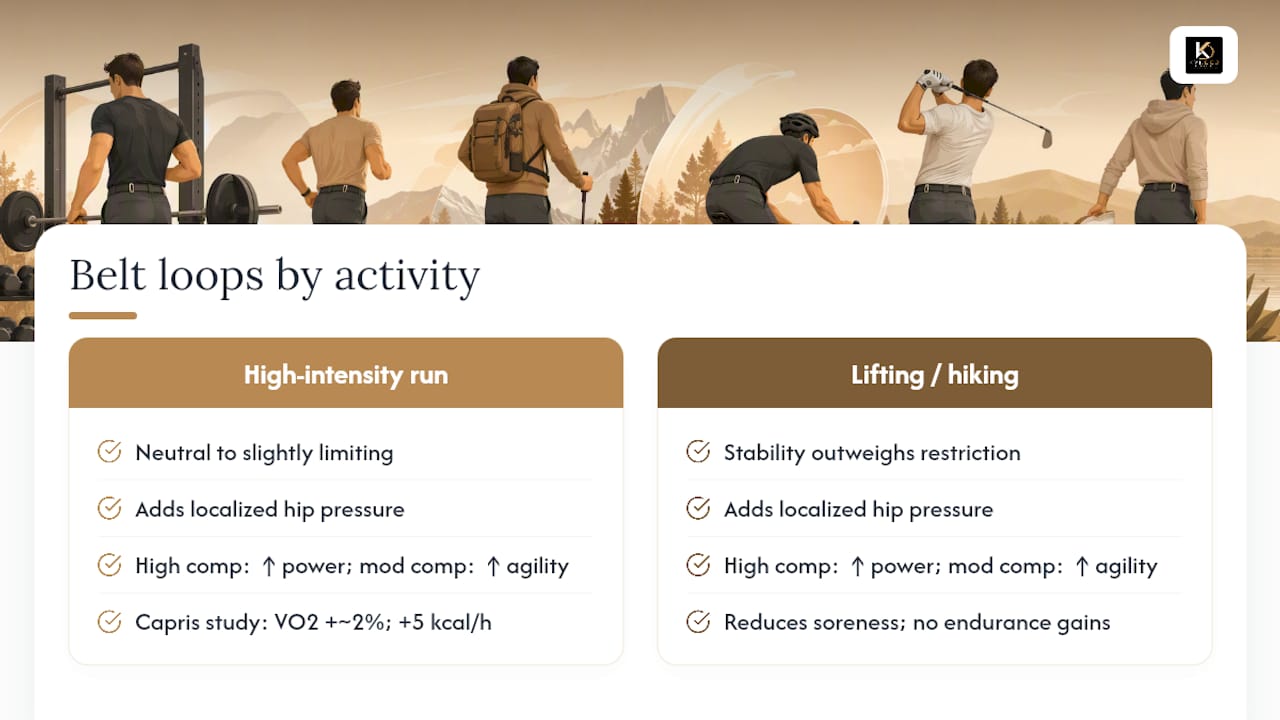
Belt loops themselves don’t change compression biomechanics. Adding a belt through them can, though, because it introduces localized pressure around the hips.
Research on compression garments shows the effects are pressure-dependent and task-specific. A study published in MDPI Sensors found that high compression improved some explosive measures like vertical jump, while moderate compression supported agility and faster lactate clearance. The takeaway: adding belt pressure on top of a compression garment could push you into a higher-pressure zone, which may help power output but slightly limit agility.
Stat to know: A controlled lab study of toning capris found a ~2% increase in VO2 and roughly 5 extra kcal per hour compared to athletic shorts, with no measurable difference in muscle activation. Subjects reported higher perceived exertion.
For recovery, The Conversation’s synthesis of compression research finds that garments often reduce soreness and support strength recovery, but don’t consistently improve race times or endurance performance.
Practical read: For most people, belt loops plus a belt are neutral to slightly limiting during high-intensity running. For loaded lifting, hiking, or utility tasks, the added stability outweighs any minor restriction.
When should you choose gym pants with belt loops?
Choose loops when you plan to wear a belt or clip gear to your waistband. Skip them when you need maximum compression or a low-profile running setup.
| Activity | Recommended waistband system |
|---|---|
| Running / sprinting | Drawstring or wide elastic, no loops |
| Loaded lifting (belt required) | Belt loops, reinforced preferred |
| Hiking / backpacking | Belt loops or integrated utility clips |
| Gym-to-street errands | Belt loops for structure and style |
| Travel / casual wear | Either; loops add outfit versatility |
| High-compression recovery | Loopless compression tight |
Quick rules of thumb:
- Loops add value when a belt is part of your setup
- Drawstrings and wide elastic waistbands are better for low-profile, high-movement work
- Integrated utility loops or clip points serve accessory attachment without a full belt
- Side adjusters offer a tailored alternative for dress-adjacent athletic wear
- Loopless high-rise tights are the right call for yoga, Pilates, or compression recovery
How are belt loops designed and sewn into gym pants?
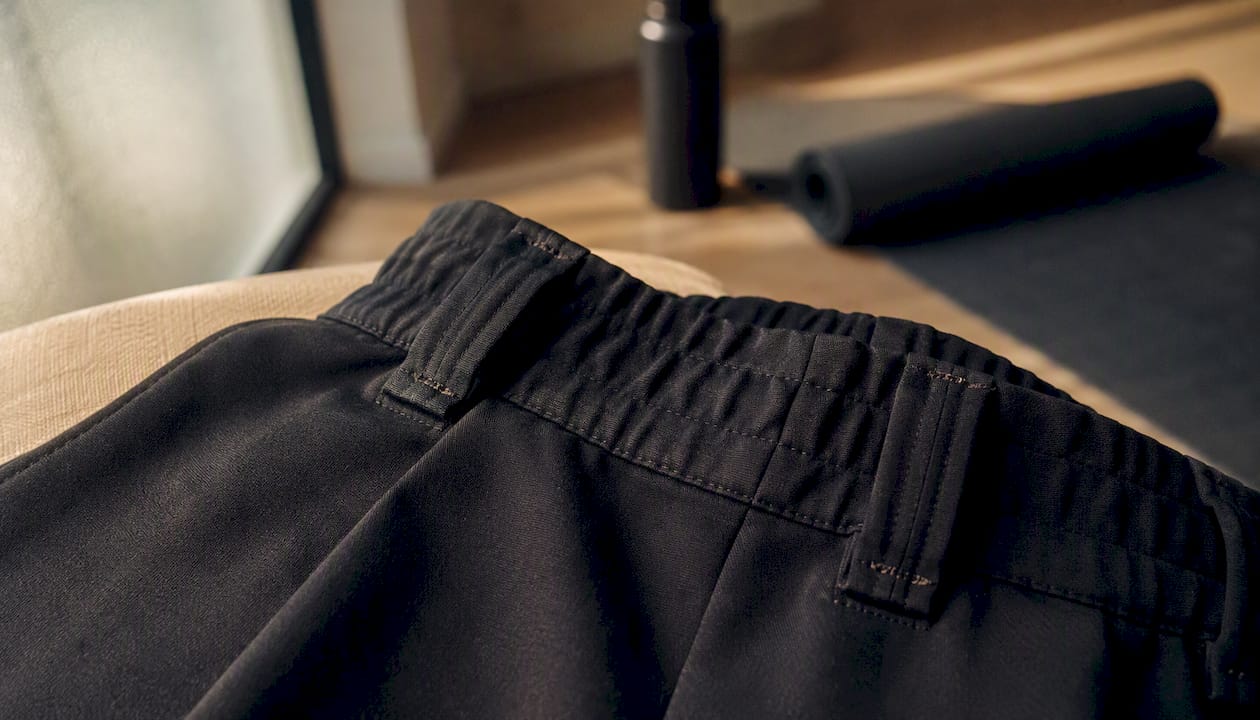
Loops are either integrated into the waistband seam during construction or stitched on afterward. The American Sewing Guild’s belt loop guidance recommends pressing under 1/4" at each end and securing with bartacks or backstitching for reliable hold.
Placement and construction details:
- Standard placement: two front, two sides, one center back (five total); heavy-use pants may add side or back extras
- Bartack reinforcement at each end prevents tearing under load
- Box stitch or double-layer tuck adds durability on utility and athletic styles
- Stretch nylon loops flex with the garment; woven cotton loops hold shape but have less give
Loops integrated during construction sit flush with the waistband seam, which looks cleaner and holds better. Post-construction loops are topstitched on, making them easier to add or replace but slightly more prone to catching on gear.
Pro Tip: For gym pants that see heavy use, check the bartacks at each loop end every few months. A loose bartack is the first sign of stress, and re-sewing it early costs far less effort than replacing a torn loop.
How to add or remove belt loops on gym pants
You can add or remove loops with basic sewing tools and about 20 minutes. The key is maintaining waistband integrity throughout.
To add a loop:
- Cut a fabric strip 1.5" wide and long enough to span the waistband height plus 1/2" for seam allowance
- Fold the strip in thirds lengthwise, press flat, and topstitch both long edges
- Mark placement on the waistband with tailor’s chalk
- Tuck the bottom raw edge under the waistband seam allowance and pin
- Topstitch or bartack the bottom end securely
- Fold the top end under 1/4", press, and bartack to the top waistband edge
To remove a loop:
- Use a seam ripper to carefully unpick the bartacks at both ends
- Remove the loop fabric without cutting into the waistband
- If the waistband seam was opened, re-sew and press flat
- Reinforce the area with a short line of topstitching if the fabric shows stress
Pro Tip: For heavily used athletic pants, SportsRec recommends leaving the belt threaded through loops during machine washing. It saves re-threading time and keeps loops in their correct alignment.
Avoid modifying high-compression garments by adding loops, since any new seam point can create a pressure concentration that affects fit and comfort.
Care and washing tips for pants with belt loops
Belt loops add stress points in the wash. A few simple habits extend their life significantly.
- Remove or loosely fasten the belt before washing to prevent buckle damage to the fabric
- Use a mesh garment bag for delicate or stretch-fabric pants to reduce loop snagging
- Wash on a gentle cycle with cold water; high heat weakens bartack thread over time
- Air dry or use low heat; high-heat dryer cycles stress reinforced seam points
- Inspect bartacks every few months on pants used for loaded training or hiking
For comfort during wear, a low-profile belt sits flatter against the hip and reduces chafe. If the waistband height is short, loops can sit close to bare skin during high-rep movements. Choosing a mid-rise or high-rise pant with loops keeps the hardware away from the hip flexor crease.
Pro Tip: If loops consistently chafe during cardio, a thin silicone-grip belt or a flat nylon webbing belt eliminates the buckle bulk that causes most of the irritation.
How Kyndeoactivewear approaches belt loop design
Kyndeoactivewear includes belt loops on selected joggers and utility-style pants to support gym-to-street versatility and everyday carry. The choice is intentional: loops appear where the silhouette calls for structure and accessory support, not as a default on every style.
When Kyndeoactivewear uses loops:
- Joggers and utility pants designed for gym-to-street transitions
- Styles where a belt completes the outfit or anchors a crossbody bag strap
When Kyndeoactivewear omits them:
- High-rise yoga pants and compression leggings, where a clean, loopless waistband supports full range of motion
- Styles built for Pilates, yoga, or compression recovery
As a Black-owned e-commerce brand focused on gym-to-street versatility, Kyndeoactivewear treats every design detail as a functional decision. Browse the gym-to-street collection to see which silhouettes include reinforced loops and which prioritize a compression-first fit.
Pro Tip: On Kyndeoactivewear product pages, check the waistband description. “Reinforced loops” signals utility-ready construction; “high-rise elastic waistband” signals a loopless, compression-focused fit.
The honest take on belt loops and gym pants
Belt loops get overlooked as a design feature because most gym pants skip them entirely. That’s the right call for compression tights and running gear. But for anyone who trains with a lifting belt, hikes with a loaded pack, or wants pants that move from the gym to the street without looking purely athletic, loops are a genuine functional upgrade.
The sports science backs a measured view: compression level matters more than the presence of loops, and the small VO2 difference measured in compression studies is unlikely to affect most recreational athletes. Choose loops for utility and style versatility. Choose loopless for maximum compression or low-profile running setups.
Gym-to-street style, built with purpose
Kyndeoactivewear is the gym-to-street activewear brand for people who want their pants to work as hard as they do, without sacrificing the look. Where other brands default to plain elastic waistbands, Kyndeoactivewear’s joggers and utility styles include reinforced loops on pieces designed for real movement and real life. For compression-first training, the high-rise leggings collection delivers a loopless, clean fit built for performance.
Every piece is designed with intention, from bartack placement to waistband height. Kyndeoactivewear is a Black-owned brand that puts functional detail and style in the same garment, so you’re not choosing between the two. Browse the full sustainable activewear collection and find the silhouette that fits your training, your commute, and your style.
Sources
- Effects of Wearing Toning Apparel on Exercise Responses — PMC
- Belt loop basics — American Sewing Guild
- Pressure-dependent effects of compression pants on athletic performance — MDPI Sensors
- Compression tights and tops: do they actually benefit you during or after exercise? — The Conversation
- What are belt loops on jeans? — Denimhunters
- How to put a belt on football pants — SportsRec
FAQ
What is the purpose of belt loops on gym pants?
Belt loops keep a belt aligned on the waistband and prevent it from sliding during movement. On gym pants, they also serve as anchor points for carabiner clips, utility pouches, and other small gear.
Do belt loops affect athletic performance?
Belt loops alone don’t change compression or biomechanics. Wearing a belt through them adds localized hip pressure, which research suggests can have task-specific effects on explosive power and agility depending on compression level.
When should I choose gym pants without belt loops?
Skip loops for high-intensity running, Pilates, yoga, or compression recovery wear, where a clean, loopless waistband supports full range of motion and consistent compression. Kyndeoactivewear’s high-rise yoga pants are built for exactly this use.
How do I keep belt loops from wearing out?
Check the bartack stitching at each loop end regularly, especially on pants used for loaded training or hiking. Wash on a gentle cycle with a garment bag, and air dry or use low heat to protect the reinforced seam points.
Can I add belt loops to gym pants that don’t have them?
Yes. Cut a fabric strip, fold and press it, then bartack each end into the waistband seam. The American Sewing Guild recommends pressing under 1/4" at each end before securing for a clean, durable finish.