

Unrestricted movement design is a product design approach that prioritizes full, uncompensated range of motion by combining mobility-first construction, structural support, and sensory comfort in every garment. The goal is simple: your clothes should move with you, not against you. According to Functional Movement Systems, unrestricted movement is a prerequisite for clear motor control and proper perception, which means the clothes you wear during training or daily activity directly affect how well your body performs.
Here is what that means for shoppers and designers right now:
- Mobility comes first. A garment that restricts your hips, ankles, or shoulders forces your body to compensate, reducing both performance and safety.
- Structural support matters as much as stretch. Loose fabric is not the same as freedom of movement. True freedom requires balanced elasticity with recovery.
- Movement-based design methods (MbDM) give designers a structured way to test and refine garments using real movement sequences, not just lab stretch data.
- Kyndeoactivewear applies these principles across its gym-to-street collections, building movement-ready fit into leggings, sets, and joggers from the pattern stage up.
Key Takeaways
Unrestricted movement design works because mobility must come before stability, and garments that restrict key joints force compensation patterns that reduce performance and increase injury risk.
| Point | Details |
|---|---|
| Mobility-first hierarchy | Establish joint mobility at hips, ankles, and shoulders before adding compression or performance features. |
| Structural mobility vs. looseness | Balanced elasticity with recovery supports dynamic stabilization; loose fabric alone does not. |
| Three-move fit screen | Squat, hip hinge, and overhead reach reveal hidden restrictions that static try-on misses. |
| MbDM typology | Movement-based design methods organize 41 approaches across five groups to guide designers at every stage. |
| Kyndeoactivewear application | Four-way stretch sets, articulated leggings, and joggers apply mobility-first principles to gym-to-street wear. |
Table of Contents
- What are the core principles behind unrestricted movement design?
- How do movement-based design methods give designers a practical framework?
- Which garment features actually enable free movement?
- Why does unrestricted movement design matter for your body?
- How do you test activewear for unrestricted movement before you buy?
- How Kyndeoactivewear applies these principles to real products
- The mindset shift that changes how you shop and design
- Kyndeoactivewear is built for the way you actually move
- Sources
- FAQ
What are the core principles behind unrestricted movement design?
The science here is grounded in Functional Movement Systems (FMS), a framework developed by Gray Cook and colleagues to prioritize movement quality before movement volume. The FMS movement principles state it plainly: move well, then move often. Applying volume or intensity to a restricted movement pattern only reinforces that restriction.
The hierarchy works like this:
- Mobility first. A joint must have adequate range of motion before any stabilization demand is placed on it.
- Static stabilization second. Once mobility is established, the body learns to hold position under light load.
- Dynamic stabilization third. Only then should movement become fast, loaded, or complex.
For activewear, this hierarchy has a direct design implication. Garments must allow mobility at the hips, ankles, and shoulders, the three joints FMS identifies as highest priority for complex movement tasks, before any compression or performance feature is layered on top. A legging that compresses the hip crease, for example, restricts the mobility that should come first in that hierarchy.
The concept of the “lived body” from movement-based design research adds another layer. Rather than treating the wearer as a set of measurements, this perspective treats the body as a sensing, moving subject. Fit is not just about dimensions; it is about how a garment feels during a squat, a lunge, or a reach overhead. That sensory interaction is where clothing fit directly affects movement quality.
Pro Tip: When evaluating any activewear piece, run a basic mobility screen first: deep squat, hip hinge, and overhead reach. If the garment pulls, bunches, or resists at any of those three, the design has not solved the mobility-first requirement.
How do movement-based design methods give designers a practical framework?
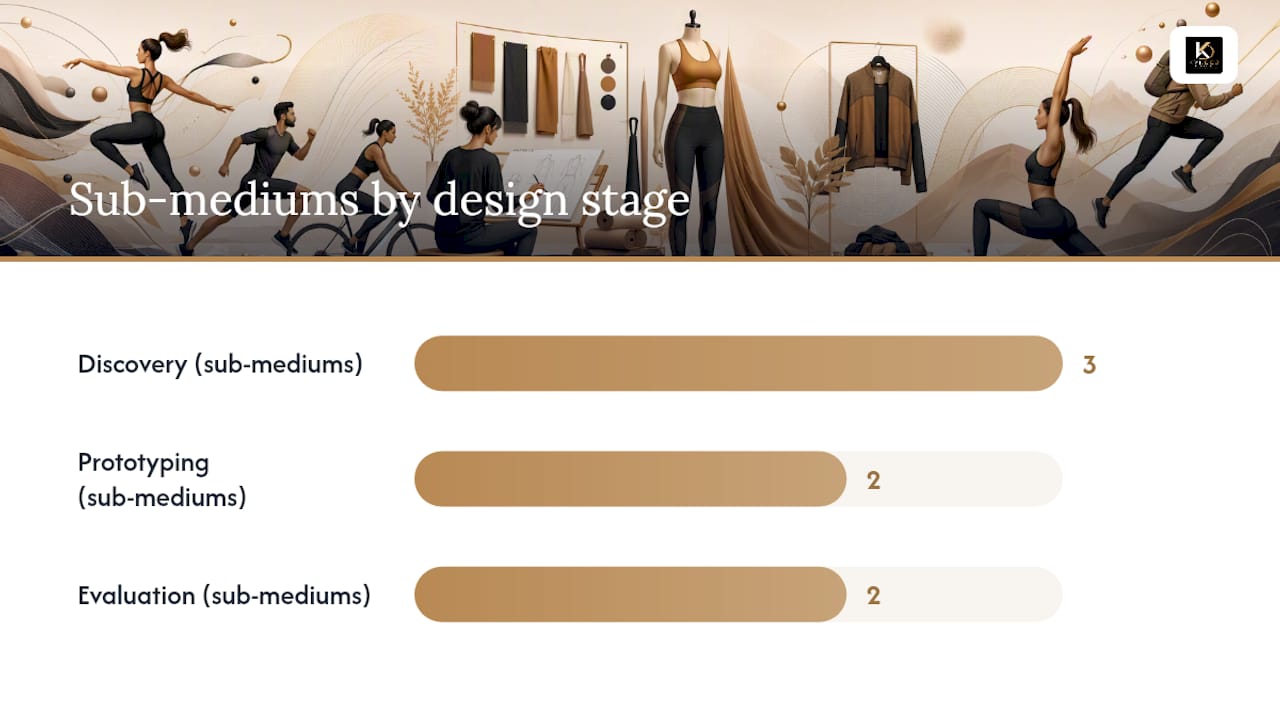
Movement-based design methods (MbDM) treat movement itself as a design material. Rather than designing a garment and then testing it, MbDM practitioners bring movement into the earliest stages of the process. A typology published in design research organizes these methods by sub-mediums and design stages, identifying seven sub-mediums and 23 distinct MbDM approaches.
A practice-based study from the University of Twente expanded that catalog to 41 methods, arranged into 17 categories across five groups: Design Resources, Activities, Delivery, Framing, and Context. Design Resources alone split into Movement, Space, and Objects categories, giving practitioners a concrete vocabulary for planning movement-involved design work.
Here is how those methods map to activewear design stages:
| Sub-medium | Example method | Design stage |
|---|---|---|
| Movement (body) | Squat/lunge/reach probe | Discovery and prototyping |
| Space | Contextual wear test (gym, street) | Evaluation |
| Objects | Fabric swatch movement test | Discovery |
| Framing | Lived-body interview with wearer | Discovery and evaluation |
| Delivery | Video capture of movement in prototype | Prototyping |
- At discovery, designers use movement probes to identify where restrictions appear before a pattern is cut.
- At prototyping, small repeatable sequences (squat, hinge, overhead reach) reveal seam and panel interference that lab stretch data alone can miss.
- At evaluation, wearers report sensory experience alongside functional movement tests, catching restrictions that metrics overlook.
Pro Tip: Structured design constraints, not open-ended experimentation, produce the most focused movement-design insights. Use the MbDM typology to choose the right method for each stage rather than running every test at once.
Which garment features actually enable free movement?
Knowing the principles is one thing. Recognizing them in a garment on the rack is another. These are the construction features that translate movement design into real apparel:
- Multi-directional stretch fabric allows the garment to follow the body through rotation, flexion, and extension without pulling or distorting.
- Gussets at the crotch and underarm eliminate the triangular tension that restricts hip flexion and shoulder elevation.
- Articulated seams follow the natural arc of joints rather than running straight across them, so the seam does not act as a hinge point that limits range.
- Differential panels place higher-stretch material at high-mobility zones (inner thigh, underarm) and firmer material at zones that benefit from support (outer quad, lower back).
- Cut-lines that avoid restriction at the hip crease, shoulder cap, and ankle keep the garment from pinching at the exact joints that need the most freedom.
The distinction between structural mobility and simple looseness matters here. FMS research is clear that true unrestricted movement requires balanced elasticity: fabric must give enough for full range of motion but recover well enough to support dynamic stabilization under load. A garment that is simply loose can actually reduce proprioception and make stabilization harder.
| Feature | What it enables | How to test it |
|---|---|---|
| Multi-directional stretch | Full ROM in all planes | Pull fabric diagonally; it should recover without distortion |
| Gusset | Unrestricted hip flexion | Deep squat; no pulling at the crotch seam |
| Articulated seam | Joint arc freedom | Overhead reach; no seam drag at the shoulder |
| Differential panels | Mobility + support balance | Side lunge; outer panel holds, inner panel gives |
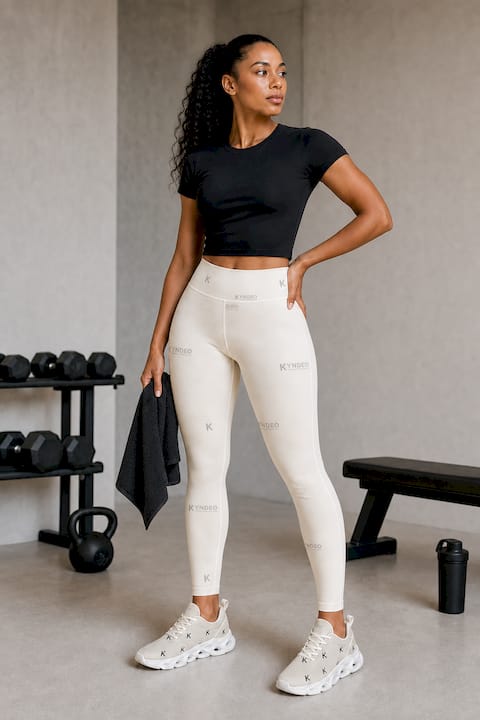
Pro Tip: The NRTH Sports Bra is a useful reference for how functional support and mobility can coexist: structured enough to stabilize, flexible enough to allow a full overhead press without binding.
Why does unrestricted movement design matter for your body?
The benefits go beyond comfort. When a garment restricts movement, your body compensates, recruiting muscles that were not meant for that task and reinforcing movement patterns that increase injury risk over time. Gray Cook and Greg Rose’s work on the SAID principle (Specific Adaptation to Imposed Demand) shows that the body adapts to whatever demand is placed on it, including the demand of working around a tight waistband or a seam that limits hip flexion.
Concrete wearer benefits of movement-ready design:
- Reduced compensation patterns that lead to joint stress and fatigue
- Improved proprioception, because fabric that moves with the body gives cleaner sensory feedback
- Smoother transitions between movements, from a squat to a lunge to a walk, without re-adjusting the garment
- Lower perceived effort, since the body is not fighting the clothing to complete a movement
- Longer movement longevity, because quality movement practiced consistently builds durable physical capacity
MovNat’s movement principles reinforce this: context-dependent, efficient movement supported by progressive skill development is what builds lasting physical capacity. Garments that allow that kind of movement support the process rather than interrupting it.
How do you test activewear for unrestricted movement before you buy?
Use this checklist whether you are in a fitting room or reading product specs online.
- Deep squat test. Squat as low as you comfortably can. The waistband should not roll, the crotch seam should not pull, and the fabric should not bunch behind the knees.
- Hip hinge test. Fold forward at the hips with a flat back. Check for pulling at the lower back panel and restriction at the hip crease.
- Overhead reach test. Raise both arms fully overhead. The top or jacket should not ride up or pull at the shoulder seam.
- Lateral lunge test. Step wide to one side. The inner thigh panel should give freely without seam drag.
- Sensory check. Walk briskly for 30 seconds. Note any chafing, bunching, or pressure points that appear only in motion.
When shopping online, ask or look for:
- Fabric stretch percentage (four-way stretch is the standard for movement-ready pieces)
- Gusset presence, noted in product descriptions or construction details
- Seam placement diagrams or flat-lay images that show articulated or offset seams
- Wearer reviews that mention specific movements, not just general comfort
Pro Tip: Run the squat, hinge, and overhead reach in sequence without pausing. That three-move screen, adapted from FMS assessment protocols, reveals hidden restrictions that a single static pose will miss.
How Kyndeoactivewear applies these principles to real products
Kyndeoactivewear builds movement-ready design into its collections from the pattern stage, not as an afterthought. The brand’s activewear design philosophy centers on stretch-fitted, gym-to-street silhouettes that preserve mobility across the full range of daily activity.
Specific product examples:
- Men’s Leggings: Four-way stretch construction with articulated patterning at the knee and hip, supporting the deep squat and lunge movements the checklist above targets.
- Men’s Joggers: Relaxed-fit silhouette with tapered ankles, balancing the structural mobility that supports dynamic stabilization with the ease needed for street-to-gym transitions.
- Matching workout sets: Coordinated top-and-bottom sets designed so the waistband, hem, and shoulder seams align across pieces, eliminating the gap-and-pull problem that mismatched separates create during overhead or hinge movements.
A note on fit: when choosing a Kyndeoactivewear set, size for your mobility range, not just your measurements. If the hip crease feels tight in a deep squat, size up in the bottom. The relaxed fit guide on the Kyndeoactivewear blog walks through exactly how to read fit for movement rather than for static appearance.
Pro Tip: Shop the women’s and men’s collections by activity type to find pieces already filtered for the movement demands of your training style.
The mindset shift that changes how you shop and design
Most people shop for activewear by how it looks in a mirror. Most designers prototype by how a garment photographs. Both approaches miss the same thing: movement is the test, not appearance.
The principle that matters most here is “move well, then move often.” Applied to shopping, it means: before you commit to a garment, run the three-move screen. If it restricts you at any point, no amount of style or price justifies keeping it. Applied to design, it means: prototype with movement probes at the discovery stage, not just at the end. A seam that looks clean on a dress form can create a hard restriction the moment a wearer reaches overhead.
Structured mobility, fabric that gives and recovers, patterning that follows joint arcs, these are not premium features. They are the baseline. Choosing looseness over structure, or compression over mobility, is a trade-off that costs you movement quality every time you train.
Kyndeoactivewear is built for the way you actually move
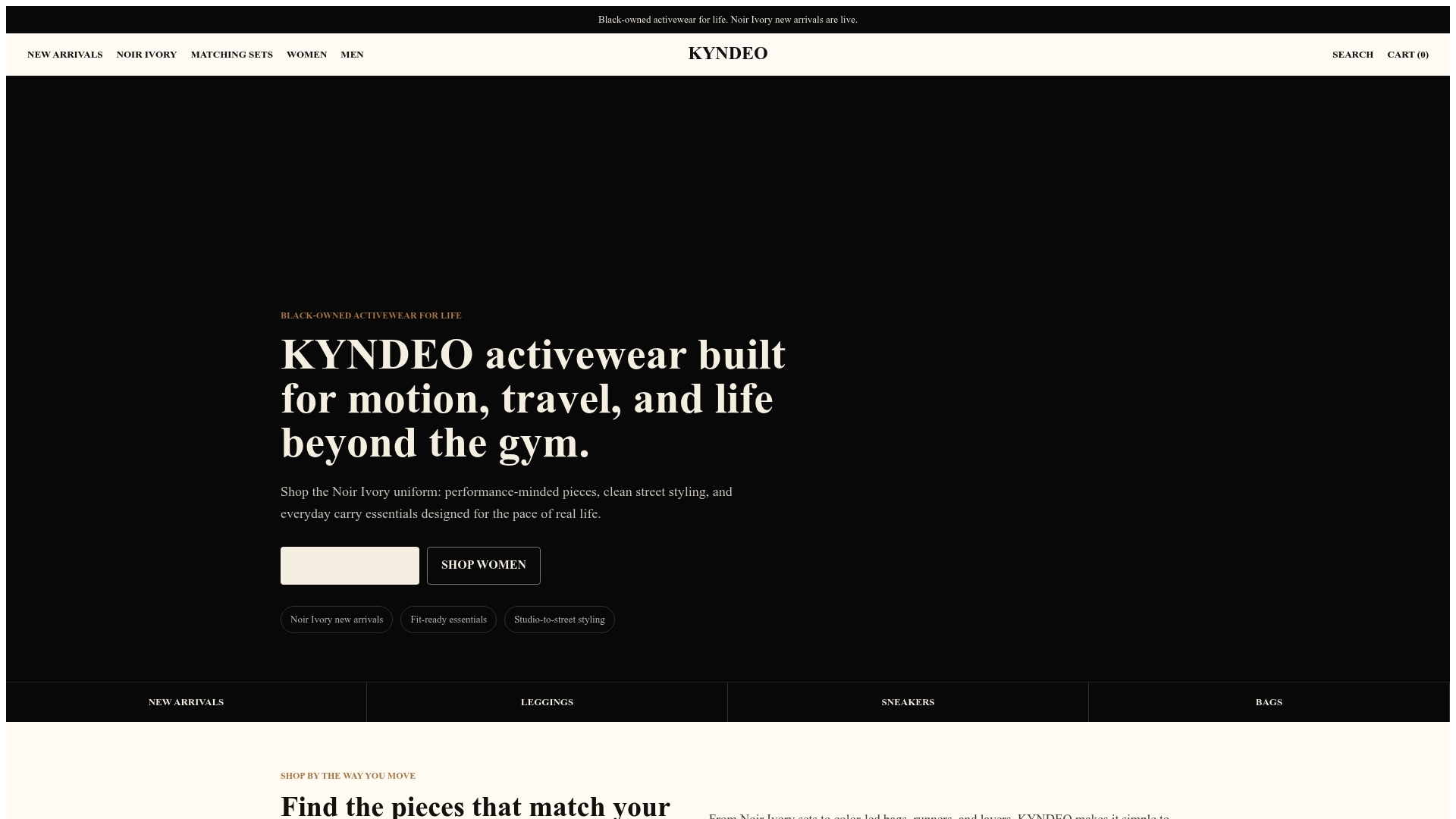
Most activewear is designed to look good standing still. Kyndeoactivewear is designed for the squat, the lunge, the reach, and the walk back to your car. The gym-to-street collections are built around the same mobility-first principles this article covers: four-way stretch fabrics, articulated seams, and coordinated sets that move as a unit so nothing gaps, pulls, or rides up mid-rep.
Three pieces worth starting with:
- Matching workout sets: Coordinated construction means the waistband and hem stay aligned through every movement.
- Men’s Joggers: Relaxed fit with structured recovery, the balance between looseness and dynamic support.
- Men’s Leggings: Articulated patterning at the hip and knee for full-range training.
Browse the full Activewear For Life collection and use the three-move screen from this article to confirm fit before you check out.
Sources
- Movement Principle # 4 | Functional Movement Systems
- Design resources in movement-based design methods: a practice-based study
- Our Principles — MovNat®
FAQ
What is unrestricted movement design in activewear?
Unrestricted movement design is a construction approach that prioritizes full range of motion at key joints by combining multi-directional stretch, articulated seams, and structural support. It treats mobility as the baseline requirement, not a bonus feature.
Which joints should activewear prioritize for free movement?
Functional Movement Systems identifies the hips, ankles, and shoulders as the highest-priority joints for complex movement tasks. Garments that restrict any of these three force the body to compensate and reduce movement quality.
How do I test activewear for unrestricted movement at home?
Run a three-move screen: deep squat, hip hinge, and overhead reach in sequence. If the garment pulls, bunches, or resists at any point, the construction has not met the mobility-first standard.
What is the difference between structural mobility and loose-fitting fabric?
Structural mobility means the fabric gives enough for full range of motion and recovers to support stabilization under load. Loose fabric without recovery can reduce proprioception and make dynamic stabilization harder, not easier.
How does Kyndeoactivewear apply movement-ready design principles?
Kyndeoactivewear uses four-way stretch fabrics, articulated patterning at the hip and knee, and coordinated set construction so tops and bottoms move as a unit, eliminating the gap-and-pull problem common in mismatched separates.