

Clothing fit is the single most underrated factor in how freely your body moves. Well-fitting clothing acts as a cooperating shell, moving with you through every squat, stride, and reach. Poorly fitting clothing becomes a restricting shell, forcing your body into compensatory patterns that drain energy and, over time, strain your joints.
Two mechanisms explain most of the difference:
- Too little ease or low-stretch construction limits joint range of motion and triggers compensatory movements, such as increased lumbar flexion or a shortened stride, to work around the restriction.
- Appropriate ease allowance plus targeted stretch and smart seam placement preserves your natural range of motion, reduces friction-related fatigue, and keeps garments in position during dynamic activity.
The industry term for this is dynamic ease, and it is the gap between how a garment fits while you stand still versus how it performs when you move. Research using 4D photogrammetry confirms that garments looking great on a hanger routinely fail the moment a body flexes, lunges, or reaches overhead.
Table of Contents
- How does clothing construction actually affect the way you move?
- What actually happens to your body when clothing restricts movement?
- Common fit problems by garment type
- How to test clothing fit in motion before you buy
- What to look for when buying movement-friendly clothing
- How Kyndeoactivewear designs for movement
- Key Takeaways
- The fit blind spot most people never catch
- Movement-ready pieces, built to pass the test
- Useful sources
- FAQ
How does clothing construction actually affect the way you move?
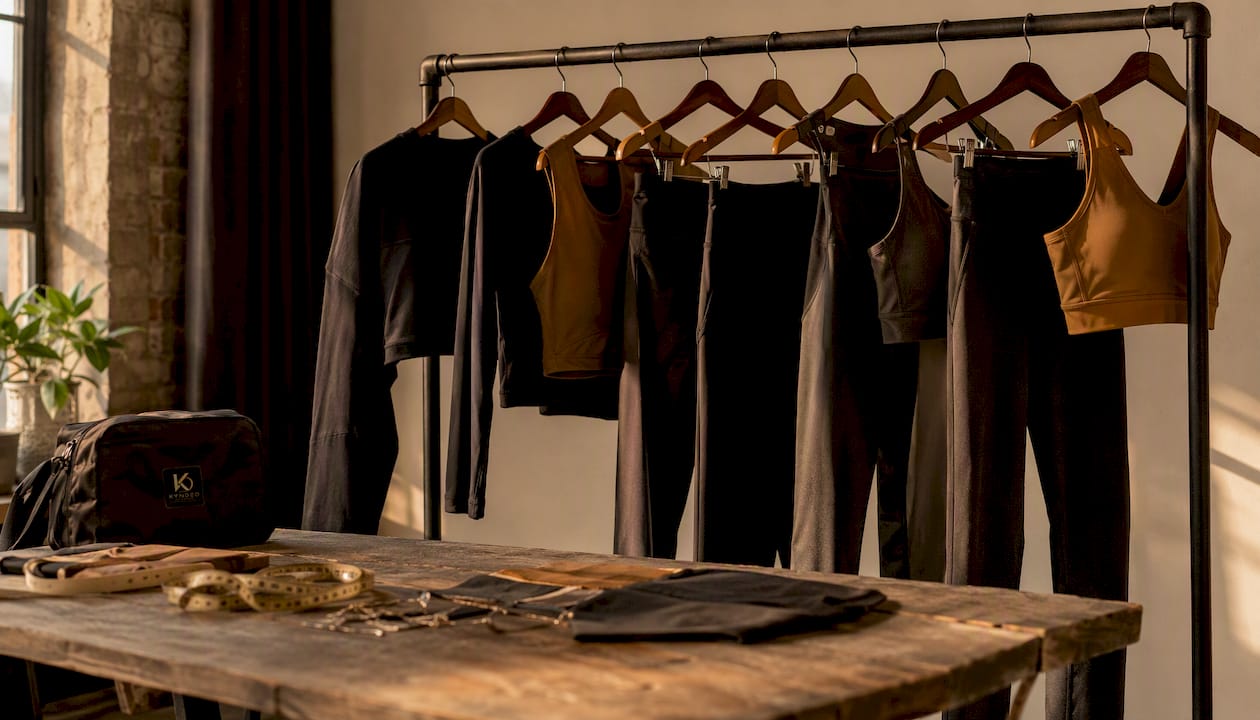
Every garment is a mechanical system. When your body moves, the fabric either slides with you or pulls against you. That outcome depends on three design decisions made before the garment ever reaches you.
Ease allowance: static vs. dynamic
Ease allowance is the intentional extra fabric built into a garment beyond your body’s measurements. Static ease lets you stand and sit comfortably. Dynamic (kinetic) ease accounts for the additional surface area your body creates during motion — a bent knee, a raised arm, a deep squat. Without enough dynamic ease, the fabric runs out of slack and pulls tight across the joint.
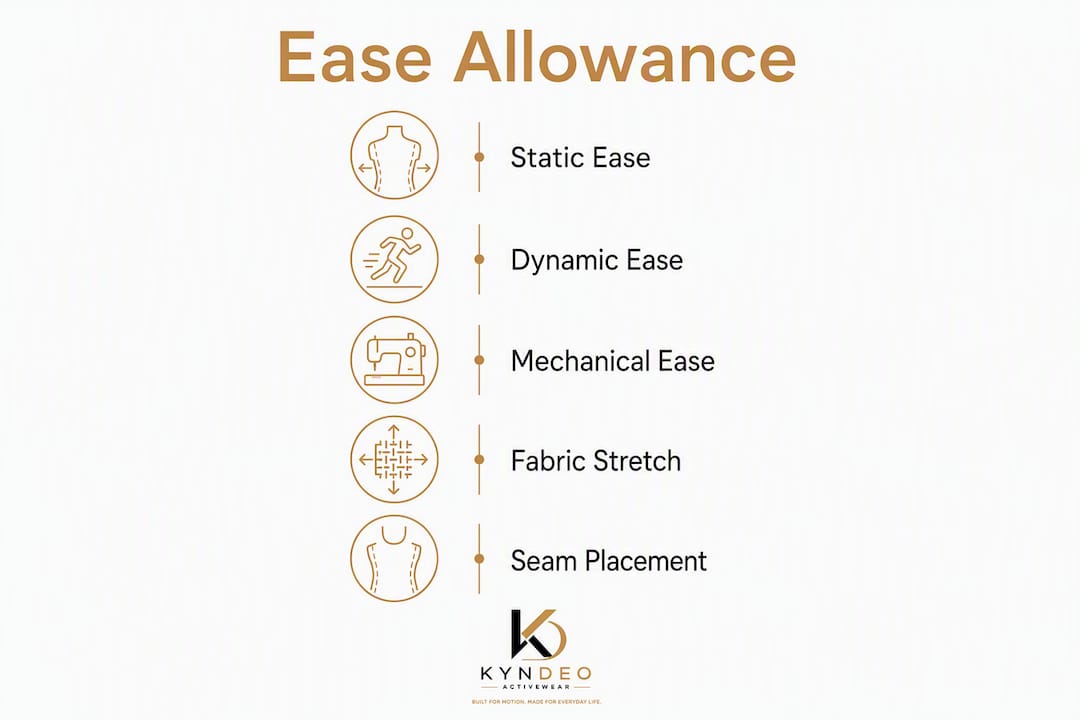
There are actually four categories designers work with: standard (static), dynamic (kinetic), mechanical (fabric-level stretch), and ergonomic (construction-level, like articulated seams and gussets). Each layer adds to wearable comfort in motion. A garment can have generous static ease but still restrict movement if the fabric has no mechanical stretch and the seams sit directly over high-flex zones.
Fabric mechanical properties
Knit fabrics stretch in multiple directions, making them the default choice for activewear. Woven fabrics resist stretch and rely almost entirely on ease allowance for mobility. The relevant specs are stretch percentage (how far the fabric extends under load) and recovery (how completely it returns to its original shape). Low recovery means the fabric sags, bunches, and loses its supportive structure after a few wears.
Shear rigidity matters too. A fabric that resists diagonal deformation will resist the twisting motions of a lunge or a lateral step, even if it stretches front-to-back. Fit assessment research shows that the microclimate between skin and fabric, including heat, moisture, and pressure, directly shapes perceived comfort during movement and whether a garment stays in position or fights the body.
Seams, gussets, and articulated cuts
Seam placement is where many otherwise well-made garments fail. A seam running directly over the back of the knee creates a pressure point the moment you flex. An inseam without a gusset (the diamond-shaped fabric insert at the crotch) restricts hip abduction and causes the waistband to pull down during a lunge. Articulated cuts pre-shape the garment to match a body in motion rather than a body at rest, so the fabric doesn’t need to redistribute as dramatically when you move.
4D scanning studies track exactly this: garment repositioning during movement, including waistband slide, sleeve shift, and the air gaps or penetration points that appear at the knee and shoulder during leg flex and arm flex tests.
Pro Tip: When trying on clothing, watch for waistband shift and sleeve pull during a simple squat or overhead reach. Those two repositioning signals reveal poor dynamic fit faster than any static mirror check.
What actually happens to your body when clothing restricts movement?
The physical consequences of poor fit go well beyond mild discomfort. A narrative review on restrictive clothing and musculoskeletal function documents how tight fashion items alter lumbar and pelvic biomechanics, decrease hip mobility, change muscle activation patterns, and contribute to postural strain and gait changes over time.
Here is how specific fit failures translate into physical outcomes:
- Tight low-rise pants increase anterior pelvic tilt and lumbar flexion during bending tasks, placing extra load on the lower back.
- Restricted thigh panels reduce hip flexion range, shortening stride length and forcing compensatory knee and ankle mechanics.
- Tight cuffs or narrow sleeves limit overhead reach, which can reduce shoulder mobility and alter scapular positioning during pressing or lifting movements.
- Stiff, bulky workwear measurably reduces performance on functional movement assessments. A pilot study on firefighters found that clothing variations directly affected Functional Movement Screen (FMS) scores and vertical jump height, with knees and thighs identified as the most common restriction and discomfort zones.
The compensatory movement problem compounds over time. Your body is remarkably good at finding a workaround when clothing blocks a natural path. But those workarounds, repeated across hundreds of daily movements, create asymmetrical loading patterns. Sports medicine research frames mobility as a networked capacity, the coordinated use of muscle strength across joints and soft tissues. Clothing that interrupts that network doesn’t just slow you down today; it chips away at the movement quality you rely on for everyday and athletic tasks long term.
Common fit problems by garment type
Knowing the mechanism is useful. Knowing where it shows up in your wardrobe is more useful.
Jeans and low-rise pants The most common problems are waistband ride-down during hip flexion and restricted hip mobility from tight thigh panels. The fix is straightforward: choose a higher rise (which anchors the waistband above the hip crest) and look for stretch denim with at least some elastane content.
Leggings and tights Insufficient gusset depth is the primary culprit. Without it, the crotch seam pulls down the waistband and up the leg simultaneously during a squat. Low-recovery fabric compounds the issue, causing sag and bunching after the first few wears. Look for a gusset, high-stretch specs, and a wide supportive waistband that sits at or above the natural waist.
Uniforms and workwear Bulk and rigidity are the enemies here. The firefighter study cited above shows this clearly: garments that add mass or restrict the knee and thigh zone reduce both FMS performance and explosive power. Articulated patterns, pre-shaped at the knee and hip, are the practical solution for task-specific work clothing.
Jackets and structured tops Sleeve seam placement at the shoulder is the critical variable. A seam set too far toward the neck restricts arm elevation. Check overhead reach and lateral arm raise while wearing the jacket before you commit. A garment that looks clean in the mirror but pulls across the upper back during a reach has a structural fit problem, not a size problem.
Gym-to-street crossovers This category asks a garment to perform across multiple contexts, a gym session, a coffee run, an errand. The tradeoff is real: a silhouette cut for street aesthetics often has less dynamic ease than a pure performance piece. Kyndeoactivewear’s gym-to-street approach addresses this by building stretch and gusset construction into pieces that still read as lifestyle wear, though fit-in-motion testing remains the only reliable way to confirm the balance works for your body.
How to test clothing fit in motion before you buy
Static mirror checks miss most fit problems. The 3-3-3 quick-test gives you a reliable read in under three minutes.
The 3-3-3 quick-test:
- Three moves: squat (full depth if comfortable), forward lunge, and overhead reach with both arms.
- Three minutes: walk, step side-to-side, and repeat the three moves dynamically rather than as isolated checks.
- Three sensations to watch for: pinch (fabric biting into a joint), drag (fabric pulling against the skin), and waistband shift (the band rolling or sliding out of position).
Step-by-step fit checklist:
- Range check: Can you complete each of the three moves without the fabric stopping you short?
- Coverage check: Does the garment stay in place, or does it ride up, gap, or expose skin during movement?
- Friction check: Any rubbing at the inner thigh, underarm, or waistband edge that would worsen over a 30-minute workout?
- Waistband and crotch comfort: Does the waistband dig in or slide down? Does the crotch seam pull tight or shift position?
- Seam pressure: Any seam pressing directly into a joint crease (back of knee, hip flexor, underarm)?
If the test reveals a problem:
- Waistband shift: try a higher rise or a wider waistband style.
- Pinch at the thigh or knee: size up in the lower body, or switch to a knit construction with a gusset.
- Sleeve pull: look for articulated seams or a raglan sleeve cut.
- Crotch drag: the garment needs a gusset; no amount of sizing adjustment fully compensates for its absence.
Pro Tip: Stop immediately if any movement causes pain. The 3-3-3 test is a fit assessment, not a training session. Pain signals a structural mismatch, not a warm-up issue.
What to look for when buying movement-friendly clothing
Once you know what to test, you need to know what to read on a label or product page.
Buyer checklist:
- Elastane (spandex) percentage: even 5–10% elastane in a woven fabric adds meaningful stretch; activewear leggings typically run higher for full mobility.
- Stretch and recovery rating: some brands list this explicitly; “4-way stretch” means the fabric stretches both along and across the grain.
- Gusset: listed in the product description or visible in flat-lay product images as a diamond or triangular panel at the crotch.
- Articulated seams: pre-shaped at the knee or elbow; look for this term in workwear and performance categories.
- Rise and inseam options: a brand offering multiple rise heights signals awareness of fit diversity.
- Size chart with body measurements: vanity sizing without measurements is a red flag; you cannot assess dynamic fit from a size label alone.
Warning signs when shopping online:
- No stretch specs listed for a garment marketed for exercise.
- Only rigid woven fabrics in a product described as “active” or “athletic.”
- Visible seam bunching in product images (a sign the sample itself has fit issues).
- No mention of gusset for leggings or fitted pants.
Decoding product descriptors:
- Second-skin = high stretch, minimal ease; great for compression but can restrict if mis-sized.
- Relaxed fit = extra ease built in; suits high-range-of-motion activities. See Kyndeoactivewear’s relaxed fit guide for a practical breakdown of when to choose this construction.
- Compression = targeted support; beneficial for circulation and muscle feedback, but sizing accuracy matters more here than in any other category.
For a deeper look at how fabric choices translate to daily wear comfort, the comfortable fabrics guide from JV London covers fiber properties and comfort tradeoffs in plain language.
Pro Tip: When shopping online, zoom into the product’s flat-lay image and look at the crotch area. A visible gusset panel is one of the clearest signals that the brand designed the garment with movement in mind.
How Kyndeoactivewear designs for movement
Kyndeoactivewear builds its pieces around the principle that fit assessment must account for both static appearance and dynamic performance. The design choices reflect the mechanics covered earlier in this article.
Leggings: High-stretch knit construction with a gusset and a wide, high-rise waistband. The waistband is designed to anchor above the hip crest, which prevents the ride-down that disrupts a squat or lunge. During your 3-3-3 test, check that the waistband stays put through all three moves and that the gusset allows full hip flexion without crotch drag.
Joggers: Articulated knee patterning and a tapered ankle keep the silhouette clean without sacrificing the range needed for a stride or a lateral step. The men’s joggers are built with this balance in mind. Test overhead reach and a full lunge to confirm the hip and thigh panels move with you.
Matching sets: Coordinated tops and bottoms are cut to work together, so the waistband of the bottom and the hem of the top don’t create a gap or a pressure zone when you move. For women’s activewear sets and men’s activewear, the 3-3-3 test applies to the full outfit, not just the individual pieces.
Clothing built for motion doesn’t ask you to choose between looking good and moving freely. The right construction makes both possible at once — and you’ll feel the difference within the first three moves.
Kyndeoactivewear also uses sustainable material choices in its collections, which matters for fit because responsibly sourced performance fibers tend to maintain their stretch and recovery properties through more wash cycles than lower-grade alternatives.
For an industry-level perspective on how athletic cuts and patterning affect movement, RNK Apparel’s explainer on athletic cut is worth reading alongside this guide.
Key Takeaways
Clothing fit shapes movement quality because ease allowance, fabric stretch, and seam placement determine whether a garment cooperates with or resists your body’s natural range of motion.
| Point | Details |
|---|---|
| Ease allowance drives mobility | Dynamic ease, not static fit, determines whether fabric restricts joints during real movement. |
| Test fit in motion, not in a mirror | The 3-3-3 quick-test (squat, lunge, overhead reach) reveals restrictions that standing still never will. |
| Knees and thighs are the primary risk zones | Research across multiple garment studies identifies these areas as the most common sites of restriction and discomfort. |
| Gussets and articulated seams are non-negotiable | These construction details prevent crotch drag and seam pressure at high-flex joints during dynamic activity. |
| Kyndeoactivewear builds for dynamic fit | Leggings, joggers, and matching sets feature gussets, high-recovery knits, and anchored waistbands designed to pass the 3-3-3 test. |
The fit blind spot most people never catch
Most people size up when clothing feels tight and size down when it looks baggy. Neither adjustment addresses the actual problem. A garment one size larger may still have a seam running directly over the back of the knee, or a waistband cut too low to anchor during hip flexion. The size changes; the construction flaw stays.
The more useful question is not “what size am I?” but “where does this garment restrict me, and is that a size issue or a design issue?” Those are different problems with different solutions. A size issue responds to sizing up or down. A design issue, like a missing gusset or a poorly placed shoulder seam, only resolves when you choose a different construction.
There is also a subtler point that rarely gets discussed: small changes in seam angle, as little as a few degrees, change how a garment distributes tension across a joint during movement. A seam angled to follow the natural flex line of the knee creates far less resistance than one running perpendicular to it, even when both garments are the same size and fabric. This is why two leggings with identical specs can feel completely different in a squat. Construction geometry matters as much as fiber content, and it is almost never listed on a label.
The practical takeaway: use the 3-3-3 test every time, regardless of brand or size familiarity. Your body changes, garment construction varies between colorways and seasons, and the only reliable check is movement itself.
Movement-ready pieces, built to pass the test
Kyndeoactivewear’s collections are designed around one standard: clothing that moves with you from the gym to the street without asking you to compromise on either end. The women’s activewear collection and men’s activewear collection include leggings, joggers, and matching sets built with the construction details this article covers: gussets, high-recovery knits, anchored waistbands, and articulated patterning.
When you shop, bring the 3-3-3 test with you. Try the squat, the lunge, and the overhead reach before you check out. Every piece in the Kyndeoactivewear lineup is built to pass it. Browse the gym-to-street collection and find the fit that moves with your life.
Useful sources
- Investigating Fit in Motion with a 4D Photogrammetry Scanner System — Documents how garments reposition during movement and where air gaps and penetration points appear; the source for dynamic fit testing methodology in this article.
- Fit Assessment and the Influence of Garment-Skin Microclimate — Explains how the microclimate between skin and fabric affects comfort and garment stability during movement.
- Biomechanical Effects of Restrictive Clothing on Human Movement and Musculoskeletal Function: A Narrative Review — Covers how tight clothing alters lumbar and pelvic biomechanics, muscle activation, and posture over time.
- Impact of Various Clothing Variations on Firefighter Mobility: A Pilot Study — Demonstrates how workwear construction affects FMS scores and vertical jump; the primary source for the uniform and workwear section.
- Why Mobility Exercises Are Key to Overall Health as We Age (AP News) — Sports medicine framing of mobility as a networked, strength-driven capacity that clothing can support or disrupt.
- Kyndeoactivewear Relaxed Fit Guide — Brand resource explaining when and why to choose relaxed fit construction for movement-focused use cases.
- Kyndeoactivewear Gym-to-Street Collection — Brand landing page for the gym-to-street design approach and the product categories built around it.
FAQ
What is the 3-3-3 rule for clothes?
The 3-3-3 quick-test checks fit in motion using three moves (squat, lunge, overhead reach), three minutes of dynamic movement, and three sensations to watch for: pinch, drag, and waistband shift. It reveals fit restrictions that a static mirror check misses entirely.
Why is my weight not changing but my clothes fit better?
Body composition changes, specifically gaining muscle and losing fat, alter your shape without changing the number on the scale. Muscle is denser than fat, so the same weight occupies less volume in some areas and more in others, which shifts how garments sit and move on your body.
Does clothing fit actually affect exercise performance?
Yes. Research on firefighters found that clothing construction directly affected Functional Movement Screen scores and vertical jump height. Restrictive garments alter joint kinematics, change muscle activation patterns, and increase fatigue, all of which reduce performance during both exercise and everyday physical tasks.
What construction details matter most for movement-friendly clothing?
A gusset at the crotch, articulated seams at the knee and shoulder, high-recovery knit fabric, and a waistband anchored at or above the natural waist are the four most impactful construction details for preserving range of motion during dynamic activity.
How does clothing fit relate to injury risk?
Tight clothing that alters lumbar and pelvic biomechanics, as documented in biomechanical research, can increase anterior pelvic tilt and change how load is distributed across the spine and hips. Over time, these compensatory patterns contribute to postural strain and joint stress beyond what the movement itself would cause.