

Activewear is performance-focused clothing engineered for movement, combining technical fabrics with functional design to support physical activity and daily life. It differs from regular clothing through properties like four-way stretch, moisture-wicking, breathability, and reinforced seams built for repeated motion and washing. The global activewear market was valued at $351,164 million in 2017 and was projected to reach $546,802 million by 2024 at a compound annual growth rate of 6.5%. That scale reflects how deeply activewear has moved from gym bags into everyday wardrobes. Whether you are heading to a workout, running errands, or traveling, the right activewear moves with you at the pace of real life.
What is activewear and what makes it different from regular clothing?
Activewear is defined as clothing specifically designed to support physical movement, exercise, and active daily routines. The key difference from regular clothing is in the fabric technology and construction, not just the style.
Regular clothing prioritizes appearance. Activewear balances comfort, flexibility, and support to accommodate everything from a morning run to an afternoon of errands. That dual purpose is what makes it a genuine everyday essential.
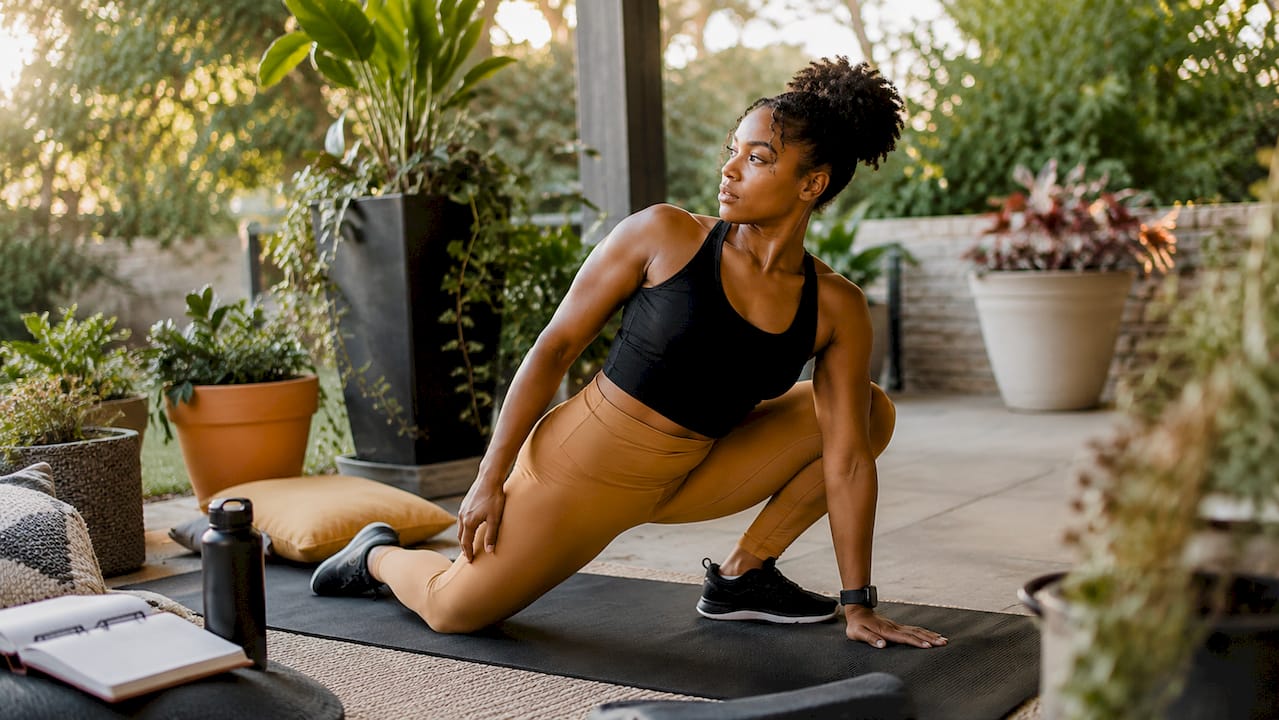
Core fabric features that define activewear
The technical properties of activewear fabrics are what separate them from standard apparel:
- Four-way stretch: Fabric moves with your body in every direction, not just side to side. This matters for squats, lunges, and any activity that demands full range of motion.
- Moisture-wicking: Pulls sweat away from the skin and moves it to the fabric surface where it evaporates. You stay dry and comfortable longer.
- Breathability: Open-knit or mesh panels allow airflow to regulate body temperature during high-output activity.
- Reinforced seams: Flatlock stitching reduces chafing and holds up through repeated washing and movement.
- Quick-drying properties: Synthetic blends like nylon and spandex dry significantly faster than cotton, making them practical for back-to-back wear.
Common activewear materials include spandex (also called Lycra), nylon blends, polyester blends, and performance cotton blends. Spandex provides the stretch. Nylon adds durability. Polyester handles moisture management. Cotton blends offer softness for lower-intensity wear.
Pro Tip: When buying activewear for daily use, check the spandex content. A fabric with 15–20% spandex gives you stretch without losing shape after repeated wear.
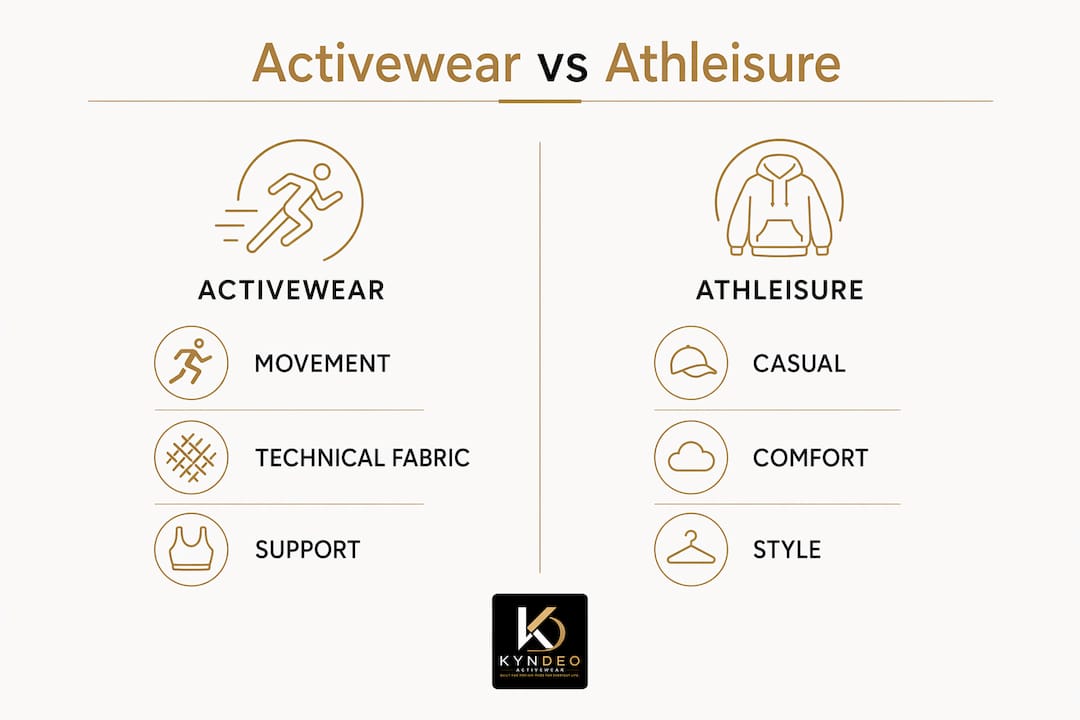
How does activewear differ from sportswear, athleisure, and loungewear?
These four categories overlap in the store and in conversation, but they serve different purposes. Knowing the difference helps you build a wardrobe that actually works.
| Category | Primary Purpose | Fabric Focus | Typical Use |
|---|---|---|---|
| Activewear | Movement and exercise | Technical stretch, moisture-wicking | Gym, running, yoga, daily activity |
| Sportswear | Sport-specific performance | Protective, sport-engineered | Team sports, specialized training |
| Athleisure | Casual fashion with athletic influence | Soft, stylish, moderate stretch | Errands, social outings, light activity |
| Loungewear | Static comfort and relaxation | Soft, loose, minimal structure | Home, rest, low-movement settings |
Sportswear is engineered for a specific sport. A basketball jersey, a cycling kit, and a swim brief are all sportswear. They are built around the demands of one activity. Activewear is broader. It covers the full range of physical movement without being tied to a single sport.
True activewear provides structural support through targeted compression that maintains body contour during movement. Loungewear does not. Loungewear is designed for static comfort, which is why it feels great on the couch but falls short during a workout.
Athleisure sits between activewear and casual fashion. The line between activewear and athleisure is increasingly blurred, with consumers seeking pieces that balance gym-ready performance with stylish, all-day wearability. The practical difference is this: activewear performs under physical stress. Athleisure looks the part but may not hold up to serious movement.
How can you style activewear for everyday wear beyond workouts?
Activewear becomes a true wardrobe staple when you know how to style it beyond the gym. The most effective approach follows a simple three-part formula.
The base, layer, accessory formula
Stylists recommend a clear structure for building street-ready activewear outfits:
- Base: Start with your activewear piece. High-waisted leggings, a fitted tank, a sports bra, or biker shorts. This is your foundation.
- Layer: Add a piece that signals intention. An oversized blazer, a structured cardigan, a button-down shirt worn open, or a cropped hoodie. The layer shifts the outfit from workout to street.
- Accessory: Choose accessories that match where you are going. Structured bags, minimalist jewelry, and clean sneakers read as intentional. A gym backpack reads as gym-only.
This formula works because it gives the eye a clear story. The activewear base provides comfort and function. The layer and accessory tell the world you dressed on purpose.
Fabric finish and color choices that work all day
Matte, seamless, and ribbed fabrics in neutral tones are significantly more versatile for mixing into daily wardrobes than brightly colored or heavily branded athletic gear. Neutral tones like black, slate gray, cream, and olive pair with almost anything in your closet. Matte finishes read as fashion rather than function.
Seamless activewear creates a clean, uninterrupted silhouette across the body. No stitching lines, no bunching at the waist. When a piece is constructed this way, the body reads as elongated and the outfit reads as fashion. That construction detail alone changes how an outfit lands.
The bag rule
The single most impactful styling shift is the bag swap. Replacing a gym backpack with a crossbody bag or structured tote immediately elevates an activewear outfit from workout-focused to intentional everyday wear. The bag is the signal. It tells everyone around you that this is a deliberate outfit, not a post-gym errand run.
Pro Tip: Build a capsule of three to five neutral activewear pieces that mix with each other and with your existing wardrobe. Matching sets from Kyndeoactivewear make this easy because the coordination is already done for you.
Why is activewear an everyday essential in modern life?
Activewear has moved well beyond the gym because modern life demands clothing that keeps up with it. Work, travel, errands, parenting, and social outings all happen in the same day. Clothing that can handle all of it is not a luxury. It is practical.
The market data reflects this shift. The activewear market was projected to reach $546,802 million by 2024, growing at 6.5% annually. North America alone accounted for 42.3% of global activewear revenue. Consumer demand at that scale does not happen by accident. It happens because the product solves a real problem.
Here is what drives that demand:
- Comfort without compromise: Technical fabrics deliver all-day comfort that dress clothes and stiff denim cannot match.
- Versatility across settings: The same legging that performs in a yoga class works for a coffee meeting when styled correctly.
- Travel practicality: Wrinkle-resistant, quick-drying fabrics make activewear the most practical choice for travel days.
- Fashion credibility: Fashion editors at InStyle and Vogue recognize that the best activewear balances technical performance with a clean aesthetic that mimics high-end ready-to-wear fashion.
- Sustainability momentum: Many brands are prioritizing sustainability, using recycled materials and low-impact production methods in response to growing consumer demand for eco-conscious options.
The cultural shift is real. Activewear is no longer a category you shop for the gym. It is a category you build your wardrobe around.
What should you consider when choosing the best activewear for your needs?
Choosing activewear that works for your life means thinking beyond color and brand. The right piece depends on how you move, where you go, and how long you need it to last.
Key factors to evaluate before buying:
- Activity type: High-intensity training needs compression and maximum moisture-wicking. Low-intensity or daily wear needs comfort and versatility. Match the fabric weight and stretch level to what you actually do.
- Fit and support: Activewear should fit close to the body without restricting movement. Waistbands should stay in place. Seams should not dig in or shift during activity.
- Fabric durability: Look for reinforced stitching and high-quality synthetic blends. Cheap fabrics pill, fade, and lose shape after a few washes.
- Versatility: The best activewear for everyday wear transitions from workout to street without looking out of place. Neutral colors and clean silhouettes make this easier.
- Sustainability: Recycled nylon and polyester blends reduce environmental impact without sacrificing performance. This is increasingly available across price points.
- Coordinated sets: Matching activewear sets remove the guesswork from outfit building. When the top and bottom are designed together, the proportions and colors already work.
Popular garment types to consider include high-waisted leggings, fitted tanks, sports bras, joggers, biker shorts, and zip-up hoodies. Each serves a different function and styling purpose within a well-built activewear wardrobe.
Key takeaways
Activewear is performance-focused clothing built for movement, and its technical fabric construction is what separates it from regular clothing, athleisure, and loungewear.
| Point | Details |
|---|---|
| Activewear is defined by fabric technology | Four-way stretch, moisture-wicking, and reinforced seams are the core features that make activewear functional. |
| It differs from athleisure and loungewear | Activewear performs under physical stress; athleisure and loungewear prioritize style and static comfort respectively. |
| Styling formula makes it everyday-ready | Base activewear piece plus a layer plus a structured accessory creates an intentional, street-ready outfit. |
| Neutral tones and seamless construction add versatility | Matte, seamless fabrics in neutral colors mix into daily wardrobes far more easily than branded or brightly colored gear. |
| Market growth reflects real consumer demand | The activewear market was projected to reach $546,802 million by 2024, confirming its role as a daily wardrobe staple. |
Activewear has earned its place in the everyday wardrobe
I have spent years watching the activewear category evolve, and the most significant shift is not in the fabrics or the technology. It is in how people think about getting dressed. The old model was simple: gym clothes for the gym, real clothes for everywhere else. That model no longer reflects how people actually live.
The styling insight that changed my perspective was the bag rule. Swap the gym backpack for a structured tote and the entire outfit reads differently. That one change costs nothing and requires no new clothing. It is proof that activewear’s limitations are mostly mental, not physical.
What I find underrated is the matching set. People underestimate how much mental energy goes into getting dressed. A coordinated set from a brand like Kyndeoactivewear removes that friction entirely. The proportions work. The colors work. You feel intentional from the first wear, which matters more than most people admit.
The sustainability angle is also worth taking seriously. Recycled fabrics are no longer a compromise. They perform at the same level as virgin synthetics in most categories. Choosing them is a practical decision, not just an ethical one.
My honest advice: build your activewear wardrobe around three to five neutral, versatile pieces that you can layer and accessorize. Stop thinking of activewear as a separate category. It is just clothing that works harder.
— Bryan
Kyndeoactivewear: built for motion, styled for life
Kyndeoactivewear is a Black-owned activewear brand that builds clothing for the full pace of daily life, from morning workouts to afternoon errands to evening outings.
The women’s activewear collection covers leggings, tanks, sports bras, and coordinated sets designed with premium stretch fabrics and clean silhouettes that move from studio to street without a second thought. The men’s activewear collection brings the same performance-minded approach to joggers, leggings, and sets built for comfort and versatility. Every piece is designed to coordinate, so outfit building stays simple. Shop Kyndeoactivewear and find the pieces that fit the way you actually live.
FAQ
What is activewear exactly?
Activewear is performance-focused clothing engineered for physical movement, featuring technical fabrics like four-way stretch, moisture-wicking, and breathability. It is designed to support exercise and active daily routines while remaining comfortable enough for all-day wear.
Is activewear the same as athleisure?
Activewear and athleisure are related but distinct. Activewear is built to perform under physical stress with structural support and technical fabrics, while athleisure prioritizes casual style with athletic influence and may not hold up to serious movement.
Can you wear activewear as everyday clothing?
Yes. Styled with a layer like a blazer or cardigan and a structured bag instead of a gym backpack, activewear transitions effectively into everyday wear. Neutral tones and seamless construction make the transition easiest.
What fabrics are used in activewear?
The most common activewear fabrics are spandex (Lycra), nylon blends, polyester blends, and performance cotton blends. Spandex provides stretch, nylon adds durability, and polyester manages moisture.
How do I choose the best activewear for daily wear?
Prioritize fit, fabric durability, and versatility. Look for neutral colors, seamless construction, and pieces that coordinate with each other. Matching sets simplify outfit building and deliver a polished, intentional look with minimal effort.